
The Bureau of Labor Statistics reported Wednesday that the consumer price index rose a seasonally adjusted 0.6% in September, pushing the 12-month inflation rate to 3.7%. Core CPI, which strips out food and energy, rose 0.3% on the month and 2.6% from a year earlier, both readings landing above Wall Street forecasts and above August's pace, according to CNBC.
Headline and Core Both Beat Forecasts
Economists surveyed by Dow Jones had expected a 0.6% monthly gain and a 3.6% annual headline rate, so the reported 3.7% came in a tenth of a percentage point above consensus, per CNBC. Core CPI outpaced expectations by a wider margin: the consensus called for 0.2% monthly and 2.5% annual core inflation, versus the actual 0.3% and 2.6%. Both the headline and core annual rates accelerated from August, when CNBC reported headline inflation ran at 3.4% and core inflation at 2.4%.
Energy and Gasoline Drove Roughly Half the Monthly Gain
CNBC's report attributed much of September's jump to energy. The energy index rose 5.2% as tensions persisted between the U.S. and Iran in a conflict the outlet said began in late February and shows no sign of resolution. Gasoline prices alone soared 9.1%, accounting for about half of the headline CPI's monthly gain, according to the BLS figures cited by CNBC. Over the past year, gasoline prices are up 34.2% and fuel oil has climbed 74.2%, the same report said.
Beyond energy, the report showed uneven movement elsewhere. Food prices were flat on the month and up 2.5% year over year. Shelter costs rose 0.4%, used car and truck prices jumped 0.7%, and apparel, a category CNBC noted is sensitive to tariffs, increased 0.3% on the month and is up 3.4% over the past year.
Markets and Fed Odds Repriced Quickly
CNBC reported that stock market futures turned negative following the release while bond yields moved sharply higher, though specific Treasury yield levels and dollar index readings were not detailed in that coverage. Futures traders responded by lifting the odds of a rate hike at the Federal Reserve's Oct. 27-28 meeting to about 44%, according to the CME Group's FedWatch tool as cited by CNBC. Odds of an increase before year-end climbed to better than 96%, with a near 50-50 chance priced for a half-percentage-point hike, the same tool showed. CNBC noted this is the final CPI reading FOMC officials will receive before that meeting.
Sonu Varghese, chief macro strategist at Carson Group, told CNBC the report demonstrated that pricing pressure has broadened well beyond fuel costs. "CPI came in hot and it wasn't just fuel prices, as core inflation ran at a 3.7% annualized pace in September and 3.2% over three years," Varghese said. "The only surprise is that investors keep getting surprised by broad-based inflation."
How the Print Fits the Fed's Recent Signals
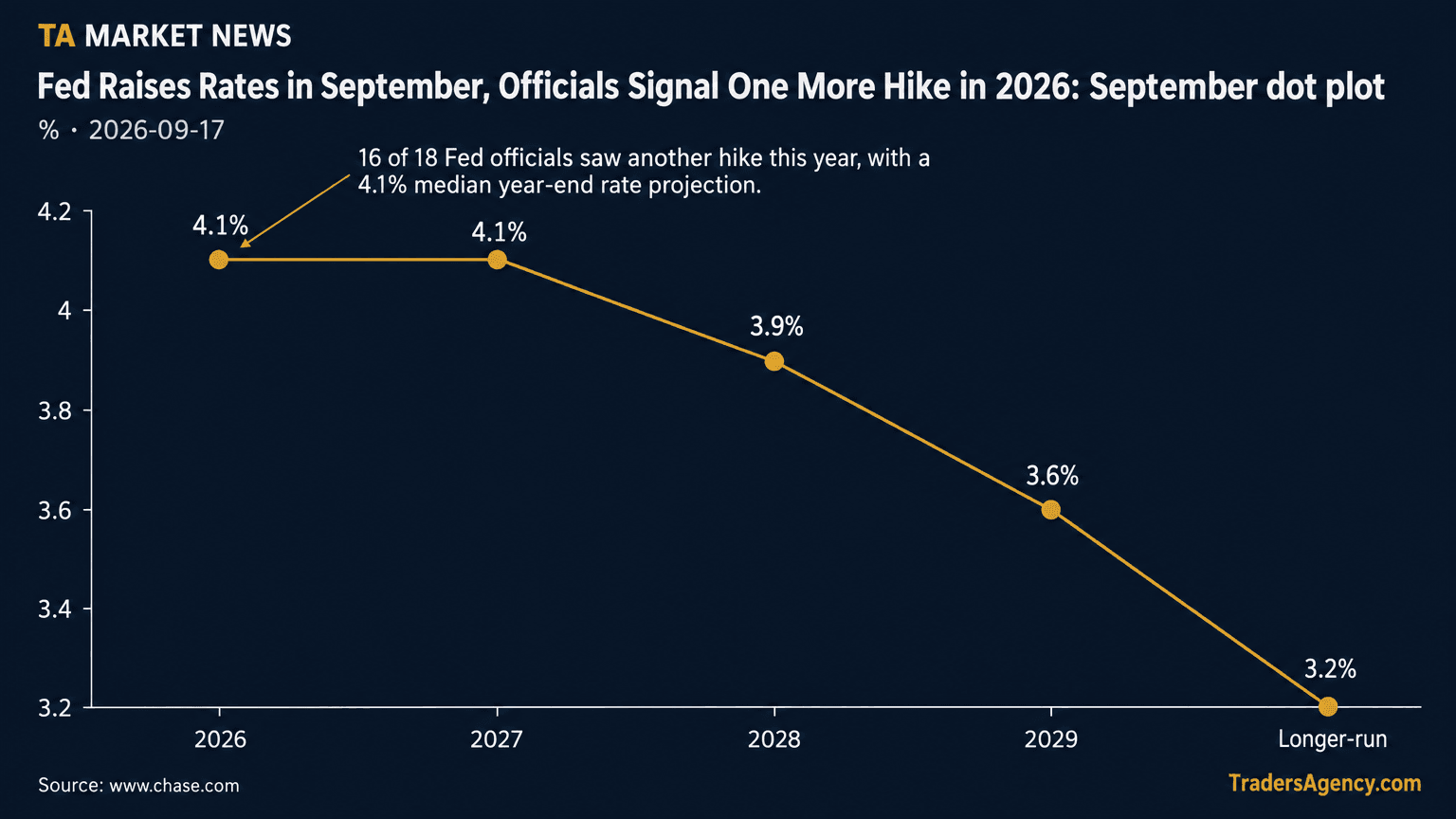
Inflation as measured by CPI has exceeded the Fed's 2% target continuously since March 2021, CNBC reported, noting the gauge had been trending lower early in 2026 before spiking after the U.S. and Israel launched strikes against Iran. The Federal Reserve responded last month by approving its first rate increase in more than three years, a quarter-point move that lifted the federal funds rate to a target range of 3.75%-4% on a unanimous 12-0 vote, according to both CNBC's coverage of the September meeting and CNBC's October CPI report.
At that September meeting, the Fed's dot plot showed 16 of 18 participants expecting another rate increase before year-end, with four of those officials seeing room for two more moves, CNBC reported. According to projections summarized by Chase, the median endpoint for the federal funds rate in 2026 stood at 4.1%, alongside a 4.1% median for 2027, 3.9% for 2028, 3.6% for 2029, and a 3.2% longer-run estimate. Minutes from that meeting, released last week, indicated officials expect to raise rates again before year-end to address inflation that CNBC said has run above target for more than five years.
CNBC's reporting noted that several policymakers have said in recent days they do not see a need to rush into another hike, even as most anticipate one more increase this year. Market pricing described by CNBC expects the Fed to skip its October meeting but hike again in December, with pricing implying at least two further increases in 2027.
New York Fed President John Williams has said consistent 0.2% monthly readings on the Fed's preferred PCE price index would signal inflation is coming down, according to Yahoo Finance's earlier coverage. Fed officials will use the CPI data together with Thursday's producer price index, due from the BLS, to estimate what September PCE inflation is likely to show, per that reporting and CNBC. Economists cited by CNBC in its CPI report and its September Fed-meeting coverage have flagged tariffs and demand tied to the artificial intelligence build-out as additional forces that could keep price pressures elevated, separate from the energy shock.
CNBC's reporting also noted that supply shocks of the kind driving the energy surge are typically treated by policymakers as temporary and are often looked through when setting rates. Even so, Fed officials have expressed concern that a prolonged conflict raises the risk that elevated energy costs become embedded in consumer and business inflation expectations. Ahead of September's hike, Fed Chairman Kevin Warsh said inflation had been "too high... for too long" and that the committee's bar for confidence in a sustained move toward its objective had not been met, according to CNBC's account of his press conference remarks.
Bottom Line
September's CPI report showed both headline and core inflation running hotter than forecast, with energy and gasoline doing much of the work while shelter, used vehicles and apparel also contributed to a broadening price picture that Carson Group's Varghese flagged as the real surprise. Futures markets responded by pulling forward the odds of further Fed tightening, though CNBC noted that several officials have recently said they see no need to rush into another hike even as most expect one more increase this year. Thursday's producer price data will give the Fed one more input before its Oct. 27-28 meeting, where — based on the policy signals described above — officials will have to weigh whether the current inflation run reflects a temporary energy shock or something more persistent.
DISCLAIMER: Traders Agency does not offer financial advice. The information provided is for educational purposes only and should not be considered financial advice. Traders Agency is not responsible for any financial losses or consequences resulting from the use of the information provided. Trading carries inherent risks and may not be suitable for all individuals. You are advised to conduct your own research and seek personalized advice before making any investment decisions, recognizing the potential risks and rewards involved.
- CNBC Top News: CPI inflation report September 2026 · accessed Oct 14, 2026
- www.chase.com: Fed Raises Rates in September, Officials Signal One More Hike in 2026 · accessed Oct 14, 2026
- www.facebook.com: 3.1K views · 77 reactions | Federal Reserve officials expect they will raise interest rates again before the end of the year to head off inflation that has run above target for more than five years, according to meeting minutes released Wednesday. CNBC's Steve Liesman has the latest. Read more: cnb.cx/4zcDCHM | CNBC · accessed Oct 14, 2026
- finance.yahoo.com: Fed rate hike odds surge to 90% on monthly jump in core prices · accessed Oct 14, 2026
- www.cnbc.com: Rates rise to 3.75%-4% · accessed Oct 14, 2026
- polymarket.com: Polymarket · accessed Oct 14, 2026
- www.youtube.com: - YouTube · accessed Oct 14, 2026
- www.cbsnews.com: Fed rate hike in September is all but guaranteed after CPI report, economists say · accessed Oct 14, 2026
See more from Traders Agency on Google
Make us a preferred source and our market analysis will appear more prominently in your Google Search, Top Stories, and AI results.
Add to Preferred Sources