
A sharp defensive rotation is underway as escalating US-Iran tensions, surging oil prices, and rising bond yields are pressuring equities. The expiration of a key US-Iran memorandum of understanding on Monday has injected immediate geopolitical risk into the stock market today. Dow Jones, S&P 500, and Nasdaq futures are all extending losses, and our team is watching these developments closely as they ripple through the major indexes. The reaction shows clear defensive positioning across multiple sectors.
The data we're tracking points to a significant tightening in financial conditions. A combination of rising oil, an AI-driven corporate borrowing spree, and concerns over government debt have lifted bond yields globally. The impacts on equity valuations are showing up in real time.
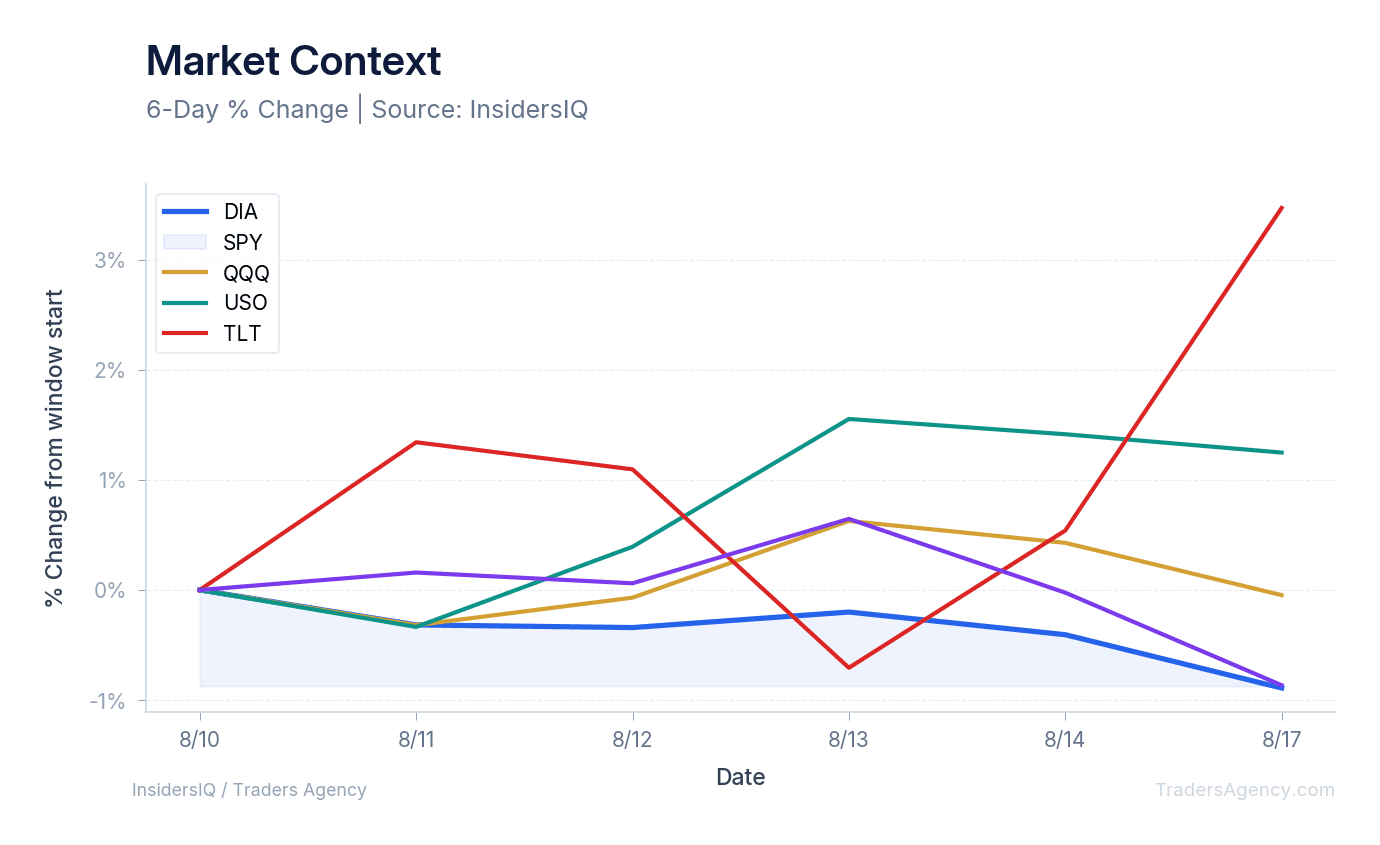
Key Divergence: The DIA (Dow ETF) shows a 10-day price change of -0.89%, while the USO oil fund has climbed +3.47% over the same period. This energy-versus-equities split is the defining characteristic of the current trading environment.
What Is the Dow Jones Doing Today?
The Dow is reacting to rising energy costs and multi-year highs in bond yields. The index reflects a broad defensive rotation, with ten of the eleven primary S&P 500 sectors closing lower on Monday. Energy is the sole outlier, adding 0.87 percent as crude prices spike.
On Tuesday, Dow Jones Industrial Average futures were flat, while S&P 500 futures declined 0.4% and Nasdaq-100 futures retreated 1.1%, leading the major indexes lower after a downbeat start to the trading week. On Monday's close, the Dow fell 272.63 points, or 0.51 percent, to 53,459.78.
The broader market weakness is evident across multiple sectors. Communication services led the laggards by losing 1.47 percent, followed closely by consumer staples, which dropped 1.46 percent. Ongoing volatility continues as these sector rotations play out.
Our team notes that the SPY ETF shows a 10-day price change of -0.05%, indicating that the broader market is struggling to find footing. The lack of participation from communication services and consumer staples creates a challenging environment for index-level gains.
How Are US-Iran Tensions Impacting Oil Prices?
Rising tensions between the US and Iran are directly impacting energy benchmarks and reviving inflation concerns. The expiration of the US-Iran memorandum of understanding on Monday has raised worries about a potential escalation of the conflict. This geopolitical shift is pushing oil to its highest level in over two weeks.
President Trump said he intends to inflict more economic pain on Iran and threatened to "bomb" Oman if it interferes with US plans for the Strait of Hormuz. Brent crude futures hit $91 per barrel, with Brent for October delivery gaining $2.35, or 2.65 percent, to settle at $90.87 on the London ICE Futures Exchange. West Texas Intermediate (WTI) rose to $84 per barrel.
WTI for September delivery added $2.10, or 2.55 percent, to settle at $84.50 on the New York Mercantile Exchange. This energy spike comes at a highly sensitive time for domestic reserves. The US Strategic Petroleum Reserve has plunged to its lowest level since 1982.
Supply Risk: With the Strategic Petroleum Reserve at its lowest level since 1982, the government's ability to stabilize prices through reserve releases is severely limited. The market remains highly exposed to supply shocks in the Middle East.
How Could Treasury Yields Affect Equities?
Surging Treasury yields are likely to pressure equity valuations across the board. The 10-year Treasury yield hit 4.72 percent. The 30-year Treasury yield advanced 5 basis points to 5.31 percent, reaching its highest level since June 2007, a 19-year high. Higher borrowing costs pressure equity valuations.
We're tracking how this tightening in financial conditions affects long-term bonds. The TLT ETF shows a 10-day price change of -0.87%, reflecting the inverse relationship between bond prices and these rising yields. Concerns over growing national debt and an AI-driven corporate borrowing spree are contributing to this yield expansion.
Higher yields offer a risk-free alternative to stocks, which can put pressure on equity valuations. These 19-year highs represent a significant shift in the cost of capital.
Want expert trading insights delivered daily?
Join thousands of traders who rely on Traders Agency for market analysis and trade ideas.
Join Traders AgencyThe Impact of the AI Borrowing Spree
The surge in bond yields is not solely a product of geopolitical tension. An AI-driven corporate borrowing spree is actively contributing to the tightening of financial conditions. Technology companies are securing large amounts of capital to fund artificial intelligence infrastructure.
This corporate debt issuance competes directly with government borrowing. Concerns over growing national debt are already weighing heavily on the bond market. When you combine sovereign debt issuance with a corporate AI borrowing spree, the supply of bonds can overwhelm demand, driving yields higher.
The 10-year Treasury yield hitting 4.72% reflects this dynamic. Rising yields create a challenging environment for the Dow and broader indexes, as higher borrowing costs pressure equity valuations across all sectors.
What Happened on the Stock Market Today?
The action involves a distinct split between struggling broad indexes and outperforming niche sectors. While major averages declined, memory stocks surged against the broader trend. The Roundhill Memory ETF advanced 5.36 percent, driven by strong gains across several specific technology component companies.
Shares of SanDisk, Western Digital, SK Hynix, Micron Technology, and Seagate Technology all recorded gains. The QQQ ETF actually shows a positive 10-day price change of +1.25%, highlighting targeted strength in parts of the technology sector.
On the broader index level, Monday's close saw the S&P 500 sink 40.7 points, or 0.52 percent, to 7,745.06. The Nasdaq Composite Index shed 84.25 points, or 0.32 percent, to 26,644.91. These declines reflect the pressure from rising yields and energy costs.
The disparity between the memory stock breakout and the broader index declines shows that capital is highly selective. Traders are not abandoning equities entirely, but they are rotating rapidly into specific sub-sectors.
Which Earnings Reports Are Moving the Dow Right Now?
Corporate earnings have supported equities so far this reporting season, even as the second-quarter reporting period slows down. We're closely monitoring the retail sector for signs of consumer resilience. Home Depot (HD) is currently trading at $337.88.
The home improvement retailer saw its stock rise 1% before the bell after reporting an improvement in second-quarter sales. Customers leaned toward smaller projects over the summer, providing a bright spot in the retail data. Other companies on deck for earnings include Toll Brothers and Klarna.
Traders are looking ahead to a slate of additional retail earnings this week. Major retailers including Walmart, Target, and Lowe's are scheduled to report quarterly results. These reports may offer insight into whether recent soft consumer data was a one-off or something more significant.
What Should Traders Watch Next in This Market?
Our research team is tracking several specific developments for the rest of the week. Regular trading sessions may heavily feature reactions to these upcoming data points.
1. Energy Benchmark Levels
We're watching Brent crude near the $91 level and WTI near $84.50. The depleted US Strategic Petroleum Reserve means the market is highly exposed to further geopolitical shocks from the US-Iran conflict.
2. Treasury Yield Highs
The 30-year yield at 5.31 percent is a major technical level. Continued elevation could force further defensive positioning and pressure growth stock valuations.
3. Retail Earnings Data
Upcoming reports from Walmart, Target, and Lowe's will provide hard data on consumer spending. Watch how retail components react to these disclosures.
4. Federal Reserve Policy
Investors are looking ahead to the Federal Reserve's next policy decision. The combination of reviving inflation concerns from oil and tightening financial conditions from bond yields will be key factors to monitor.
The Bottom Line
Our team views the current market setup as highly sensitive to geopolitical headlines and bond market volatility. We're keeping a close eye on energy sector strength and upcoming retail earnings to gauge consumer resilience. Traders should maintain strict risk management as these multi-year highs in Treasury yields continue to price into equities.
Our team is focusing on three main signals:
- Oil prices: The price action of WTI and Brent crude near their recent highs.
- Bond yields: The stability of the 30-year Treasury yield at the 5.31 percent level.
- Retail earnings: The upcoming reports from Walmart and Target.
The data we're watching suggests that volatility could remain elevated as the market digests these compounding pressures.
Want expert trading insights delivered daily?
Join thousands of traders who rely on Traders Agency for market analysis and trade ideas.
Join Traders AgencyKey Takeaways
- Ten of eleven S&P 500 sectors closed lower on Monday, with Energy the sole gainer, adding 0.87% as crude prices spiked.
- The DIA (Dow ETF) posted a -0.89% 10-day price change while the USO oil fund gained +3.47% over the same period, marking a clear energy-versus-equities split.
- The 30-year Treasury yield sitting at 5.31% is a key level traders are watching, as multi-year highs in bond yields are actively pressuring equity valuations.
- The expiration of a US-Iran memorandum of understanding on Monday introduced immediate geopolitical risk, contributing to the defensive rotation across major indexes.
- Upcoming retail earnings from Walmart and Target are flagged as the next significant test of consumer resilience in this environment.
DISCLAIMER: Traders Agency does not offer financial advice. The information provided is for educational purposes only and should not be considered financial advice. Traders Agency is not responsible for any financial losses or consequences resulting from the use of the information provided. Trading carries inherent risks and may not be suitable for all individuals. You are advised to conduct your own research and seek personalized advice before making any investment decisions, recognizing the potential risks and rewards involved.
See more from Traders Agency on Google
Make us a preferred source and our market analysis will appear more prominently in your Google Search, Top Stories, and AI results.
Add to Preferred Sources