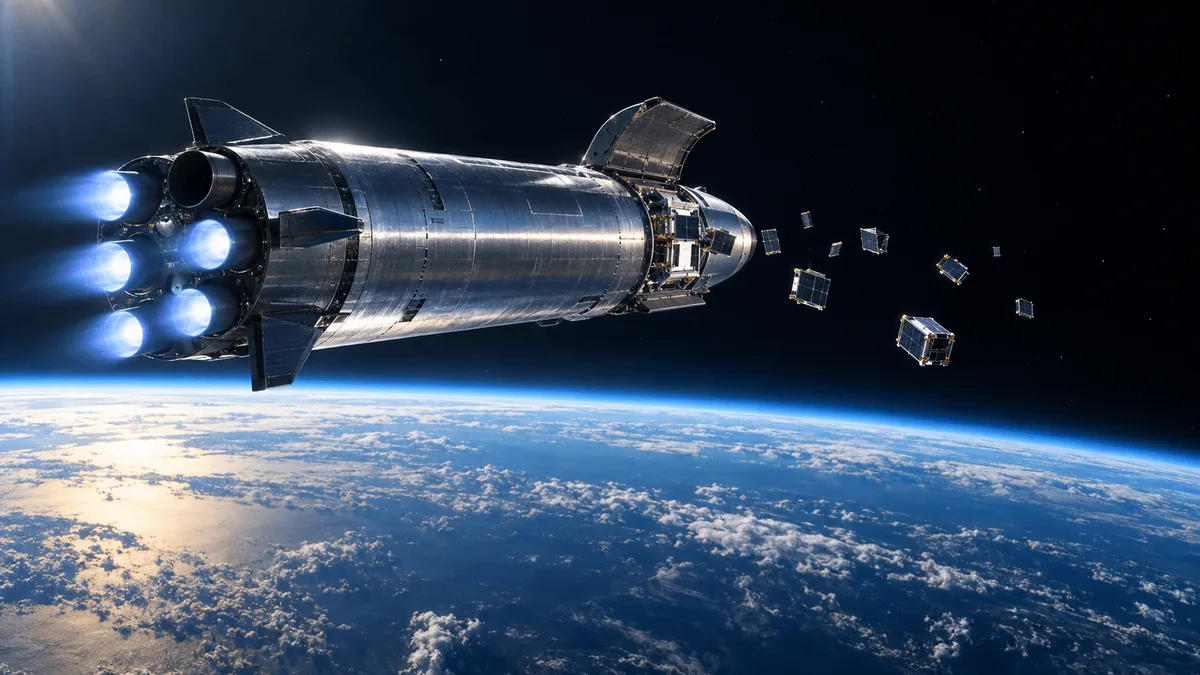
SpaceX's Starship reached orbit for the first time on its 14th test flight, successfully deploying all 26 Starlink V3 satellites it carried before company controllers cut the mission short following a Raptor engine shutdown during ascent, according to SpaceX's own flight summary and reporting from CNBC and MarketWatch.
What Went Wrong During Ascent
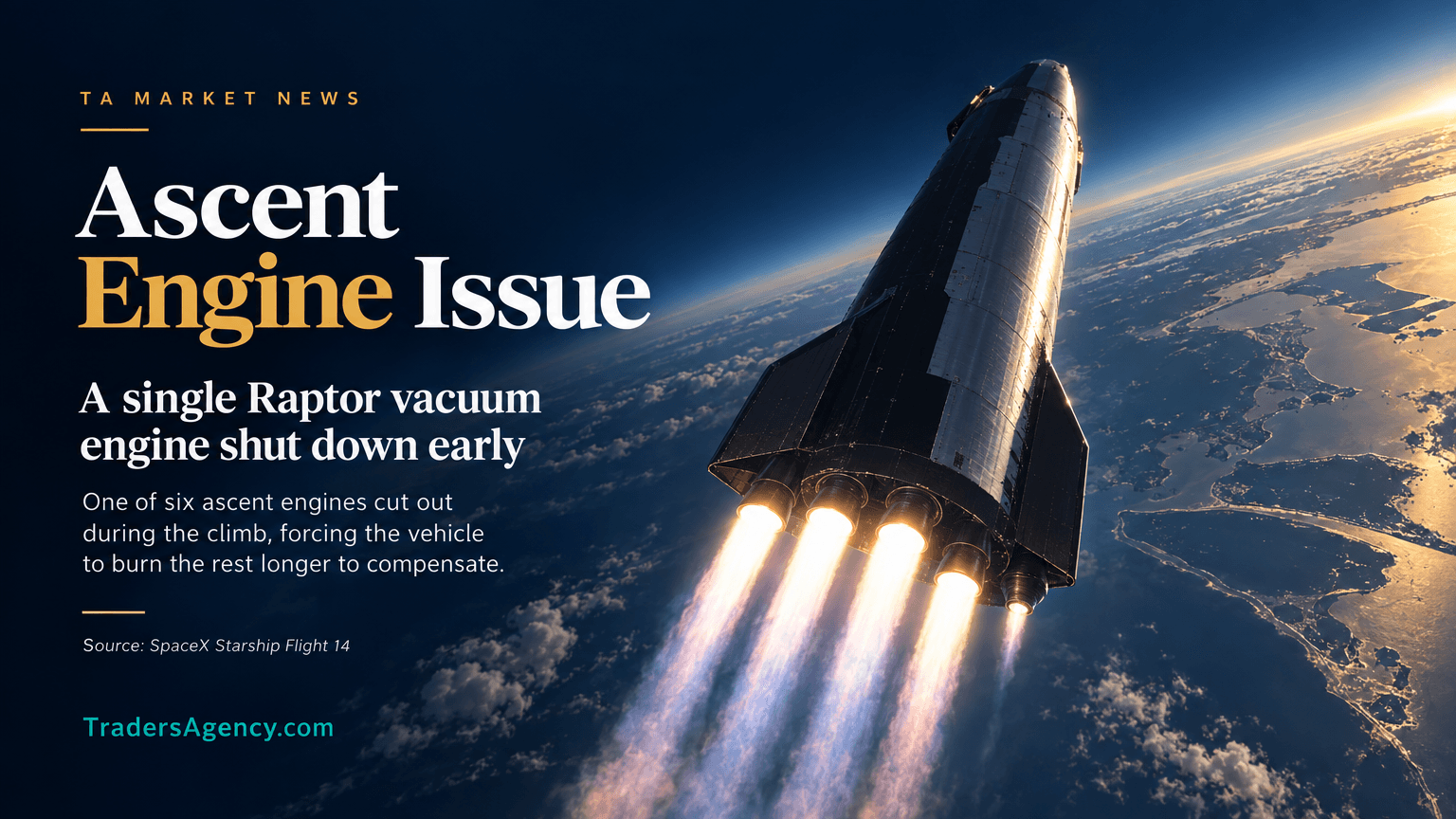
During Starship's ascent burn, a single Raptor vacuum engine shut down early, according to SpaceX. The upper stage compensated by burning its remaining five engines longer than planned, which allowed it to still reach its planned, passively safe suborbital trajectory. MarketWatch reported that SpaceX debated for several minutes whether to attempt orbital insertion at all before deciding to continue.
SpaceX said the flight control team then limited the time Starship spent on orbit "out of an abundance of caution given the engine issue experienced during ascent" and proceeded with deorbiting the vehicle to a splashdown location in the northern Pacific Ocean. The company said that area was one of two pre-coordinated landing zones identified before launch and cleared of sea and air traffic. Pre-flight reporting from CNBC had described the plan as circling the planet multiple times and landing off the coast of Chile.
According to SpaceX's flight summary, the rest of the sequence was completed rather than skipped. Before orbital insertion, controllers assessed the vehicle, determined the three sea-level Raptor engines needed for later burns were healthy and gave a "go" for orbital operations, then reignited a single sea-level engine for the orbit insertion burn. After deployment of the 26 satellites, Starship relit a single sea-level engine for its first-ever deorbit burn, passed through atmospheric reentry and descent, and relit all three sea-level engines for a landing burn and flip maneuver before splashing down on target in the Pacific Ocean.
The Super Heavy booster was not recovered on this flight by design. SpaceX said the boostback maneuver was intentionally designed to burn through the remaining liquid oxygen in the booster's main tank to test the limits of booster performance ahead of future return-to-launch-site missions, and that the booster's flight termination system was triggered upon landing burn shutdown as a demonstration of the safety hardware. CNBC reported that the booster made a "soft splashdown" off the coast of Starbase shortly after liftoff.
Why the Payload Matters
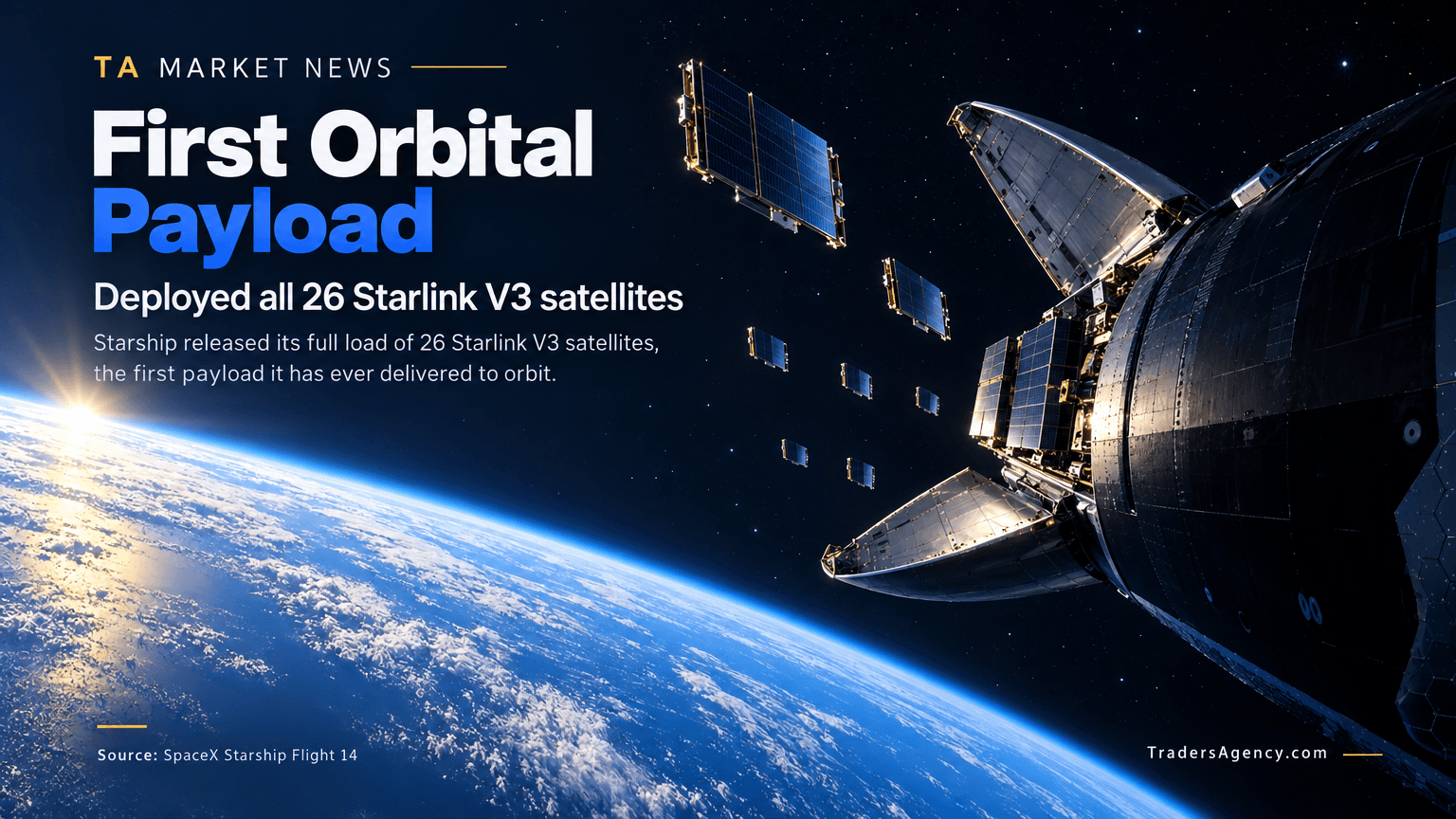
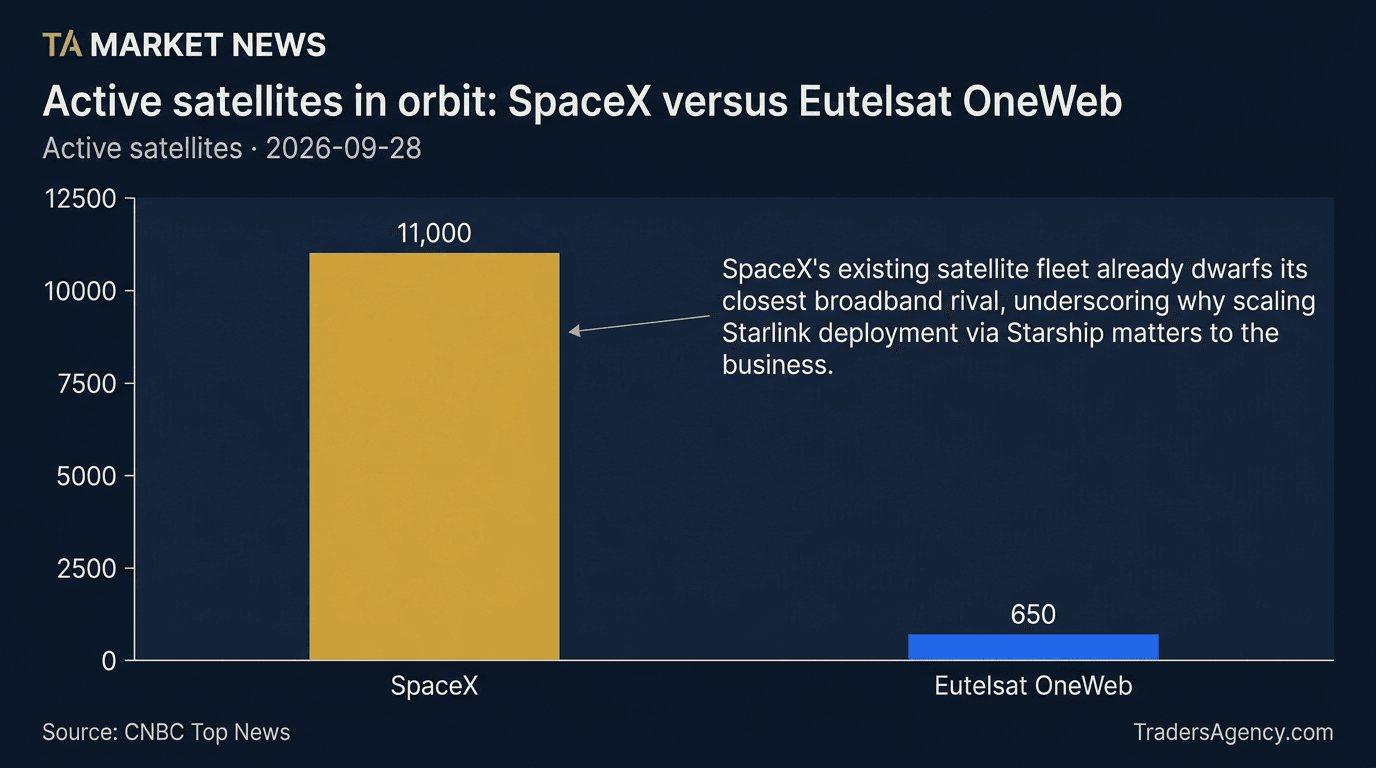
CNBC reported that SpaceX is counting on Starship to scale its Starlink, or Connectivity, business, which was the company's largest and only profitable segment as of the second quarter, and that SpaceX operates around 11,000 active satellites today compared with roughly 650 for competitor Eutelsat OneWeb — a difference of 10,350 satellites, or about 1,592% more (11,000 - 650; (11,000 - 650) / 650 * 100). CNBC also reported that a single Starship can carry 60 Starlink V3 satellites, so Flight 14's 26-satellite load was 34 fewer than that stated capacity, or about 57% below it (26 - 60; (26 - 60) / 60 * 100).
CNBC further reported that SpaceX is preparing Starship for a major NASA test flight next year and intends to use the rocket to bring U.S. astronauts back to the moon's surface, and that COO Gwynne Shotwell said at the All-In Summit that the company plans to launch "AI compute satellites" into orbit in 2027.
Bottom Line: On SpaceX's own account, Flight 14 cleared its headline milestones — first orbit, first payload deployment, first deorbit burn and an on-target Pacific splashdown — while the mission ran shorter than the nearly 10-hour profile MarketWatch reported had initially been planned. Interpreting those facts, the flight establishes the deployment path SpaceX needs for Starlink V3 volume, while the early shutdown of one Raptor vacuum engine during ascent leaves ascent-phase engine performance as the item to watch on subsequent flights. This is analysis of the reported outcome, not a forecast of future flight results.
DISCLAIMER: Traders Agency does not offer financial advice. The information provided is for educational purposes only and should not be considered financial advice. Traders Agency is not responsible for any financial losses or consequences resulting from the use of the information provided. Trading carries inherent risks and may not be suitable for all individuals. You are advised to conduct your own research and seek personalized advice before making any investment decisions, recognizing the potential risks and rewards involved.
- CNBC Top News: SpaceX launches its massive Starship rocket into orbit for first time · accessed Sep 28, 2026
- SpaceX Starship Flight 14: SpaceX - Launches · accessed Sep 29, 2026
- SpaceX Starship Flight 14: Starship Flight 14 · accessed Sep 29, 2026
- MarketWatch Top Stories: SpaceX sends its Starship rocket to orbit for the first time — but not without some hiccups · accessed Sep 29, 2026
- CNBC Top News: SpaceX is poised for a big comeback after recent struggles, says TD Cowen · accessed Sep 29, 2026
- CNBC Top News: Stocks making the biggest moves premarket: Fair Isaac, SpaceX, AMD & more · accessed Sep 29, 2026
See more from Traders Agency on Google
Make us a preferred source and our market analysis will appear more prominently in your Google Search, Top Stories, and AI results.
Add to Preferred Sources