
Hey, Ross here:
xAI stock keeps coming up from traders hunting for a way into Elon Musk's AI ambitions. The real trade isn't where most people are looking. It's not about chasing private shares in an AI company. It's about the one resource every AI buildout needs and nobody has enough of: electricity.
That's the bottleneck. Chip output is scaling at a pace most industries would kill for. Electricity output isn't. When one side of an equation grows exponentially while the other stays flat, you don't need a finance degree to figure out where the pressure builds.
This matters now because the AI buildout is a multi-trillion dollar undertaking. If the grid can't keep up, the companies that solve that problem get paid no matter who ends up "winning" the AI race.
What Is Elon Musk's Real AI Trade?
Bottom Line: The real AI trade is not a single Musk-branded stock. It is the group of power infrastructure companies that fix the gap between fast-growing chip output and flat electricity supply, since that bottleneck pays off no matter which AI company wins.
There's no single ticker with his name on it
There isn't a named "Elon Musk AI stock" in play here. The opportunity isn't tied to one company's brand. It's the group of businesses solving the energy constraint the entire AI buildout runs into.
The logic is simple. Chips are scaling. Power isn't. That gap is the trade. As Musk puts it, "every major investment theme has to do with bottlenecks." When someone with a direct line of sight into the AI buildout tells you exactly where the constraint sits, that's not idle chatter. That's a map.
The quote driving the whole thesis is blunt: "Where are you going to get the energy if you're not in space?" A rhetorical question, sure. Also a warning. If electricity supply can't scale with chip production, something has to give, and the companies plugging that gap become structurally necessary, not optional.
Why Does Power Beat Chips in the AI Trade?
Chips without power are expensive paperweights. It doesn't matter how fast chip output scales if the electricity to run those chips doesn't exist. That's the bottleneck, and it's why the companies solving the power problem matter more right now than the chipmakers themselves.
Here's what makes the thesis investable rather than merely interesting: "these guys, no matter who wins, no matter who does the buildout, are going to get the order."
One sentence, entire thesis. You don't have to guess which AI company comes out on top. You only have to identify who supplies the power infrastructure underneath all of them.
Chip supply is a competitive race between companies. Power supply is a shared constraint every single one of them has to solve. The winners on the power side never have to pick a side in the AI race at all.
How Can Investors Play the AI Power Trade?
No private placements, no insider access required
If you've been searching for how to invest in Elon Musk's AI company hoping to find a clean way to buy shares directly, this trade takes a different route entirely. Instead of chasing the AI company itself, the play is the public companies supplying the power infrastructure the buildout depends on.
That distinction matters. Whether the search is xAI stock, SpaceX AI stock, or one of the other variations floating around, none of it is what's being traded here. This setup is built around two publicly traded, chartable companies tied to the power bottleneck.
That's the appeal. You don't need special access or a phone call with a banker to trade a bottleneck. You need a chart, a support level, and a stop-loss.
Ownership questions miss the point
This trade doesn't hinge on the ownership structure of any single AI company. It hinges on a much simpler, chartable fact: the grid is the constraint, and the companies fixing it get paid regardless of who owns what upstream.
So while is xAI owned by Elon Musk and Elon Musk AI company name are common searches, they aren't the questions this trade answers. The trade answers a different one: who profits when every AI company, regardless of ownership, needs more electricity than currently exists?
Get an entire year of live weekly mentoring sessions, my newsletter, indicators, bonus reports, tons more. Click the link and I'll see you in the next live session.
Join my Black Ops Trading ClubStock One: Powell
The first name in this setup is Powell, ticker PL. The company makes engineered products and systems for integrated power control, which drops it directly in the path of the AI buildout's energy problem.

The price action tells a story of its own.
- Powell roughly quadrupled in about a 9-month period across 2025 and 2026
- It then pulled all the way back from $330 down to $170
- It's now trying to base off the lows after that decline
That's not a modest pullback. That's a stock that ran hard, handed back a large chunk of the move, and is now working to stabilize. This is the setup worth watching closely for entry.

Stock Two: Same Story
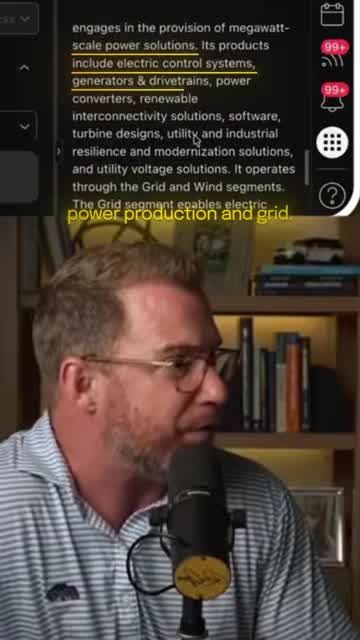
The second name follows a nearly identical script. It makes critical components in power production and grid expansion, including generators and converters, the equipment that has to scale if the grid is going to keep pace with AI's demands.
The pattern mirrors Powell almost exactly: a pullback into the previous base, support found at the same level as last time, a shallow dip that came ripping right back, a couple of pause days, then a push through the highs of the last couple of weeks on good volume.
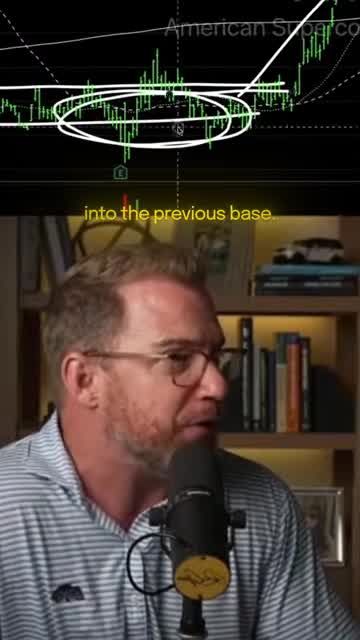
Two different companies. Same underlying bottleneck. Same technical structure.
The Trade Setup
Support levels, failed breakouts, and where the stop goes
1. Find the key support/resistance line
On Powell, after the severe decline from $330 to $170, the stock finally stopped falling and bounced. It found three, four, five, seven days of support at that level. Price then slipped below it, which flipped that level from support into resistance, and the stock has only recently started to emerge above it again.
2. Respect the failed breakout
Powell gapped outside its base, opened up, wasn't ready, and pulled back. That pullback marked the lowest point of the failed attempt. That low is exactly where the stop-loss goes, and that's the defined risk on the trade.
3. Keep risk consistent
For the second stock, same blueprint: enter near the base, respect the support level, and keep total risk at about 10%. In Ross's words, "no sense getting cute with it."
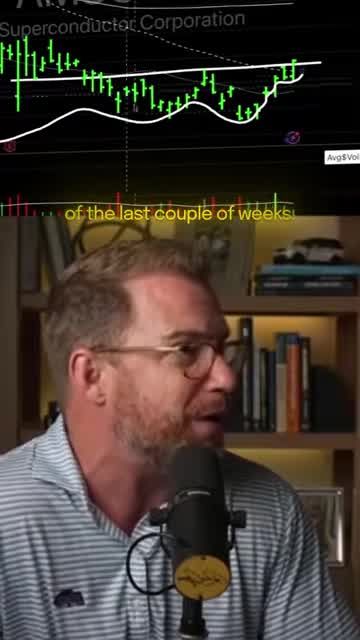
Both setups follow the same sequence: sharp decline, base, bounce off support, breakout attempt. When two companies tied to the same bottleneck print the same technical structure at the same time, that isn't coincidence.
Beyond xAI Stock: The Bottleneck Trade
The interest in xAI stock tells you people want exposure to Musk's AI ambitions. The actual tradable opportunity sits somewhere else: the power infrastructure companies solving the one problem every AI company, chipmaker, and data center operator shares. Not enough electricity.
Chips are scaling exponentially. Power isn't. That gap is the trade.
Powell and the second power-components name aren't bets on who wins the AI race. They're bets on the fact that whoever wins still needs electricity to run the hardware, and that demand doesn't evaporate no matter how the competitive fight between AI companies plays out.
This isn't speculation about a hot AI ticker. It's pattern recognition applied to a bottleneck that isn't going away. You can review Powell's own filings through the SEC's EDGAR database if you want the fundamentals behind the chart.
Frequently Asked Questions
What is Elon Musk's #1 AI stock?
There's no single named ticker tied directly to an Elon Musk AI company in this trade. The opportunity centers on power infrastructure companies benefiting from the AI buildout's electricity bottleneck.
What are the top AI stocks to buy?
This analysis covers two: Powell (ticker PL) and a second company making power production and grid expansion components, including generators and converters.
What AI stock is Elon Musk buying?
No specific AI stock purchase by Musk is identified here. The focus is his comments about the electricity bottleneck facing the AI buildout.
What AI company did Elon Musk invest in?
That detail isn't addressed. The focus is the power infrastructure companies positioned to benefit regardless of which AI company ends up ahead.
Is xAI owned by Elon Musk?
Ownership structure isn't part of this analysis. The trade is built around public power infrastructure stocks, not ownership questions.
How do I invest in Elon Musk's AI company?
Rather than chasing shares in the AI company directly, this trade focuses on publicly traded power infrastructure stocks tied to the energy bottleneck every AI buildout runs into.
Get an entire year of live weekly mentoring sessions, my newsletter, indicators, bonus reports, tons more. Click the link and I'll see you in the next live session.
DISCLAIMER: Traders Agency does not offer financial advice. The information provided is for educational purposes only and should not be considered financial advice. Traders Agency is not responsible for any financial losses or consequences resulting from the use of the information provided. Trading carries inherent risks and may not be suitable for all individuals. You are advised to conduct your own research and seek personalized advice before making any investment decisions, recognizing the potential risks and rewards involved.
See more from Traders Agency on Google
Make us a preferred source and our market analysis will appear more prominently in your Google Search, Top Stories, and AI results.
Add to Preferred Sources