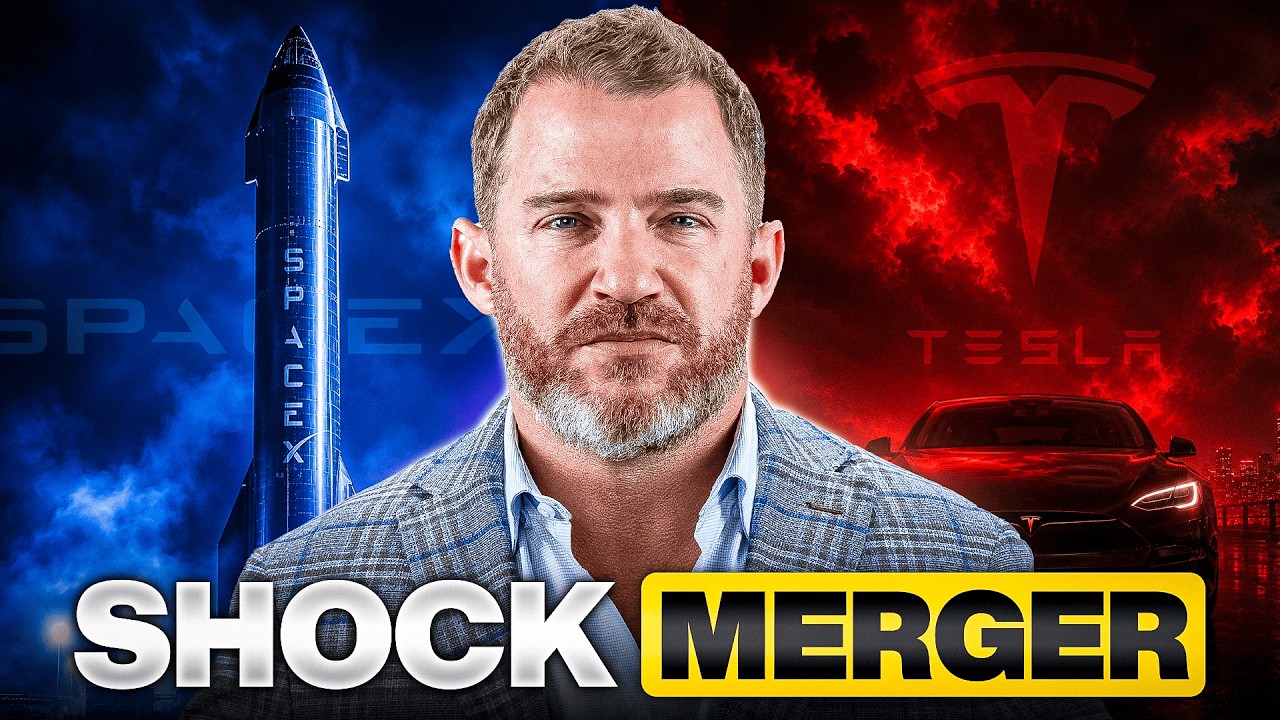
In 14 days, SpaceX is going to pull off the largest IPO in human history. But there is a real chance this will be the last time you ever see it trade as a standalone company.
The SpaceX IPO head fake is setting up to be one of the biggest moves in market history. The real plan puts Elon Musk at the head of the largest company on Earth.
The IPO: June 12, $1.75 Trillion
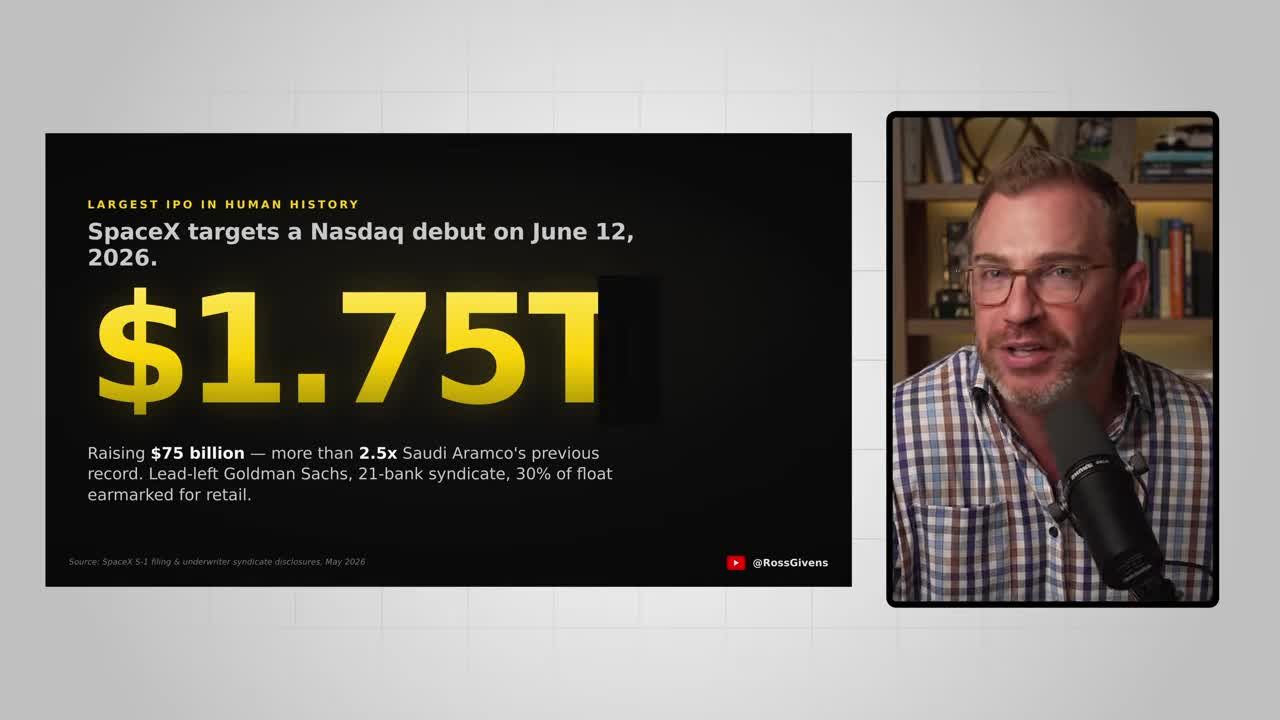
SpaceX stock hits the market on June 12th under the ticker symbol SPCX. The 21-bank syndicate handling the listing assigned a $1.75 trillion valuation, aiming to raise $75 billion in capital. That makes it the largest IPO ever. The capital being raised is more than twice the previous record, and it is still massively oversubscribed.
This stock is going to absolutely rip on day one. But there is an even bigger move coming, one that could make up as much as 8% of the entire NASDAQ index. There is a good chance it happens this year.
How Did Early Investors Get Backdoor Exposure to SpaceX Before the IPO?
Big money has been flooding the space sector for months, and early positioning has paid off.
DXYZ, the ETF holding pre-IPO SpaceX stock, nearly tripled in 48 days. Then there was Filtronic, the small-cap radio component supplier I flagged last month. It doubled in under a week.
The trend is real. And the bigger story is just getting started.
Is the SpaceX IPO a Head Fake for a Bigger Merger Move?
Why the IPO is just the opening move
Earlier this week on the All-In podcast, Chamath Palihapitiya laid out the real roadmap. As one of the most plugged-in venture capitalists in Silicon Valley, he made a reasonable case for a SpaceX valuation of two trillion dollars.
He also said the IPO itself is probably a head fake. If Chamath is right, the SpaceX IPO head fake is just the opening act before a much larger restructuring of Elon's empire.
His prediction is clear. By the end of 2026 or mid-2027 at the latest, SpaceX gets rolled into Tesla. One stock. One company. The Berkshire Hathaway of the modern century. He even has a name for it: Elon Corp. And it could soon make up as much as 8% of your retirement portfolio.
Why Are Analysts Making a $2 Trillion Case for SpaceX?
Most people are valuing SpaceX based on Starlink subscribers and Falcon 9 launches. SpaceX did $18.7 billion in revenue in 2025. Starlink alone did $11.4 billion of that and posted a $4.5 billion operating profit.
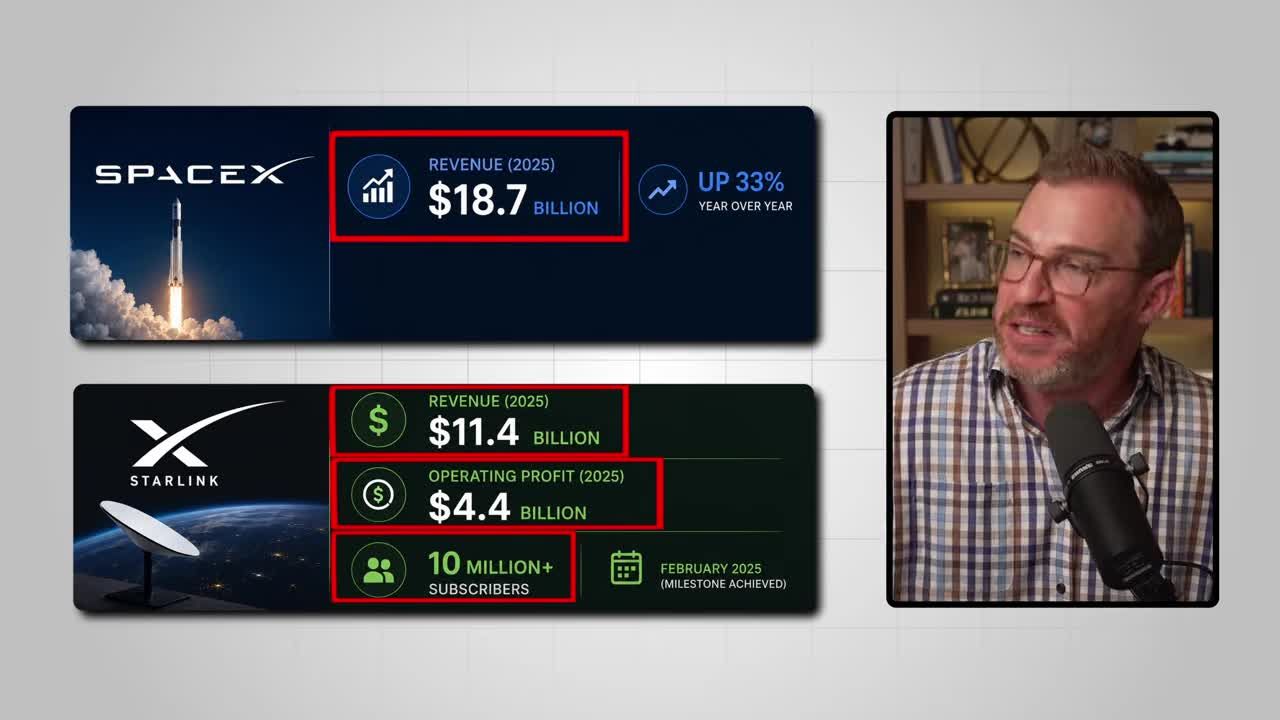
Starlink cleared 10 million subscribers in February of this year. Chamath figures revenue will hit $25 to $30 billion this year, $45 billion next year, and around $90 billion by 2028. That is a 5x growth over the next three years.
At a 20 times revenue multiple, the math points straight to two trillion dollars.
Elon's $180 Million Bet
He sold PayPal in 2002 and walked away with $180 million after taxes. He invested all of it. Every dollar.
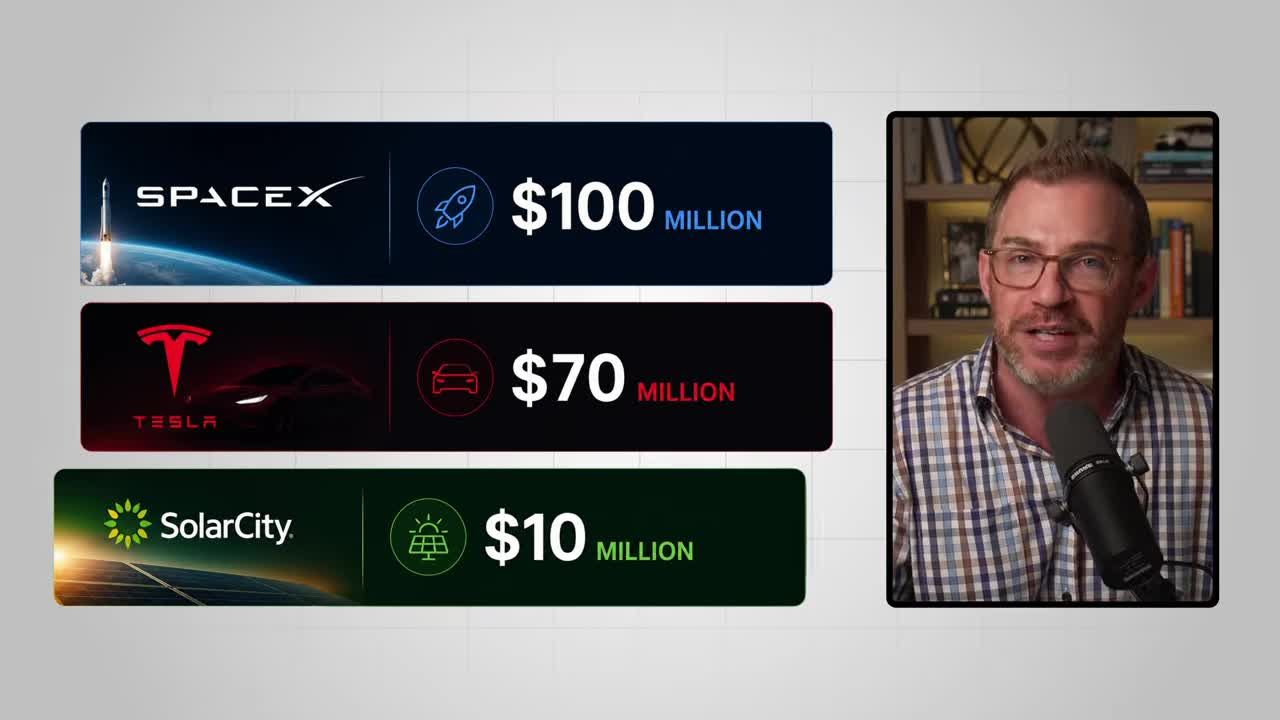
$100 million into SpaceX. $70 million into Tesla. The final $10 million into SolarCity. He went all in to the point where he had to borrow money from friends to pay rent in 2008.
The results are hard to even comprehend.
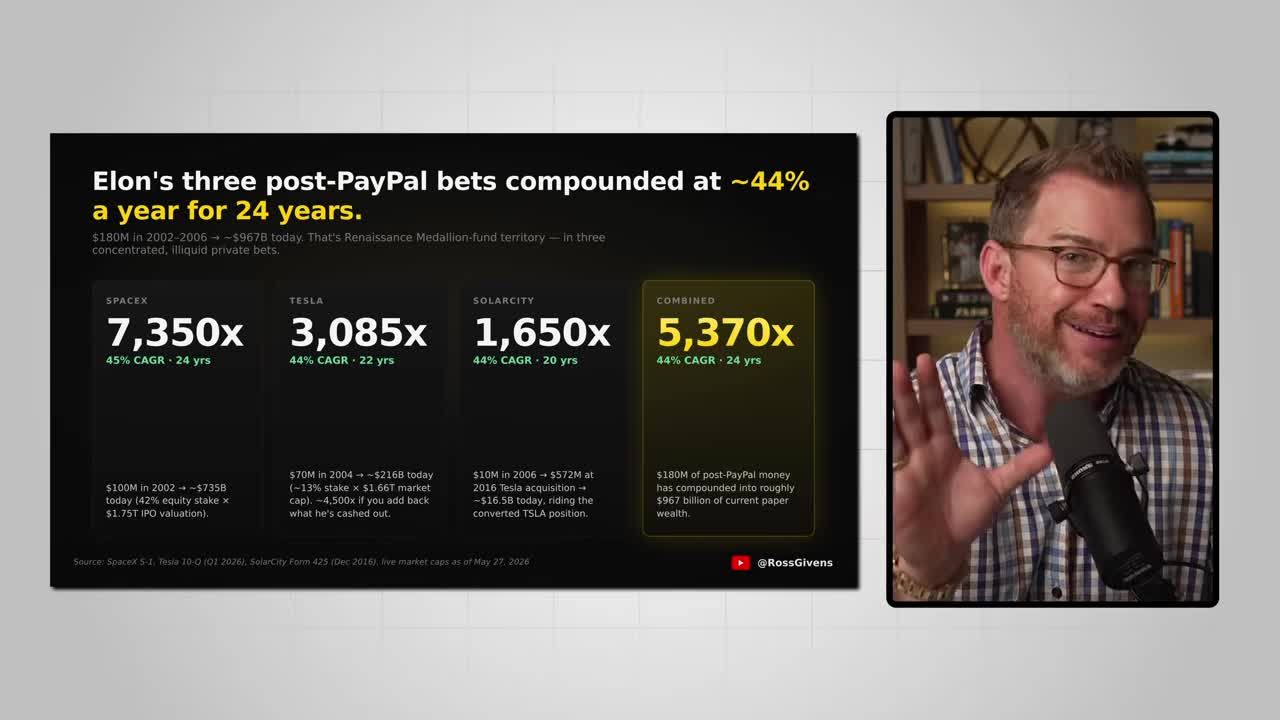
Based on his current equity stakes (and ignoring the $39 billion he sold over the years for Twitter and personal use), his actual returns are even higher. Here is the math:
- SpaceX: His $100 million is now a 42% stake at a $1.75 trillion valuation. That is a 7,350-fold return, a 735,000% return, compounding at 45% per year for 24 years straight.
- Tesla: His 13% stake in the $1.6 trillion company represents a 3,000-fold return. Add back what he cashed out and it is a 4,500-fold return, a 44% compound annual growth rate.
- SolarCity: His $10 million was worth $572 million when he sold it in 2016. Rolled into Tesla, it is worth $16.5 billion today.
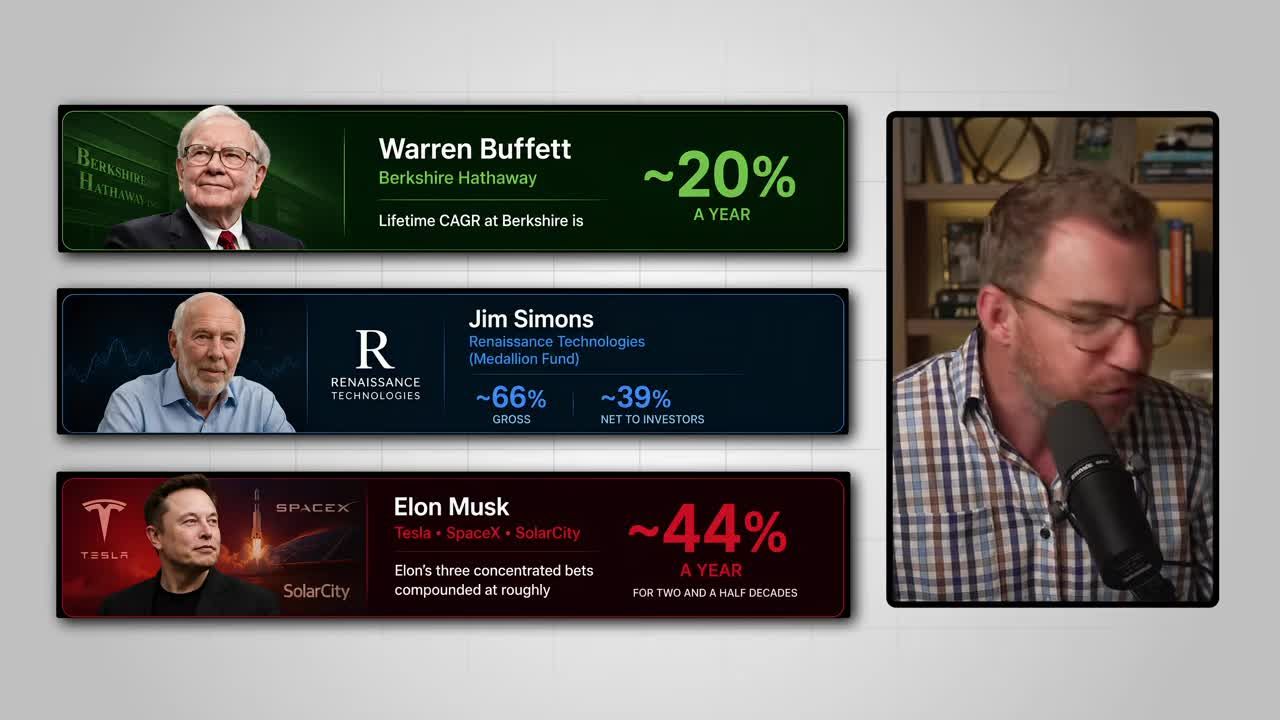
For context, Warren Buffett's lifetime compound annual growth rate at Berkshire is 20%. The only person with higher returns is Jim Simons at Renaissance Medallion Fund, a massive quant operation with hundreds of PhD mathematicians that generated 66% gross returns. Elon's three concentrated bets generated 44% a year for two and a half decades across three illiquid private companies with one CEO running all of them.
For the last 25 years, the best place you could have put your money is in the hands of Elon Musk. Think what you want about the guy. He is the greatest value creator who has ever lived. He belongs at the head of the largest company in the world.
Get an entire year of live weekly mentoring sessions, my newsletter, indicators, bonus reports, tons more. Click the link and I'll see you in the next live session.
Join my Black Ops Trading ClubAlready One Ecosystem
Why a SpaceX-Tesla merger makes perfect sense
These companies already operate like one company. Merging them gets rid of overhead, lets capital flow freely between divisions, and drops every dollar of cost savings straight to the bottom line.
The operational integration is already happening:
- Terraab: In March, Tesla, SpaceX, and xAI announced a joint $25 billion chip manufacturing facility going up right next to Giga Texas in Austin. The AI5 and AI chips will run Tesla vehicles and Optimus robots. The D3 chips will be space-hardened processors for SpaceX orbital satellites. Same fabrication, same engineers, same supply chain.
- Energy and Data: SpaceX and xAI have already bought hundreds of millions of dollars worth of Tesla Mega Packs to power their data centers.
- Connectivity: Starlink is going to be the connectivity backbone for Tesla's robo-taxi network and all over-the-air full self-driving updates.
- Robotics: Optimus, Tesla's humanoid robot, is being designed in part to assemble Starship vehicles and eventually build out the Mars colony.
These are not three separate companies. This is one ecosystem with three boards and three sets of lawyers stapled to it.
Will Regulators Block It?
Anytime you talk about a multi-trillion dollar merger, the first question is whether regulators will cry monopoly. In this case, they do not have a case.
Tesla and SpaceX operate in completely different markets with almost zero customer or product overlap. Tesla makes cars, batteries, solar panels, humanoid robots, and AI training compute. SpaceX makes rockets and satellite internet.
Legal experts told CNBC this week that a SpaceX-Tesla merger likely would not trigger antitrust issues given the different industries.
Compare that to AT&T trying to buy T-Mobile in 2011. Same industry, same customers. Blocked. Visa trying to buy Plaid in 2020. Same payment rails. Blocked. Those mergers would have eliminated direct competition between two players in the same market. A SpaceX-Tesla deal does not do that. It vertically integrates two complementary businesses. The Department of Justice would not have a leg to stand on.
8% of the NASDAQ
What forced passive buying means for Elon Corp
Tesla is sitting at a $1.66 trillion market cap today. SpaceX prices day one at $1.75 trillion. Add those together and you get a $3.41 trillion day one valuation.
If Chamath is right and SpaceX trades up to two trillion (historically, big IPOs gap 30 to 50% higher the first month), the combined Elon Corp could be worth $3.6, $3.7, maybe $4 trillion. That is bigger than Apple. Bigger than Microsoft. The only company bigger today is Nvidia, and it would be close.
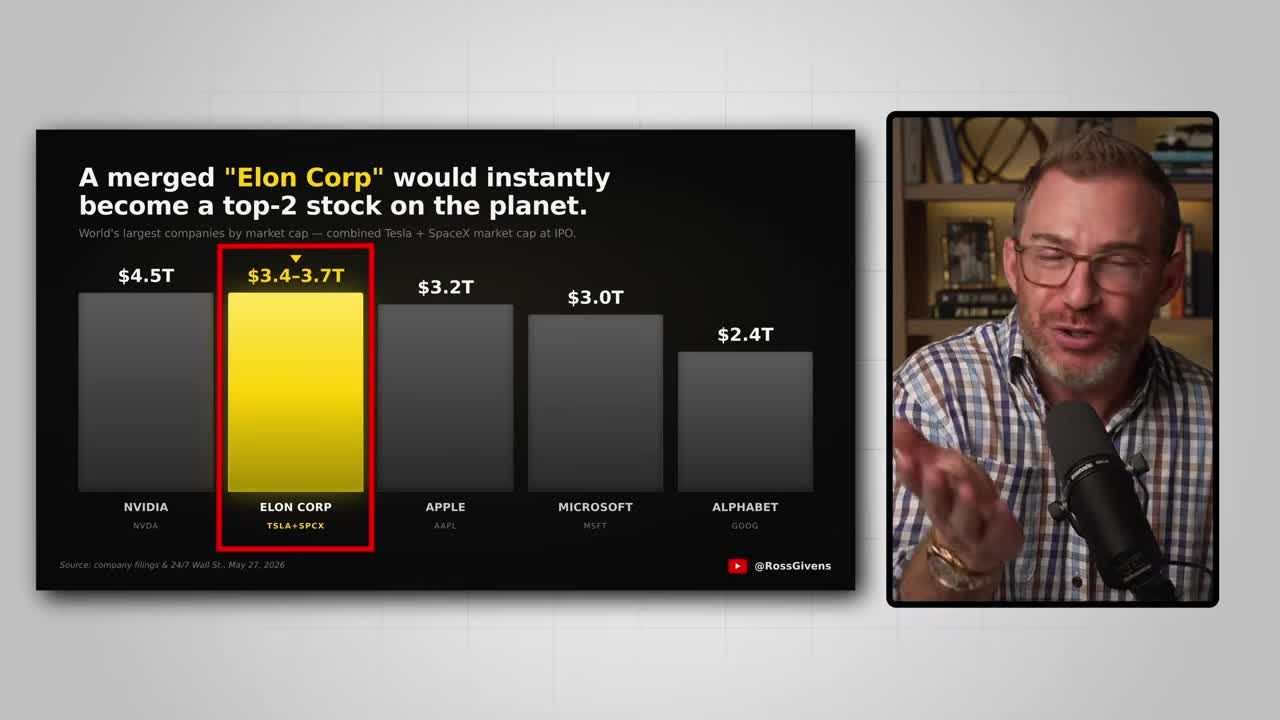
This would instantly become arguably the most important stock on planet Earth. And there is another benefit if you are a shareholder.
A $3.4 trillion Elon Corp would be roughly 5% of the S&P 500, putting it in the top three alongside Nvidia and Apple. For the NASDAQ 100, the math is even bigger. The NASDAQ 100 being just 100 stocks is more concentrated than the S&P's 500. A merged Elon Corporation would represent 7.5 to 8% of the index.
That means for every single dollar that flows into a NASDAQ 100 index fund (through 401ks, IRAs, pensions, the whole deal), eight cents gets routed straight into Elon Corp stock. Perpetual, steady, consistent buying support.
We are talking about $500 to $700 billion of forced passive buying that gets routed into this stock the moment the merger closes and the indexes rebalance. That is just how the indexes work.
The Bigger Picture
None of this is guaranteed. The merger might happen by year-end. It might slip to 2027. The structure might be different. Elon could change his mind tomorrow. But the strategic logic is already in place, and the operational integration is already happening. Terraab. Mega Packs. Starlink on robo-taxis. Optimus building Starships.
Every quarter these three companies look more like one company. Understanding the SpaceX IPO head fake is the key to seeing where this is all headed.
If you own Tesla today and that merger happens, you wake up holding a piece of the most diversified, vertically integrated technology empire on the planet. Cars, robots, rockets, satellites, solar, energy storage, AI, and Mars colonization, all trading under one ticker.
It is the closest thing this generation will see to a Berkshire Hathaway. Except instead of owning insurance companies and candy bars, it owns rockets and robots. And just like Berkshire, the moat keeps getting wider every single year.
Get an entire year of live weekly mentoring sessions, my newsletter, indicators, bonus reports, tons more. Click the link and I'll see you in the next live session.
Key Takeaways
- SpaceX is set to debut on the Nasdaq under ticker SPCX on June 12 at a $1.75 trillion valuation, raising $75 billion through a 21-bank syndicate, making it the largest IPO in history by a wide margin.
- The offering is massively oversubscribed, and SpaceX could represent as much as 8% of the entire Nasdaq index once included, a weighting that would force passive funds to buy regardless of price.
- DXYZ, the pre-IPO SpaceX ETF, nearly tripled in 48 days as institutional money flooded the space sector ahead of the listing, with Filtronic doubling in under a week as a secondary play.
- The IPO is framed as a setup for a larger Tesla-SpaceX merger, with Elon Musk reportedly holding $180 million in personal bridge exposure that only pays off if the combined entity clears a specific valuation threshold.
- A Tesla-SpaceX merger would create a single ticker covering cars, humanoid robots, rockets, satellites, solar, energy storage, AI, and Mars infrastructure, described as the most vertically integrated technology empire ever assembled.
DISCLAIMER: Traders Agency does not offer financial advice. The information provided is for educational purposes only and should not be considered financial advice. Traders Agency is not responsible for any financial losses or consequences resulting from the use of the information provided. Trading carries inherent risks and may not be suitable for all individuals. You are advised to conduct your own research and seek personalized advice before making any investment decisions, recognizing the potential risks and rewards involved.
See more from Traders Agency on Google
Make us a preferred source and our market analysis will appear more prominently in your Google Search, Top Stories, and AI results.
Add to Preferred Sources