
Indonesia's stock market suffered its steepest one-day fall in nearly three decades on October 16, 2026, after index provider MSCI said the country's continued classification as an emerging market is "no longer appropriate" and laid out a plan to reclassify it to "standalone" status, a category excluded from MSCI's emerging and frontier index products, which are tracked by passive funds and used as benchmarks by other fund managers, according to The Straits Times. MSCI's flagship emerging markets index contains 1,200 companies with a combined market capitalisation of more than US$10 trillion, Channel NewsAsia reported.
The Jakarta Composite Index collapsed 8 percent at the open, triggering a 30-minute trading halt, before resuming and closing down 11.57 percent in its biggest single-day drop since January 1998, according to the Straits Times. Channel NewsAsia reported the index was down 11.1 percent when trading resumed and sitting at its lowest level since 2020, while TradingEconomics put the decline at 10.8 percent, or 660 points, to around 5,200 — a six-year low. Liza Camelia Suryanata, head of research at stockbroker Kiwoom Sekuritas Indonesia, said of the halt that "it's the first time this has ever happened in my 20 years in the stock market," the Straits Times reported. Bloomberg, in a summary posted to its Facebook account, characterized the episode at one point as the country's worst two-day stock market rout in nearly three decades.
What MSCI Cited

MSCI said in an October 16 statement that "significant concerns remain around market dysfunction" in Indonesia, judging that even a downgrade to "frontier" status would not reflect the severity of the problems and proposing the deeper "standalone" category instead, according to the Straits Times. The cited concerns center on market transparency, concentrated share ownership and insider trading rather than a published checklist of free-float technicalities, per TradingEconomics. Indonesian equities had already been frozen in MSCI's indexes since January 2026, when the provider first flagged opacity in ownership and trading behavior and threatened a frontier downgrade, the Straits Times reported.
MSCI says reclassification to standalone status may occur where there is severe deterioration in market accessibility or in size and liquidity, with Argentina the most recent precedent, the Straits Times reported. If Indonesia were downgraded, it would become the largest economy in MSCI's standalone group, according to the same report.
Which Stocks Drove the Fall
Selling was broad across sectors, with all major sectors recording steep losses led by basic materials, energy, financials and infrastructure, per TradingEconomics. Bank Central Asia fell 14.81 percent, Bank Rakyat Indonesia dropped 14.84 percent, Bank Mandiri slid 14.82 percent and Telekomunikasi Indonesia lost 14.80 percent on the day, according to TradingEconomics market data. Bank Negara Indonesia declined 12.90 percent and Astra International fell 12.34 percent in the same dataset. TradingEconomics separately reported that Telkom Indonesia fell 11.7 percent, Astra International 9.6 percent and Jasa Marga 14.8 percent, with the country's four largest banks tumbling between 8.5 and 14 percent. The two sets of figures are not reconciled in the source material and appear to capture different points in the session rather than a single confirmed closing print, so they should be read as directional.
Jakarta's Response
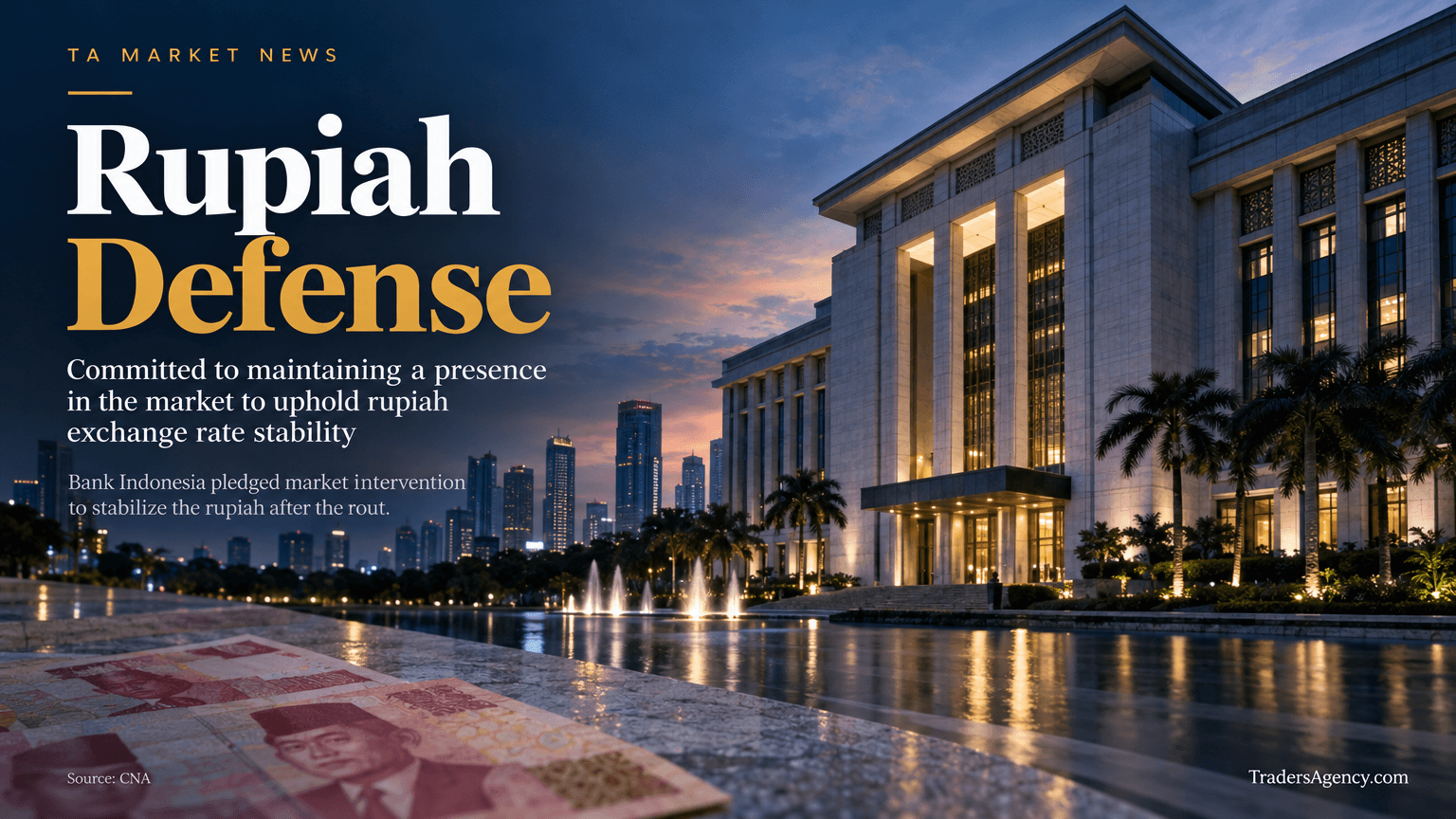
Bank Indonesia said it is "committed to maintaining a presence in the market to uphold rupiah exchange rate stability in line with its fundamentals," according to CNA. Erwin Gunawan Hutapea, the central bank's head of monetary management and securities, said the bank would act to stabilize the rupiah, which CNA reported had already fallen around 8 percent this year to a record low; the central bank's next monetary policy meeting was due the following Wednesday.
Hours after the MSCI announcement, Indonesia's Financial Services Authority (OJK) disclosed fines of millions of dollars against market participants over trading violations tied to three listed firms, Dian Swastatika Sentosa, Barito Renewables Energy and Petrindo Jaya Kreasi, the Straits Times reported. OJK official Hasan Fawzi said investors allegedly conducted "planned and structured" price manipulation of Dian Swastatika's shares, and that IPO shares in Barito Renewables and Petrindo were allegedly steered from the outset to parties linked to controlling shareholders, concentrating ownership. The regulator separately said it was "carefully reviewing and paying serious attention to MSCI's assessment," per TradingEconomics.
Indonesia's senior economic minister, Airlangga Hartarto, said there was "a big question mark" over why MSCI had not raised the standalone downgrade during a meeting in Bangkok earlier in the week, speaking ahead of a gathering of top officials — including the finance minister and the central bank governor — convened to discuss MSCI's announcement, according to CNA and the Straits Times. The Indonesia Stock Exchange said it has taken concrete steps to enhance transparency and integrity in the country's capital market, with chief executive Jeffrey Hendrik saying he would request further clarification on the basis for MSCI's announcement, CNA reported. The office of Finance Minister Suahasil Nazara, who chairs the country's financial stability board, did not reply to a Straits Times request for comment.
Outflow Estimates and Analyst Views
Brokerages have sketched a wide range of potential capital flight. UBS estimated a removal by MSCI could trigger about $4 billion in passive outflows, with active investors adding a further $15 billion, according to the Straits Times. Goldman Sachs separately estimated withdrawals of up to $13 billion, per TradingEconomics. Indonesian equities have lost more than $350 billion in market capitalization since January 2026, with about $60 billion wiped out on October 16 alone, the Straits Times reported, and foreign investors had already net-sold $4.7 billion of Indonesian stocks this year before the latest rout.
Angus Mackintosh, an ASEAN specialist at Aletheia Capital in Singapore, said the move did not reflect the health of the vast majority of listed companies or the Indonesian economy, adding that "grouping Indonesia with Lebanon, Palestine, and Argentina does not make sense," CNA reported. The Straits Times reported that he called the proposal "a wake-up call for Indonesia" and said "the only way for Indonesia to remedy this situation would be to impose severe sanctions and fines on those involved in concerted share manipulation," noting Indonesia has already increased free-float requirements for listed firms. Tan Altundag, investment manager for emerging equities at Pictet Asset Management, said the proposal "highlights MSCI's dissatisfaction with the pace of reforms and raises further questions about the investability of the market" and that "the investment implications could be significant," according to the Straits Times; Altundag has no holdings in Indonesia.
The Straits Times noted the downgrade threat compounds a difficult 2026 for Indonesia, during which Moody's and Fitch both cut their sovereign rating outlooks to negative, citing reduced policymaking credibility.
Timeline Ahead
MSCI said it will run a consultation with market participants on the proposed standalone reclassification until April 2027, then proceed unless it finds clear evidence of improved market governance and function, according to the Straits Times. The Indonesia Stock Exchange emphasized that the October 16 announcement "does not constitute a final decision" and that input will be accepted through April 30, 2027, per CNA. TradingEconomics reported that MSCI's final decision is due by June 30, 2027, with any downgrade planned to take effect in mid-2027.
Bottom Line
MSCI's proposal is not a final decision. The index provider is accepting input until April 30, 2027, with a final determination due by June 30, 2027, leaving Jakarta roughly six months of consultation in which to address the ownership-concentration and trading-transparency concerns it cited. The interpretation that follows is ours: the scale of the one-day rout, broker outflow estimates running into the billions of dollars, and a sovereign rating backdrop already trending negative after the Moody's and Fitch outlook cuts suggest many investors are not waiting for that clarity. Whether Indonesian authorities produce the kind of enforcement action Mackintosh argues is necessary, rather than rule changes alone, is likely to determine whether the standalone threat becomes reality by mid-2027.
DISCLAIMER: Traders Agency does not offer financial advice. The information provided is for educational purposes only and should not be considered financial advice. Traders Agency is not responsible for any financial losses or consequences resulting from the use of the information provided. Trading carries inherent risks and may not be suitable for all individuals. You are advised to conduct your own research and seek personalized advice before making any investment decisions, recognizing the potential risks and rewards involved.
- CNA: Indonesian stocks dive 11% as MSCI weighs market reclassification · accessed Oct 16, 2026
- www.google.com: Indonesian Shares Suffer Biggest Daily Drop Since 1998 · accessed Oct 16, 2026
- www.google.com: 221K views · 1.6K reactions | An MSCI warning of a possible downgrade in Indonesia triggered what was at one point the country’s worst two-day stock market rout in nearly three decades. Indonesian policymakers are now rushing to shore up confidence and avert losing emerging-market status bloom.bg/49MclC8 | Bloomberg · accessed Oct 16, 2026
- www.google.com: ‘Crisis of Confidence’ Grips Indonesia Stocks After MSCI Warning · accessed Oct 16, 2026
- www.google.com: - YouTube · accessed Oct 16, 2026
- www.google.com: Indonesia Stock Market (JCI) - Quote - Chart - Historical Data - News · accessed Oct 16, 2026
- www.google.com: MSCI to remove Indonesia from global indexes · accessed Oct 16, 2026
- finance.yahoo.com: MSCI Announces Third Quarter 2026 Earnings Call Details · accessed Oct 16, 2026
See more from Traders Agency on Google
Make us a preferred source and our market analysis will appear more prominently in your Google Search, Top Stories, and AI results.
Add to Preferred Sources