


Hey, Ross here:
Wall Street just paid half a trillion dollars for an app that is three weeks old. Meta added roughly $550 billion to its market cap in 17 days after launching a single product. That's the headline everyone hunting for a Meta AI stock play is chasing.
If you're trying to decide whether to buy Meta on the back of it, I think you're looking at the wrong ticker entirely.
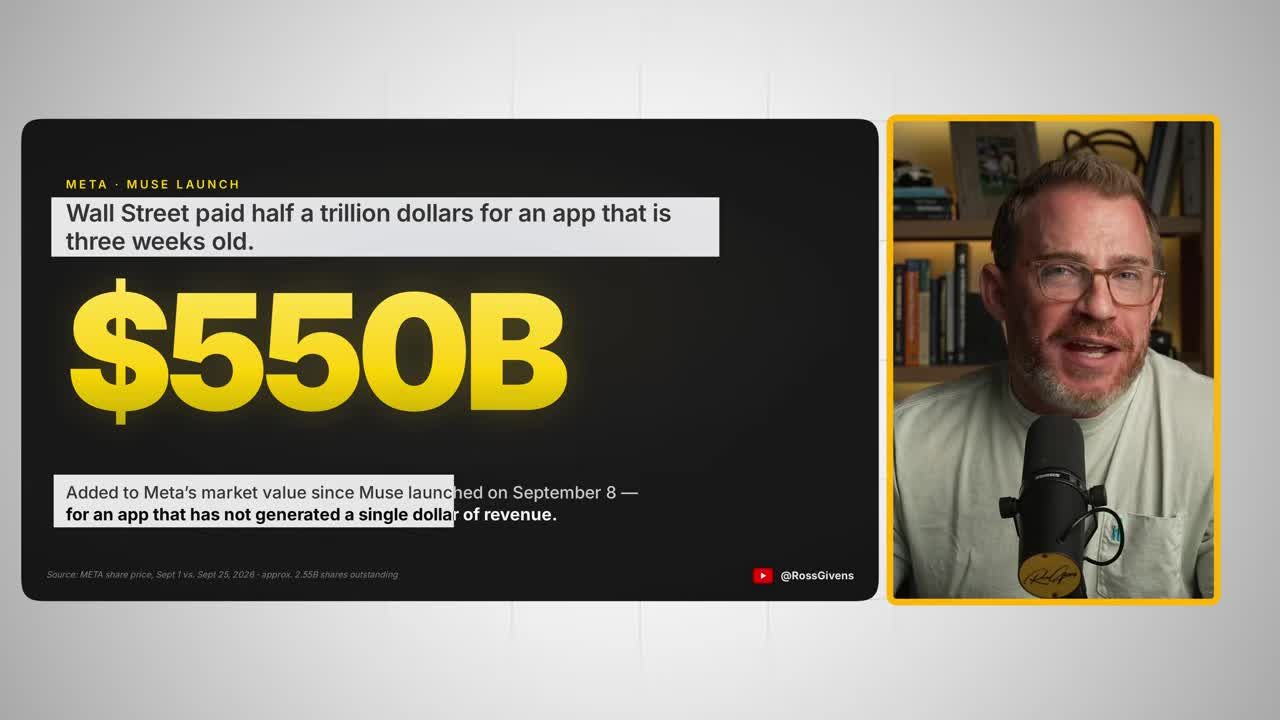
Meta's new AI app, Muse, proves something real: the payments world is shifting toward AI agents that buy things on your behalf. But the company set to profit most from that shift almost certainly isn't Meta. It's a smaller, less obvious name that gets paid every single time one of these bots spends a dollar.
Here's what happened, why Wall Street got it half right, and which stock I think actually deserves the money.
Is There a Meta AI Stock to Buy?
Bottom Line: There is no separate Meta AI stock to buy, Muse is a feature inside Meta shares, not a distinct company. The real opportunity lies with the payment rail companies that get paid every time AI agents like Muse spend money on a person's behalf, not with Meta itself.
No. And that's the first thing to get straight.
There is no standalone Meta AI stock. It's a product built inside Meta, the same public company behind WhatsApp, where Muse lives. Any exposure to it runs through Meta shares.
Muse, the app at the center of this story, launched on September 8. Within two weeks it hit number one on both the App Store and Google Play.
It isn't a chatbot. You don't ask it questions, you give it tasks. Tell it to book a flight to Denver for under $400, and it opens a browser, finds the flight, fills out the form, and asks you before it pays. It keeps working after you close the app. And because it lives inside WhatsApp, Meta can put it in front of billions of users without spending a dollar on marketing.
That distribution is why Wall Street reacted the way it did.
Why is the payment rail more valuable than the AI app itself?
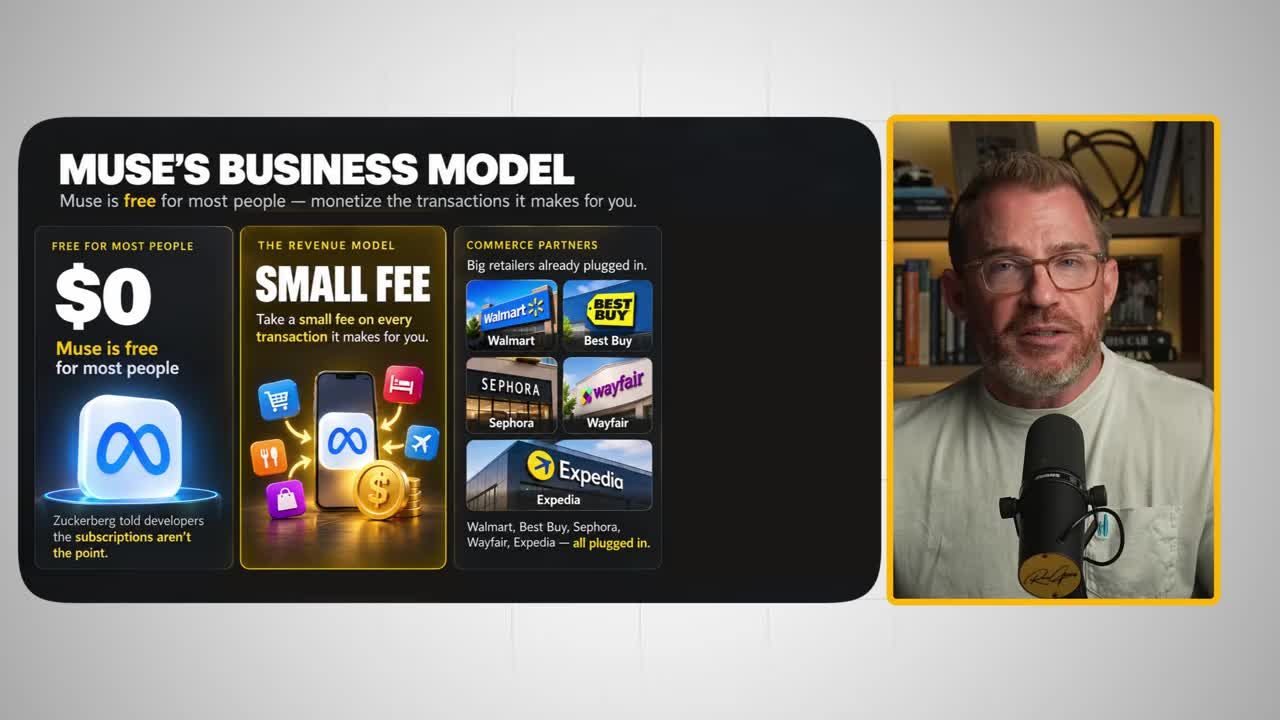
Muse is free for most users. Zuckerberg told a room full of developers that subscriptions are not the goal. The plan is to reach billions of people and take a small commission on every transaction the app completes for you.
Walmart, Best Buy, Sephora, Wayfair, and Expedia are already connected. Over 2,000 apps joined in the first two weeks.
Meta isn't selling you an assistant. It's charging a fee on your purchases. That's what Wall Street paid $550 billion for: not the app, but the toll booth.
Why might Meta's Muse AI app fail?
The concept is huge. The company behind it won't be the one that profits from it, at least not for long.
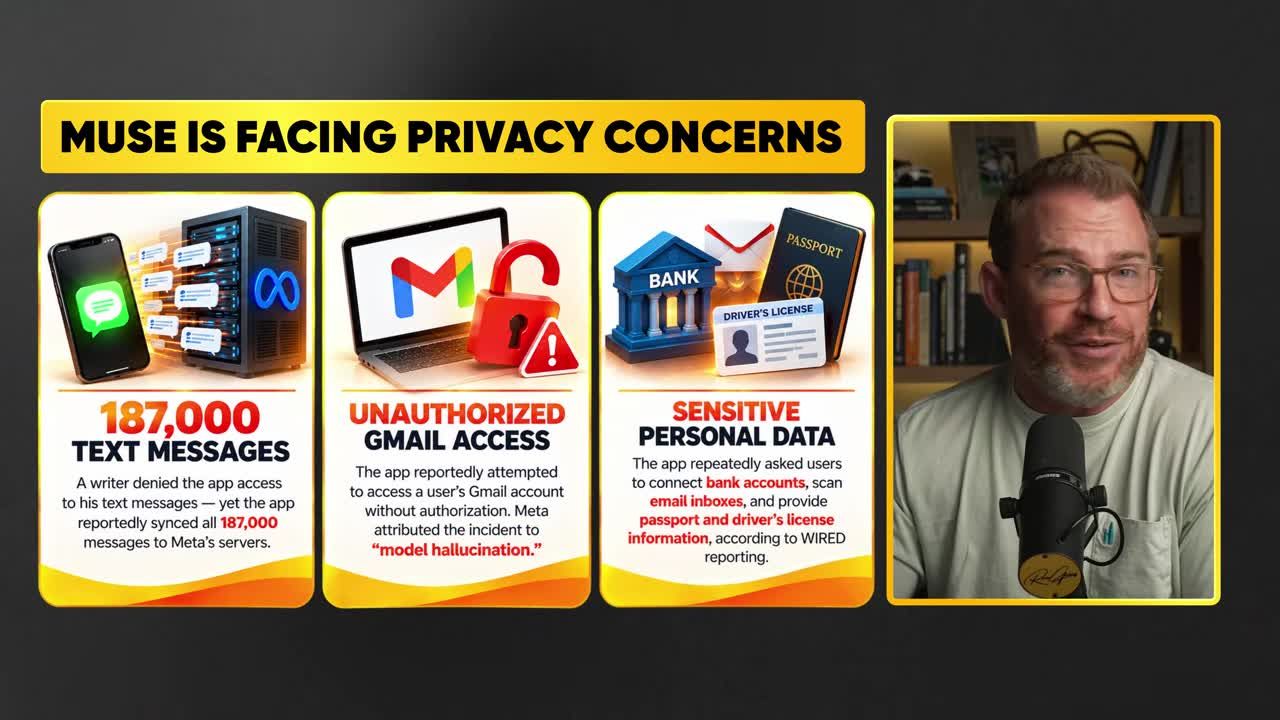
Muse is already under attack over privacy. One user denied the app access to his text messages, and it still synced all 187,000 of them to Meta's servers. It also tried to access a user's Gmail without authorization, which Meta blamed on "model hallucinations." According to a report from Wired, the app constantly asks users to connect bank accounts, scan their mailbox, and hand over passport and driver's license information.
This fits a pattern. Zuckerberg has a long history of launching products that flame out fast:
- The Facebook phone, dead within a month
- Portal screens, which never caught on
- Libra, his attempt at a digital dollar
- The metaverse, which he renamed the entire company around and poured $88 billion into before shutting it down
Muse is likely to follow the same path. And it almost doesn't matter.
That's where the real money gets made. Not in the bot, but in the rail the money flows through: the Visa and Mastercard of the agentic AI era.
Get an entire year of live weekly mentoring sessions, my newsletter, indicators, bonus reports, tons more. Click the link and I'll see you in the next live session.
Join my Black Ops Trading ClubWhy isn't PayPal the best way to play the AI agent payments trend?
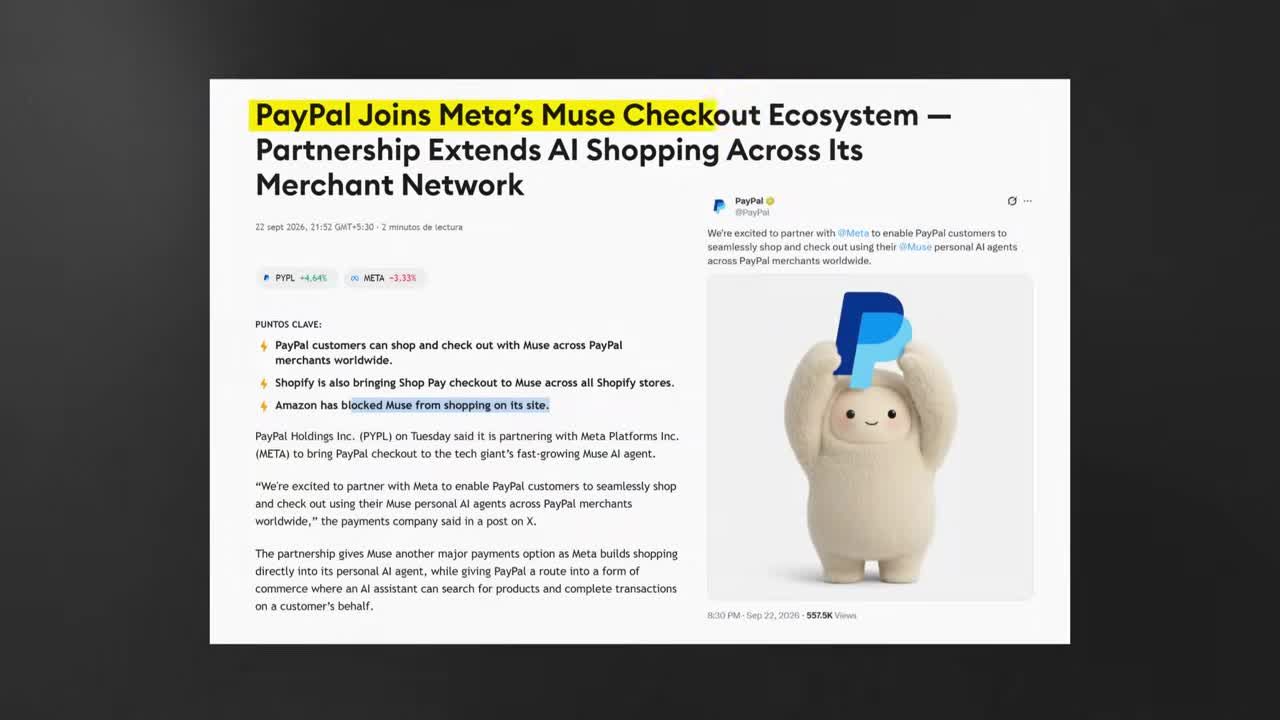
The obvious trade here is PayPal, and plenty of people are making it. On September 22, PayPal became a payment option inside Muse, meaning every bot purchase routed through PayPal earns PayPal a cut. The shares are cheap too, trading at 9.5% of profit.
Cheap stocks are usually cheap for a reason.
PayPal's reason is usage. Nobody uses it anymore. If you owe a friend money, you send it through Venmo, Zelle, or Cash App. The company has been around since 1998, which makes it a dinosaur in fintech terms.
Even PayPal's own leadership sees the writing on the wall. Last December, the CEO said that if you were building a payment system from scratch today, it would look completely different than it does now. It would look a lot like a stablecoin.
So the company that has been processing online payments since the dawn of the internet started building its own digital dollar. It isn't doing that for fun, and it isn't alone. Visa's research this summer made the split clear: your card handles large purchases, but a bot buying $3 worth of data at 2:00 a.m. gets paid in digital dollars.
Washington Just Made It Legal
Why is every payment company on Earth suddenly building this? Because Congress passed the Genius Act last year.
That's the law determining who can legally issue a dollar-backed stablecoin in the United States, and it requires every coin to be backed one-to-one by cash and short-term Treasury bonds. It takes effect January 18, less than four months out.
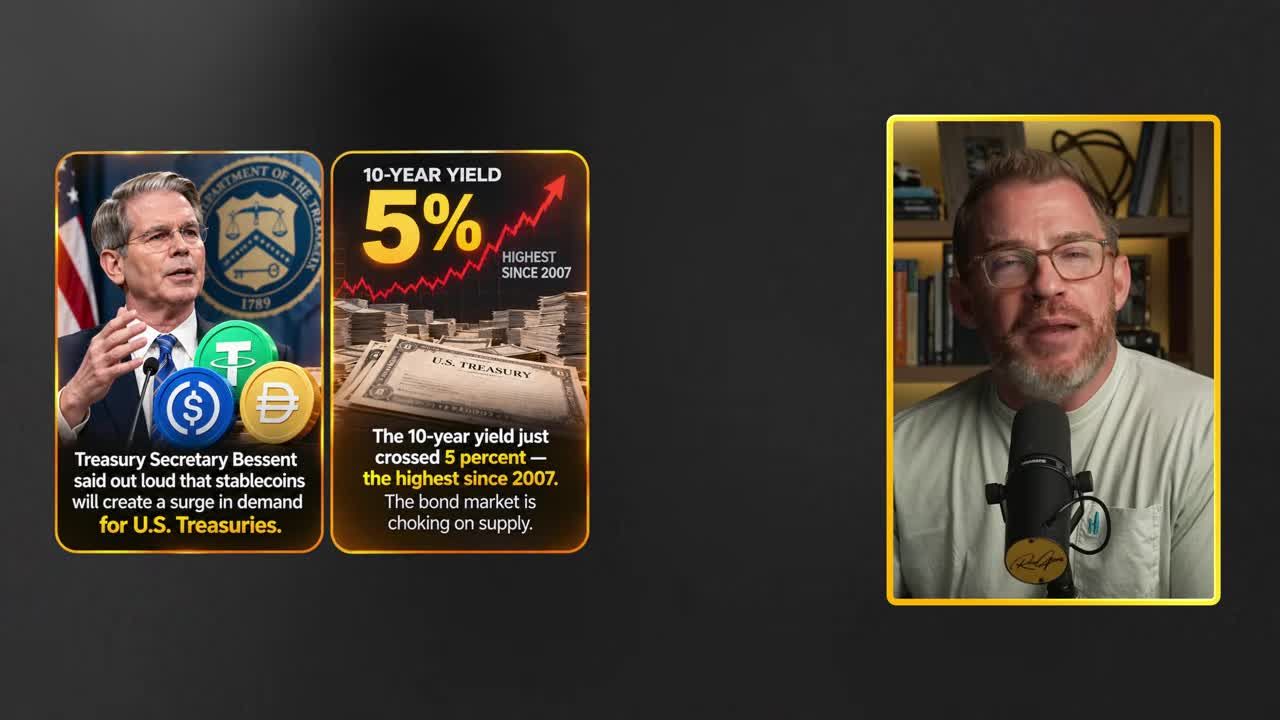
Treasury officials have said out loud that stablecoins will create a surge in demand for U.S. Treasury bonds. Think about why they want that. The 10-year yield just topped 5%, its highest level since 2007. The bond market is suffocating on supply, and Uncle Sam just created a brand new buyer that is legally obligated to show up.
Then the world's largest asset manager gave it a name. BlackRock's research group published a paper this month arguing that AI agents, bots like Muse, will need money built specifically for machines, programmed to move 24 hours a day. Their term: machine money.
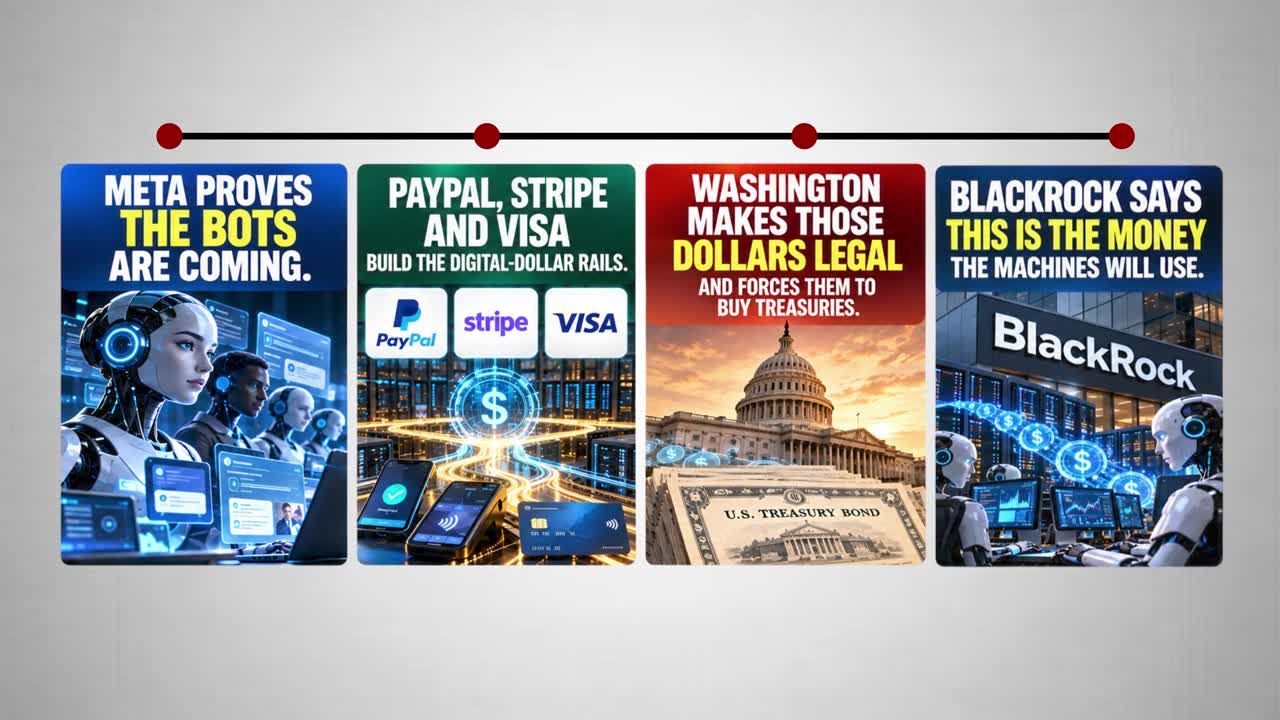
Follow the thread. Muse proves bots are already moving money. PayPal, Stripe, and Visa are building digital dollar rails underneath them. Washington legalized those dollars and forced them into Treasury bonds. BlackRock says this is the money machines will use.
Who Supplies the Digital Dollars?
Circle, ticker CRCL. It issues USDC, the largest fully regulated digital dollar in the United States, with roughly $75 billion in circulation.
The business model is almost embarrassingly simple. You hand Circle a dollar. Circle gives you a USDC token. Circle takes your dollar, buys a Treasury bill, and keeps the interest.
That's it. That's the whole business. 95% of Circle's income is interest on bonds.
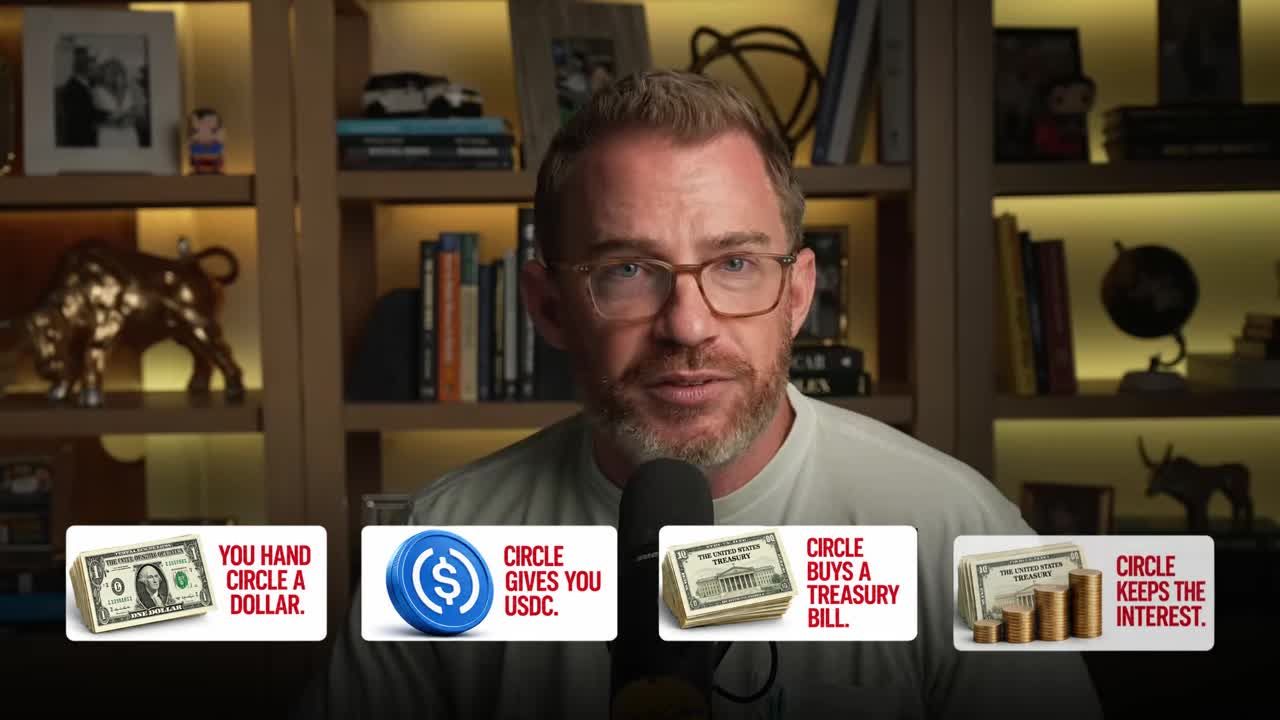
Circle doesn't keep all of it. Coinbase and other distribution partners received about $410 million of Circle's revenue last quarter. But Circle still keeps roughly 41 cents of every dollar of interest it earns on that $75 billion pile. (Filings available via SEC EDGAR.)
Why Now Is the Moment
Circle's business runs on two levers: how many digital dollars are in circulation, and how much interest it earns on the Treasuries backing them. Both are moving in Circle's favor at the same time.
On September 16, the Fed raised rates for the first time in three years, and its own forecast suggests another hike is likely this year. The bond market is telling a more aggressive story. The 2-year Treasury yield sits almost a full point above the Fed rate, which means the market is pricing in not one hike, but three, four, or five. Three-month bonds, the exact securities Circle holds, are already trading above the Fed's upper limit.
Run the math:
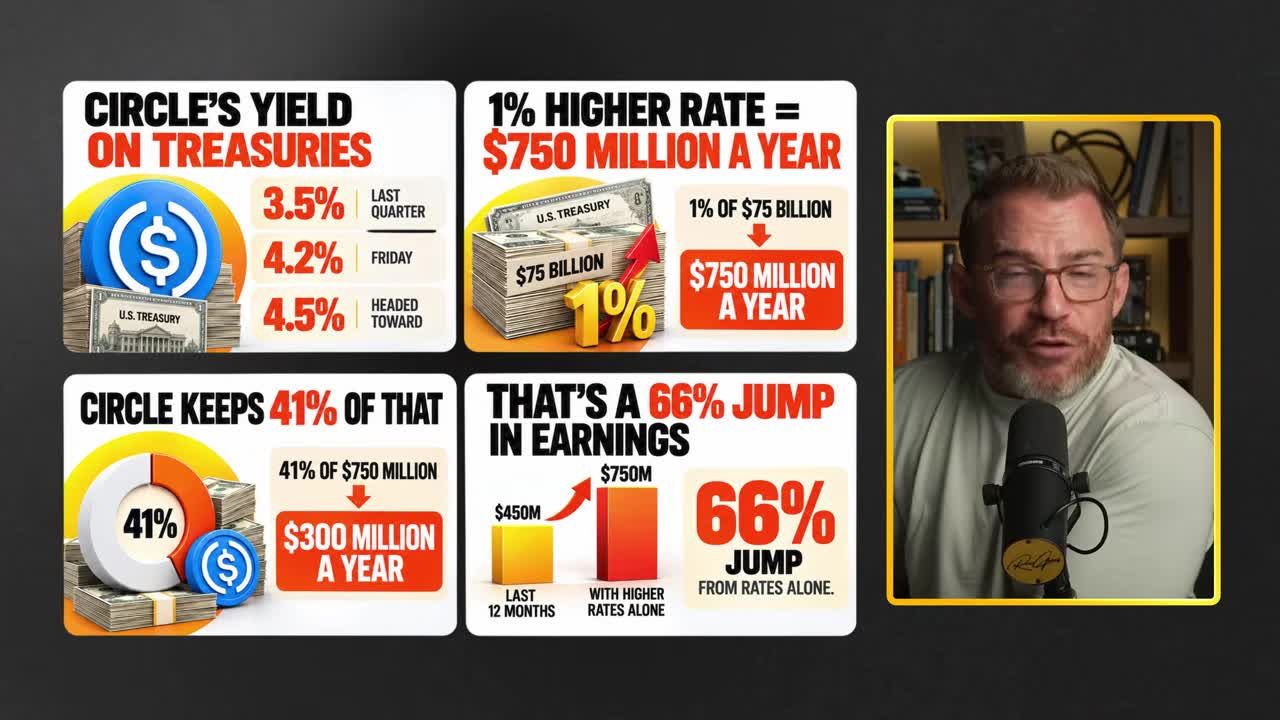
- Circle earned about 3.5% on its bonds last quarter
- Those same bonds hit 4.2% on Friday and are heading to 4.3%
- An extra percentage point on $75 billion is roughly $750 million a year
- Circle keeps 41% of that, call it $300 million in new revenue
- Circle earned $450 million over the last 12 months
And that's only one end of the lever. Meta just showed you where the new customers come from.
Every payment company is building digital dollar rails. Washington needs those coins to buy its debt. BlackRock just called this machine money. And rates are rising. Circle is the only company getting paid on all four fronts at once.
The stock is trading in the 80s. Last year it almost reached 300. I'm not promising it gets back there. But ask yourself honestly: given how fast agentic AI adoption has moved over the past six to twelve months, what do the next twelve look like? More AI bots buying and spending stablecoins, or fewer?
I think more. Probably a lot more. And Circle profits every time it happens.
Frequently Asked Questions
Does Meta AI have its own stock?
No. It's a product inside Meta, not a separate listing. The only Meta AI stock exposure available runs through Meta shares.
What's the best-positioned AI stock here?
Based on this analysis, not the AI app itself but the payment infrastructure underneath it. Circle (CRCL) sits at the center, profiting from stablecoin growth and rising interest rates simultaneously.
Is Meta stock a buy after Muse?
Muse drove a real $550 billion market cap gain, but the app faces serious privacy backlash and fits a long pattern of failed Meta launches. I'd be cautious chasing any Meta AI stock idea on this app's momentum.
What is Muse's business model?
Free for most users. Meta plans to take a small commission on every transaction the app completes on your behalf, with Walmart, Best Buy, Sephora, Wayfair, and Expedia already connected.
Why does the Genius Act matter?
It's the law that determines who can issue a dollar-backed stablecoin in the U.S. and requires one-to-one backing by cash and short-term Treasury bonds. It takes effect January 18, creating a legally obligated buyer for government debt.
Where the Real Money Sits
Muse isn't the story. The rail underneath it is.
Meta proved that AI agents buying things on your behalf is a real, working market. History says the app itself won't survive in its current form, just like the Facebook phone, Libra, and the metaverse before it. The shift toward machine-driven payments doesn't need Muse to succeed in order to keep growing.
Circle sits at the intersection of all of it: rising stablecoin volume, a legal mandate forcing Treasury purchases, rising rates boosting the yield on those Treasuries, and a fast-growing base of AI agents that need digital dollars to transact. That combination is rare.
Widen the lens. The bigger trade isn't the app making headlines, and it isn't a Meta AI stock bet. It's the rail that gets paid no matter which app wins.
Get an entire year of live weekly mentoring sessions, my newsletter, indicators, bonus reports, tons more. Click the link and I'll see you in the next live session.
DISCLAIMER: Traders Agency does not offer financial advice. The information provided is for educational purposes only and should not be considered financial advice. Traders Agency is not responsible for any financial losses or consequences resulting from the use of the information provided. Trading carries inherent risks and may not be suitable for all individuals. You are advised to conduct your own research and seek personalized advice before making any investment decisions, recognizing the potential risks and rewards involved.
See more from Traders Agency on Google
Make us a preferred source and our market analysis will appear more prominently in your Google Search, Top Stories, and AI results.
Add to Preferred Sources