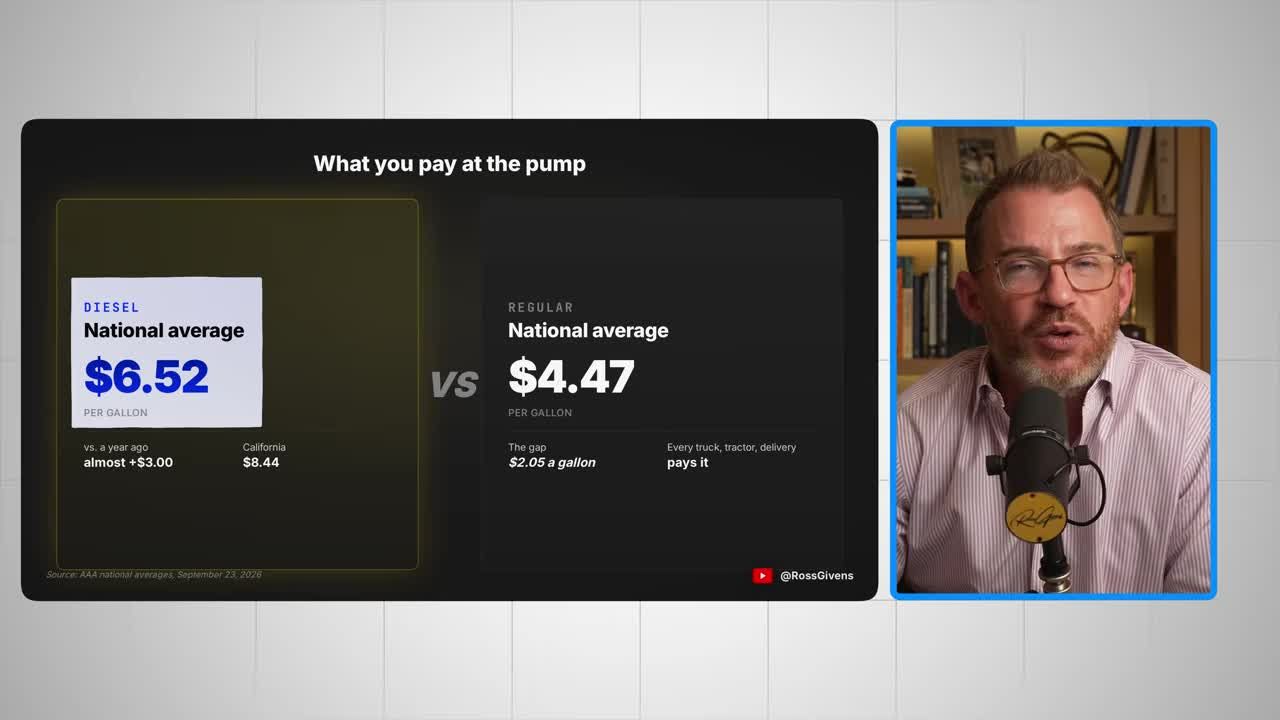
Here's where diesel prices trade today: north of $6.50 a gallon. Regular gasoline is about $4.50. That's a $2 gap between two fuels that come out of the same barrel of crude, get cracked at the same refinery, and get delivered to the same gas station by the same truck.
So why is one of them $2 more expensive than the other?
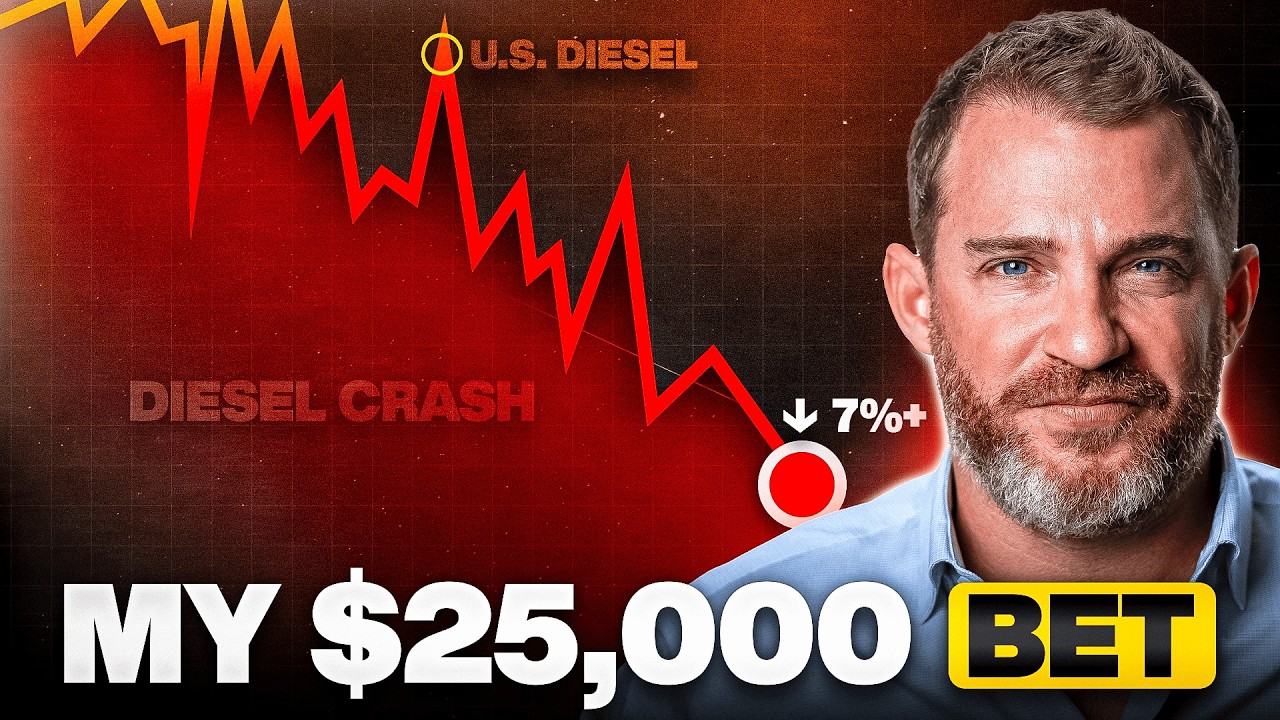
A year ago, diesel was almost $3 a gallon cheaper than it is right now. Something changed, and it wasn't the price of oil. I'm risking $25,000 on the most leveraged trade I could find to take advantage of it. Below is the setup, who's been pocketing the difference, and the exact trade I put on to bet against it.
How Did Two Wars Break the Refineries?
Bottom Line: Diesel sits near record highs not because crude oil is scarce, but because drone strikes and conflict have knocked out refining capacity in Russia and the Middle East. That refinery shortage, plus a possible policy lever from Washington, is the setup behind a leveraged bet that the diesel-gasoline price gap narrows in the coming weeks.
The shortage isn't crude. It's the machines that turn crude into diesel.
Ukraine has been hitting Russian refineries with drones all year, enough that Russia banned its own diesel exports just to keep fuel available at home. Refineries in the Middle East have taken hits in the Iran conflict.
Here's the part most people miss.
And you can't build a new refinery in a month. You can't build one in a year. The world is short refineries, which means the world is short diesel. That's the first reason diesel prices trade today at a level that makes no sense next to gasoline.
Why Does Europe Run on Diesel?
The countries that lost refining capacity are the same countries that need diesel the most. In Europe, 28% of the cars on the road run on diesel. Not the trucks, the cars. The family sedan. Here in the US, a diesel car is practically unheard of.
On top of that, every heavy truck, every train, every ship, every farm on both sides of the ocean runs on diesel. Europe has all of that plus a passenger fleet, and it was getting a big chunk of its diesel from the exact refineries that just got knocked out: Russia and the Gulf.

So Europe went shopping. There was exactly one place left on earth with a whole lot of refineries still running at full tilt.
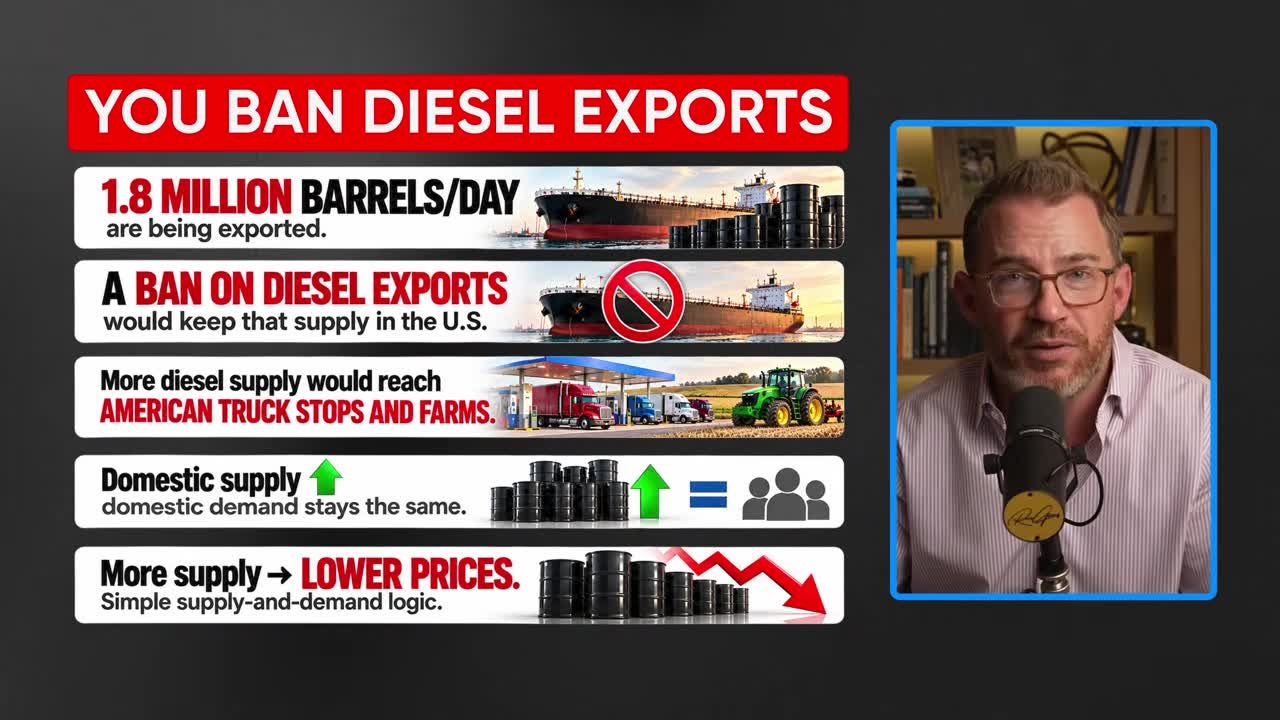
- The US makes about 5.3 million barrels of diesel a day
- We use about 3.6 million barrels a day
- The remaining 1.8 million barrels a day gets loaded onto ships in Houston and Port Arthur and sent to Europe and Latin America
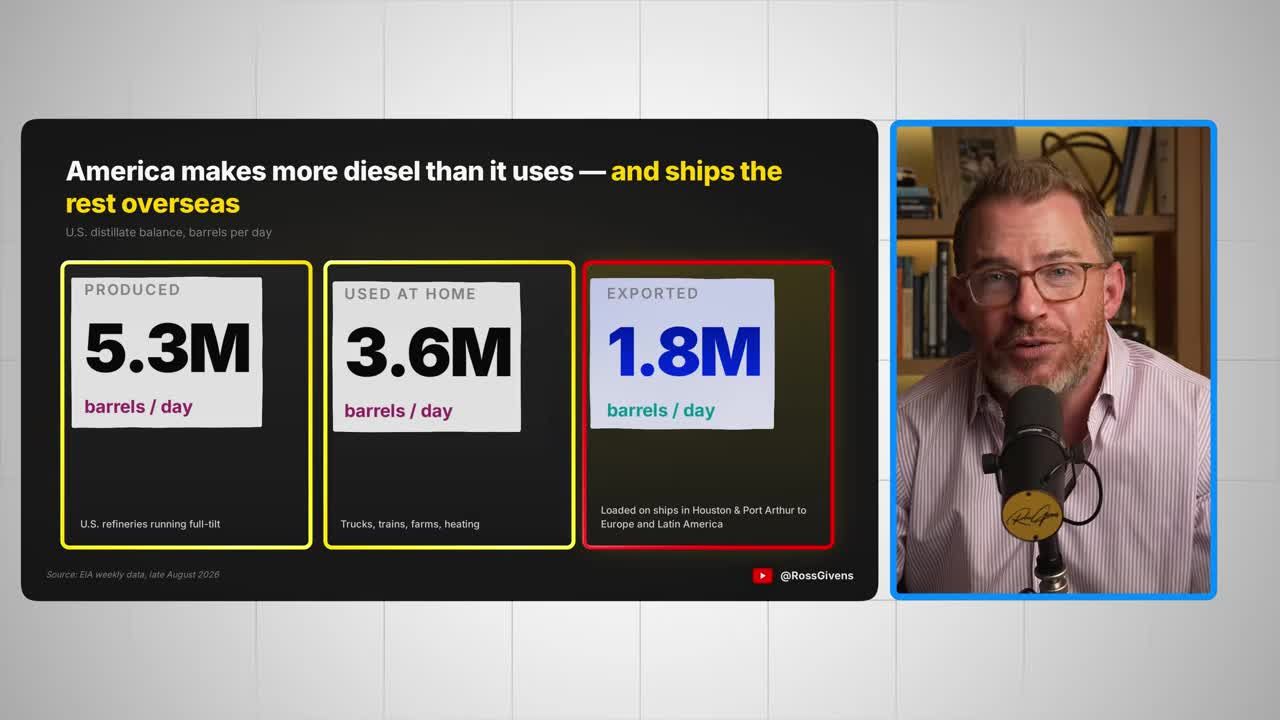
That's the answer to the $2 question. You're not competing with the guy next to you at the pump. You're competing with a trucking company in Rotterdam, and Rotterdam is desperate.
Who Is Collecting the $2?
The refiners. Valero, Marathon Petroleum, and Phillips 66, the companies running the giant plants along the Gulf Coast. The gap between where diesel prices trade today and what the crude cost them is the whole story.
There's a term for a refiner's profit margin: the crack spread. Don't let the name spook you. A refinery buys a barrel of crude, cracks it into gasoline and diesel, and sells the products. The crack spread is what they sell it for minus what the crude cost them. That's the margin.
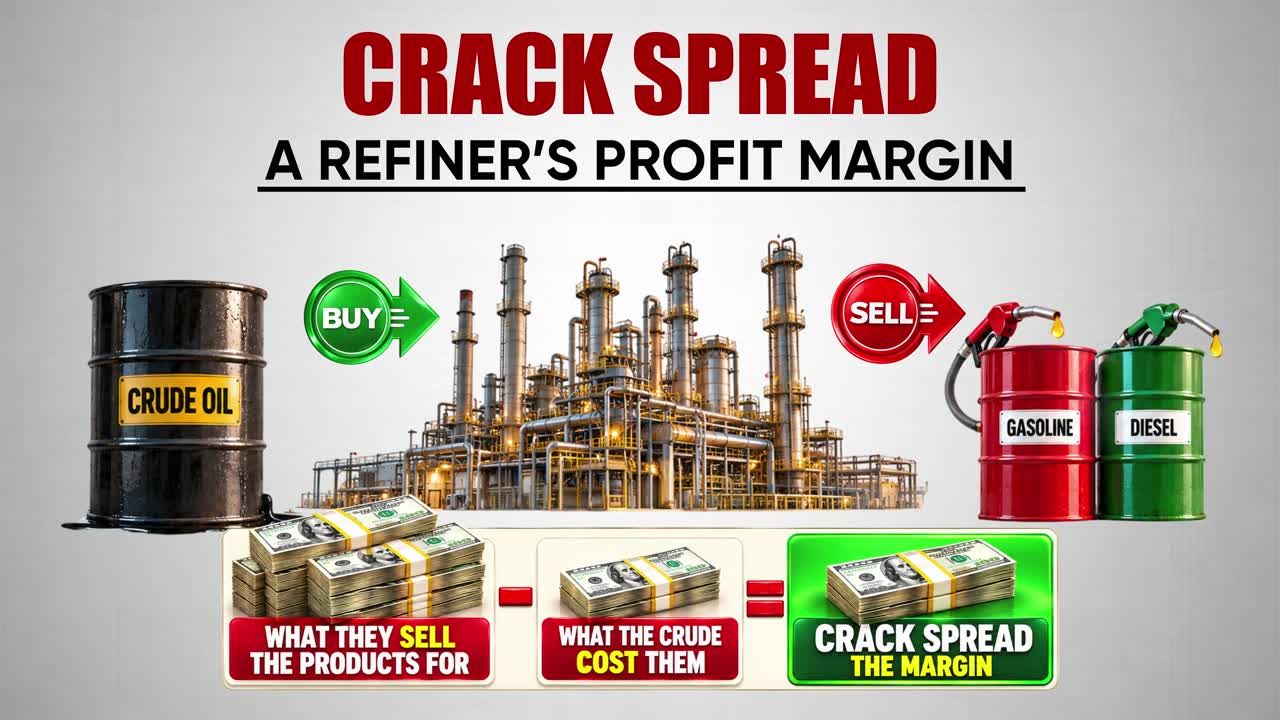
Right now the diesel crack is over $100 a barrel. Valero alone runs about 3 million barrels a day through its plants, which means every extra dollar of margin is another $3 million in daily profit.
Valero, Marathon, and Phillips 66 all just reported quarterly profits per share almost four times what they made a year ago.
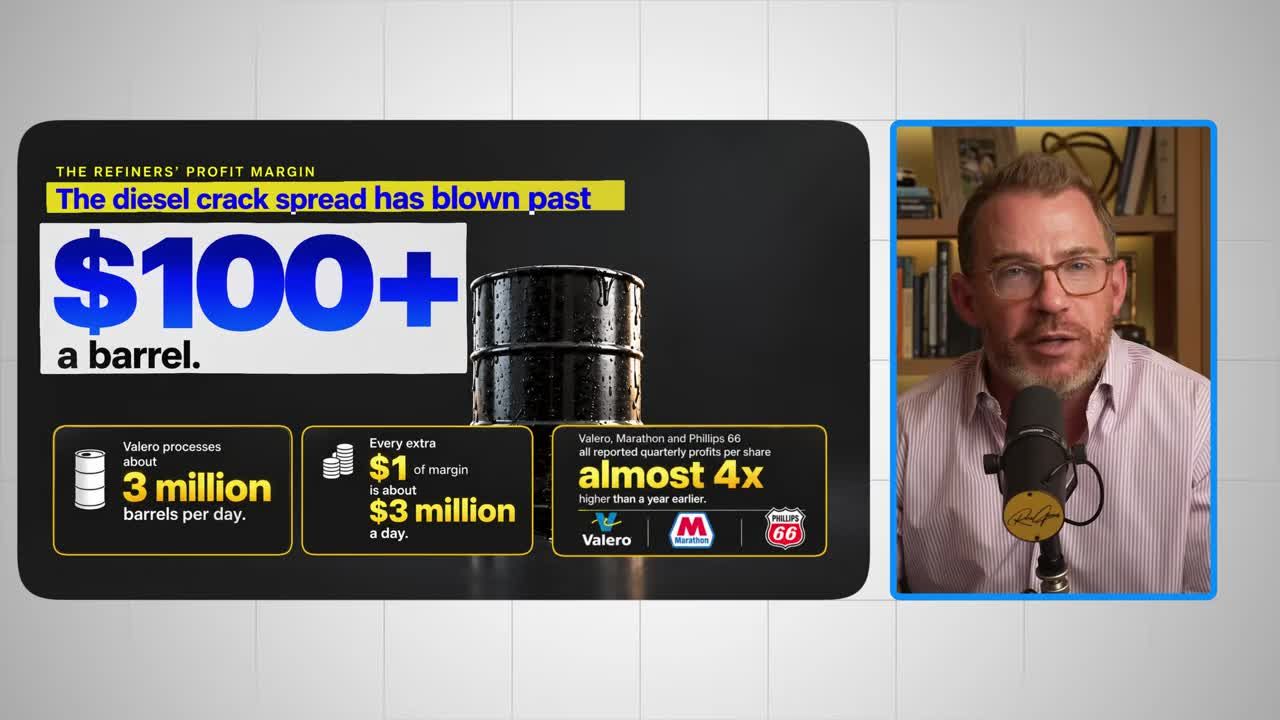
These are American refineries, run by American workers, processing American crude. Then the diesel gets loaded onto a ship and sold to the highest bidder overseas. Meanwhile the farmer in Iowa and the trucker in Alabama pay $6.50 a gallon to fill up.
These guys are printing money, and they're printing it by selling our diesel to foreigners.
Get an entire year of live weekly mentoring sessions, my newsletter, indicators, bonus reports, tons more. Click the link and I'll see you in the next live session.
Join my Black Ops Trading ClubA Text Message and One Lever
Yesterday I got a text from a good friend who trades oil. And when I say he trades oil, I don't mean he buys futures contracts from his computer. He buys it by the tanker. He or someone he knows touches pretty much every barrel that moves through the Gulf. He's plugged in.
The message: the White House is considering a ban on diesel exports.
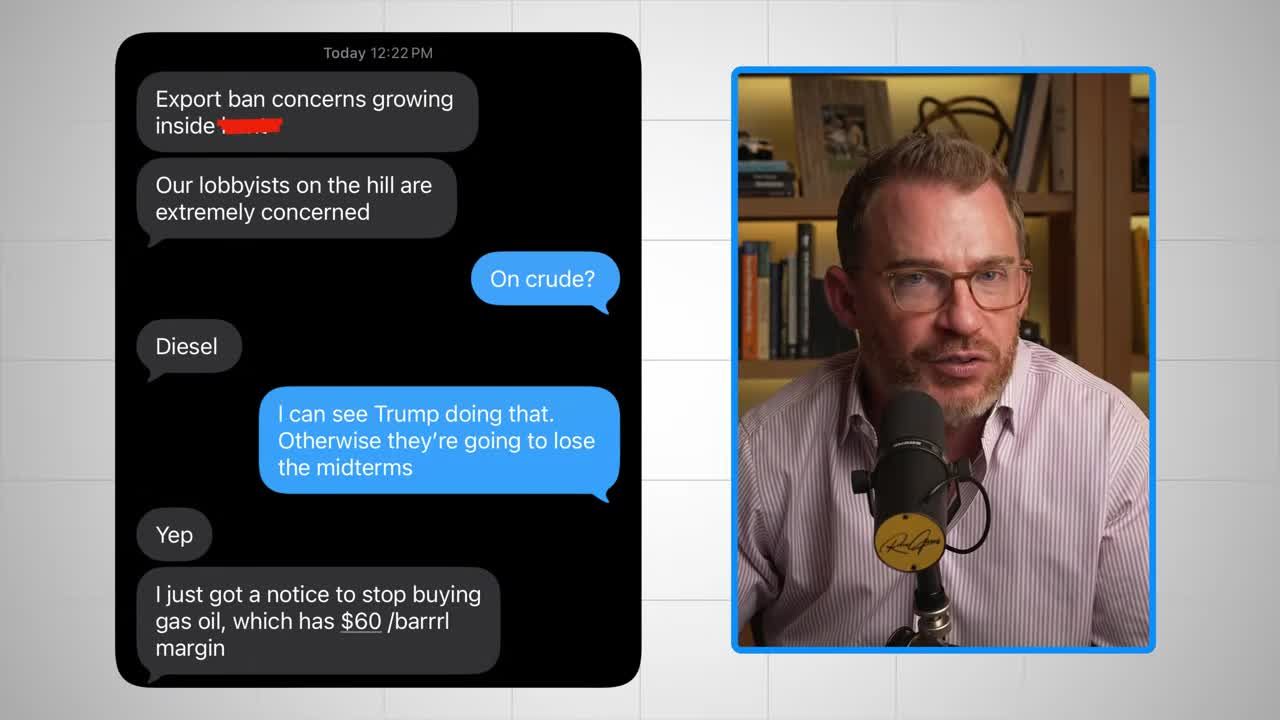
It makes perfect sense. There is one lever that fixes $6.50 diesel almost overnight. Not the Fed. Not OPEC. Not drilling more.
You stop the ships.
Ban diesel exports and that 1.8 million barrels a day has nowhere to go but American truck stops and American farms. More supply at home, same demand at home. The price comes down. And that $100 refining margin gets cut way, way down right along with it.
"The Government Would Never Do That"
Maybe. We've had a free market in energy exports for a decade. The oil industry hates the idea. Both the energy secretary and the interior secretary said a ban would backfire, and they're not wrong. Long term, most oil analysts agree: refiners cut production, world prices rise, and it eventually bites us.
They're probably right. But we're not trading eventually. We're trading the next six weeks.
Where Do Diesel Prices Trade Today, and Why Do the Next Six Weeks Matter?
Midterm elections land on November 3rd. Diesel at $6.50 is a number every farmer sees every single day, and every red-blooded American driving an F-250 feels it every time he fills up.
This isn't a left issue or a right issue. In Iowa, the Republican and the Democrat running for the same House seat have both called for an export ban. When both parties in a swing race want the same thing six weeks before an election, it tends to happen.
And it's already moving. On September 22nd, the president said it out loud at the UN. The Treasury Secretary said the same day that they're studying whether a full or partial ban is feasible. Then on September 23rd, roughly an hour after that text from my oil contact, news broke that the administration is preparing a 90-day diesel export ban.
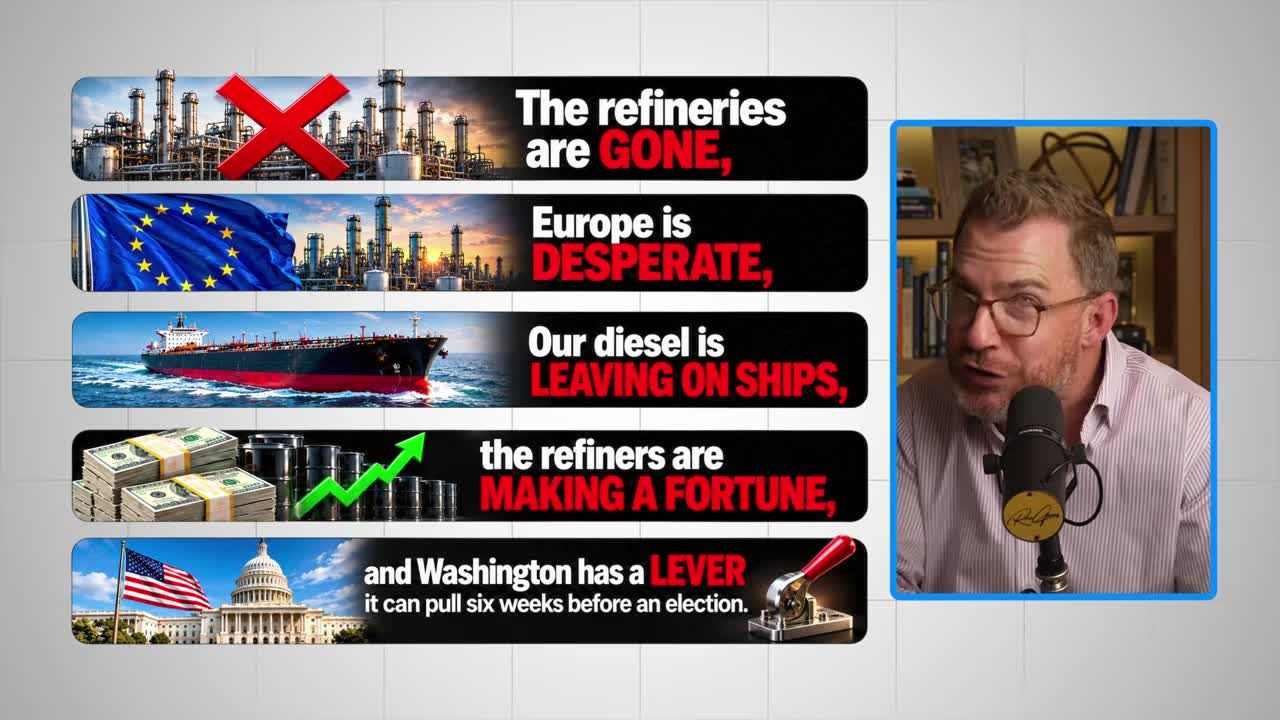
The refineries are gone. Europe is desperate. Our diesel is leaving on ships. The refiners are making a fortune. And Washington has one lever it can pull six weeks before an election.
That's the thesis. Now the trade.
The Obvious Trade Doesn't Work
US diesel futures trade under the name heating oil, ticker HO, in New York. My first idea was simple: buy put options on the November contract. If US refiners can't export diesel, the domestic price plummets. Options give defined risk and big upside if diesel cracks. Risk $25,000, try to turn it into $100,000.
One problem. The option chain for November heating oil puts is empty. The bid and ask columns are blank. There is essentially no volume, and the only two bids on the board were both mine.
This market doesn't really transact online. It's airlines and refiners doing 100-lot deals over the phone. A guy trying to put $25,000 to work doesn't exist to them.
So I Went to Europe
A US export ban is designed to bring diesel prices down here. What does it do over there?
Europe is toast. It already lost Russian diesel. It's losing Middle East diesel. Now it's about to lose ours, another 1.8 million barrels a day disappearing from the world market. That, in all likelihood, sends European diesel higher.
The European diesel contract is called gas oil. The symbol in Interactive Brokers is GOIL, and it trades in London. It's one of the most liquid energy contracts on the planet, and anyone with a futures account can trade it.
The Position
- Long one contract at 1412
- Currently trading around 1436, so up roughly $2,000
- Stop loss at 1300, about $100 per contract of risk in price terms
- The contract represents 100 metric tons, priced by the ton, so at 1,436 that's about $143,000 of exposure
- Total dollar risk on the futures position: roughly $10,000 to $11,000
I still have two working orders out to buy those HO put options, around $4,000 apiece. I doubt they get filled, but I'm giving them a little more room. Between the futures contract and those options, total risk into this trade lands somewhere around $20,000 to $21,000.
What Happens From Here
If the reported 90-day ban goes through, US diesel prices should come down while European gas oil moves higher. That's the whole bet.
The refining math doesn't change quickly. Refineries stay knocked out, Europe stays desperate, and that $100 crack spread should compress once the domestic supply gets locked in at home. Whether it holds past the 90-day window is a different question, and most oil analysts think a longer ban eventually backfires by cutting refiner production and pushing world prices up anyway.
So far the trade is working. Time will tell if it keeps going my direction. But I wanted you to know what I'm doing and what's happening in this market, both so you can potentially structure something yourself and so you have a little hope that the level diesel prices trade today is finally coming down.
Get an entire year of live weekly mentoring sessions, my newsletter, indicators, bonus reports, tons more. Click the link and I'll see you in the next live session.
DISCLAIMER: Traders Agency does not offer financial advice. The information provided is for educational purposes only and should not be considered financial advice. Traders Agency is not responsible for any financial losses or consequences resulting from the use of the information provided. Trading carries inherent risks and may not be suitable for all individuals. You are advised to conduct your own research and seek personalized advice before making any investment decisions, recognizing the potential risks and rewards involved.
See more from Traders Agency on Google
Make us a preferred source and our market analysis will appear more prominently in your Google Search, Top Stories, and AI results.
Add to Preferred Sources