
Eli Lilly's experimental combination of eloralintide, an amylin-targeting drug, and tirzepatide, the active ingredient in Zepbound, produced weight loss of up to 23.3% of body weight at 48 weeks in a Phase 2 trial of adults who were overweight or obese and had diabetes, according to CNBC and MarketWatch, via Morningstar. The combination, referred to as EloraTZP in MarketWatch's account, outperformed either drug alone on weight loss, but it also came with a higher rate of treatment discontinuation due to side effects. Results were presented Wednesday at the European Association for the Study of Diabetes annual meeting in Milan, Italy, both outlets reported.
Trial Design and Weight-Loss Results
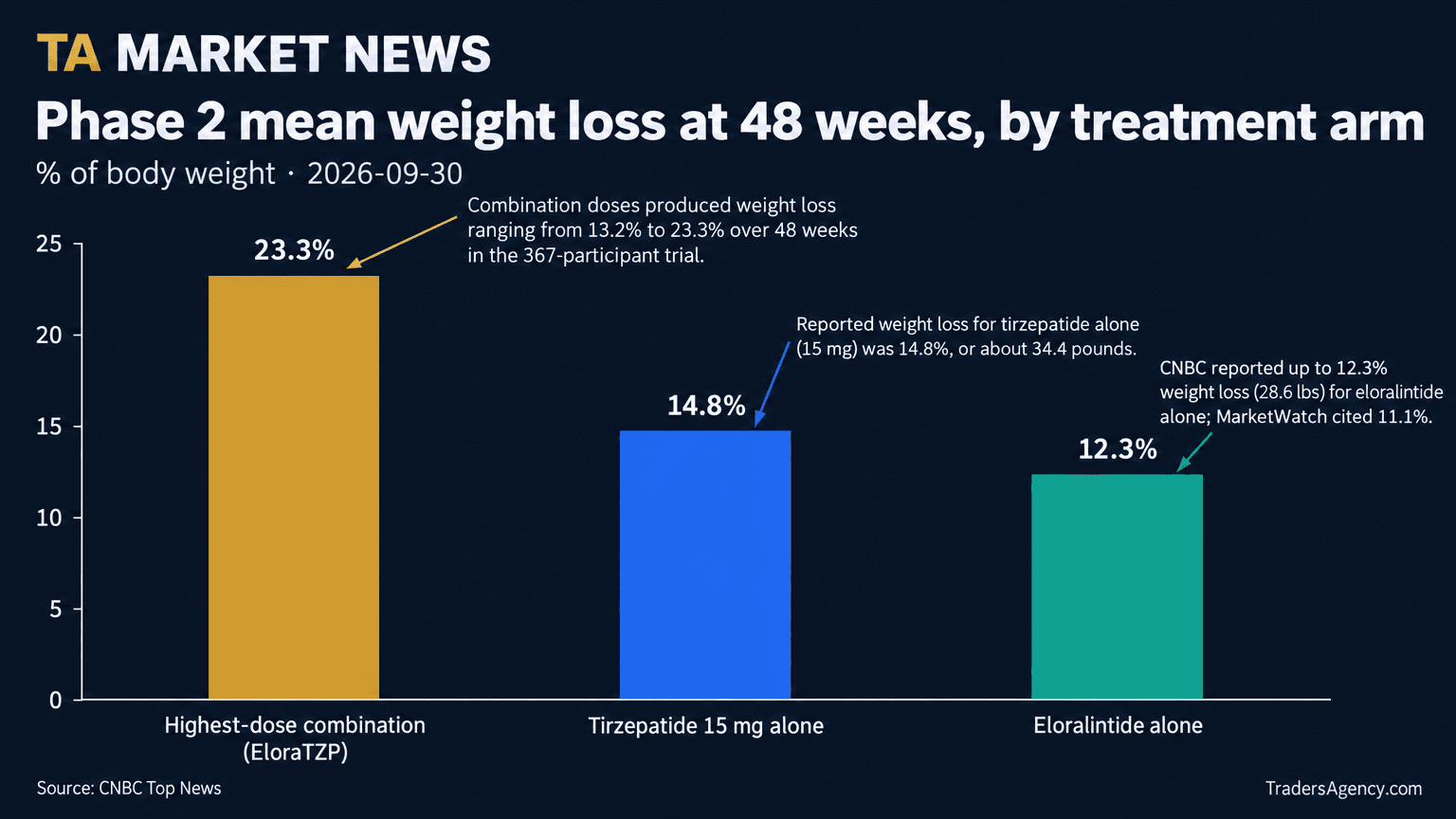
The Phase 2 study enrolled 367 adults who were overweight or obese and had diabetes and ran for 48 weeks, CNBC and MarketWatch reported. Depending on the dose, the combination produced weight loss ranging from 13.2% to 23.3% of body weight, according to MarketWatch's account of the trial. CNBC reported that patients on the highest dose of the combination lost up to 23.3% of their weight, or around 54 pounds on average.
Those results compared with 14.8% weight loss, or 34.4 pounds on average, for patients taking a 15-milligram dose of tirzepatide alone, per CNBC. For eloralintide alone, the two outlets gave different figures: CNBC reported weight loss of up to 12.3%, or 28.6 pounds, while MarketWatch cited a figure of up to 11.1%. Either way, the combination's top-dose result exceeded both monotherapies by a wide margin on a reported basis.
Blood Sugar and Metabolic Effects
The combination also lowered A1C, a standard measure of blood sugar control, by up to 2.9% on average, according to CNBC. That compared with up to 2.4% for the higher dose of tirzepatide alone and up to 1.4% for eloralintide alone, per the same report. Study investigator Liana Billings, a clinical researcher at the Endeavor Health hospital system in the Chicago area, said in Lilly's news release, as quoted by MarketWatch, "Obesity and type 2 diabetes are interconnected. We are seeing the potential benefit of targeting multiple hormonal pathways to address both."
Tolerability and Discontinuation Rates
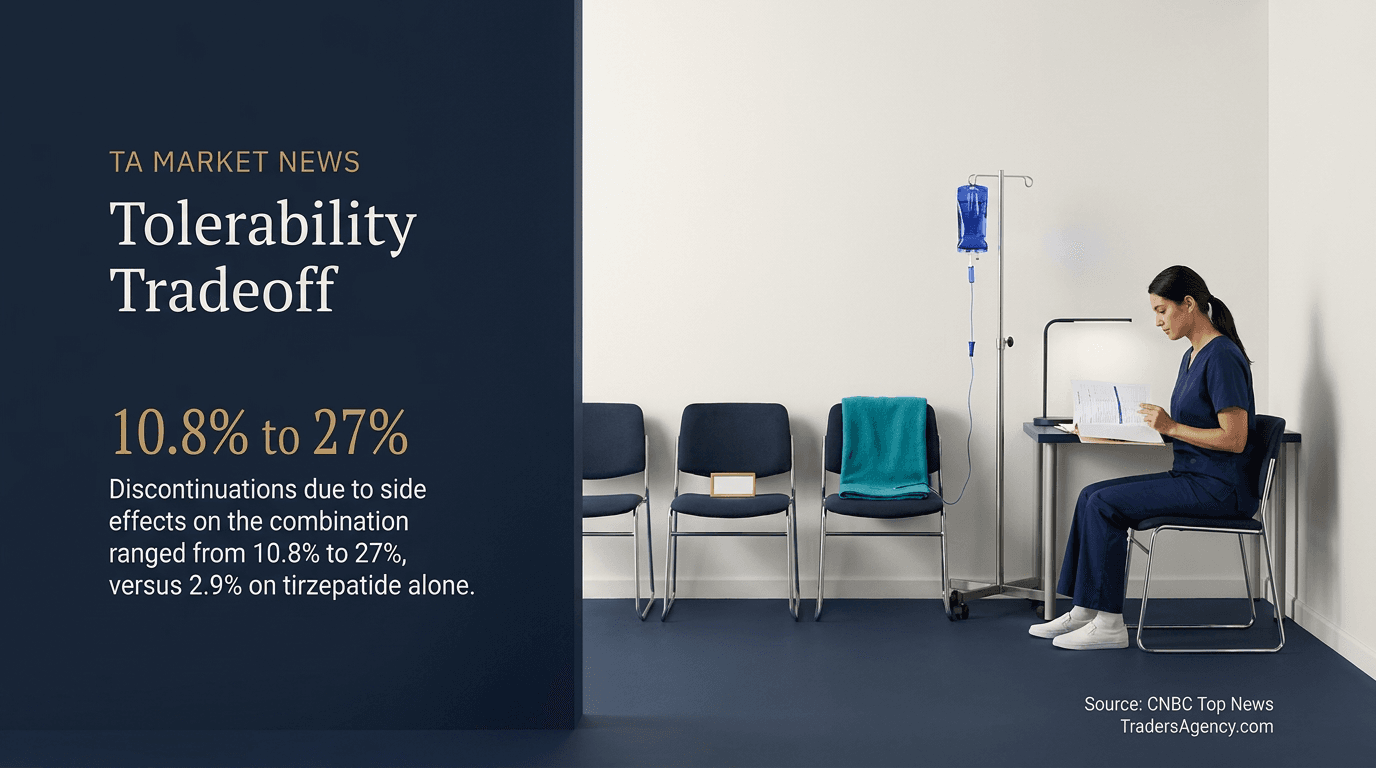
The efficacy gains came with a tradeoff in tolerability. CNBC reported that 10.8% to 27% of patients on the combination regimen discontinued treatment due to side effects, depending on the dose, compared with 2.9% of patients on tirzepatide alone. MarketWatch put the combination's overall discontinuation range at 10.8% to 27% as well, versus 10.8% for eloralintide alone and 2.9% for Zepbound. CNBC separately noted that up to 10.8% of patients on eloralintide alone discontinued treatment, compared with 16.7% on placebo.
The most common side effects in the combination arms were gastrointestinal, generally mild or moderate in severity, and occurred mainly during dose escalation, CNBC reported. MarketWatch similarly noted that patients on the combination experienced more frequent gastrointestinal adverse events and discontinued at a notably higher rate than those on either drug alone.
Analyst Reaction and the CagriSema Comparison
Ahead of the data release, some analysts had already framed the trial as a direct comparison point for Novo Nordisk's CagriSema, a combination of the amylin agonist cagrilintide and semaglutide, according to CNBC. The U.S. Food and Drug Administration is expected to decide whether to approve CagriSema before the end of the year, per MarketWatch's reporting.
Leerink Partners analyst David Risinger told CNBC he sees "mega-blockbuster" sales potential for eloralintide, saying the drug likely has "much greater market potential than the Street currently realized." Risinger separately told investors earlier in the month, as quoted by MarketWatch, that Leerink was "hoping that elora + low-dose tirzepatide can offer a better weight loss-to-tolerability ratio than high-dose tirzepatide." If approved, eloralintide is projected to generate $2.6 billion in sales in 2030, according to FactSet consensus estimates cited by MarketWatch, with potential use for patients who cannot tolerate GLP-1 or GLP-1/GIP drugs.
The amylin space is drawing wider competitive interest. MarketWatch noted that AstraZeneca and Roche are also developing amylin-based drugs for weight loss, alongside Novo's cagrilintide-based CagriSema.
At the same EASD meeting, Lilly also released full Phase 3 data for retatrutide, a separate obesity drug, showing weight loss of 12.7% to 20.8% in people who were obese or overweight with diabetes, according to MarketWatch. That gives Lilly two obesity programs generating data points in the same week, though the reported coverage describes no head-to-head comparison between the two drugs.
What's Next for Phase 3
Lilly plans to adjust dosing regimens for the combination in Phase 3 trials, CNBC reported, with Custer telling the outlet, "we expect that we'll end up with a very favorable balance of efficacy and tolerability." No specific Phase 3 start date, trial size, or regulatory filing timeline was included in the reported coverage.
Bottom Line
The Phase 2 data show Lilly's eloralintide-tirzepatide combination outperforming both single drugs on reported weight loss, but with discontinuations due to side effects reaching as high as 27% across combination doses, versus 2.9% for tirzepatide alone, per CNBC. Whether the dosing adjustments Lilly says it plans for Phase 3 can narrow that tolerability gap without eroding the efficacy edge remains an open question — an interpretation of the reported figures — and it will shape how the combination is positioned against Novo Nordisk's CagriSema and the amylin programs MarketWatch says AstraZeneca and Roche are developing.
DISCLAIMER: Traders Agency does not offer financial advice. The information provided is for educational purposes only and should not be considered financial advice. Traders Agency is not responsible for any financial losses or consequences resulting from the use of the information provided. Trading carries inherent risks and may not be suitable for all individuals. You are advised to conduct your own research and seek personalized advice before making any investment decisions, recognizing the potential risks and rewards involved.
- CNBC Top News: Eli Lilly obesity drug with amylin, tirzepatide boosts weight loss in trial · accessed Sep 30, 2026
- endpoints.news: Lilly’s amylin-Zepbound combo posts best-ever weight loss in patients with obesity and diabetes · accessed Sep 30, 2026
- www.morningstar.com: Adding Lilly's new drug to Zepbound helped people lose up to 23% of their weight. But there were more side effects. · accessed Sep 30, 2026
- www.biospace.com: Weight loss - BioSpace · accessed Sep 30, 2026
- x.com: Damian Garde (@damiangarde) on X · accessed Sep 30, 2026
- trials.lilly.com: Find Lilly Clinical Trials · accessed Sep 30, 2026
See more from Traders Agency on Google
Make us a preferred source and our market analysis will appear more prominently in your Google Search, Top Stories, and AI results.
Add to Preferred Sources