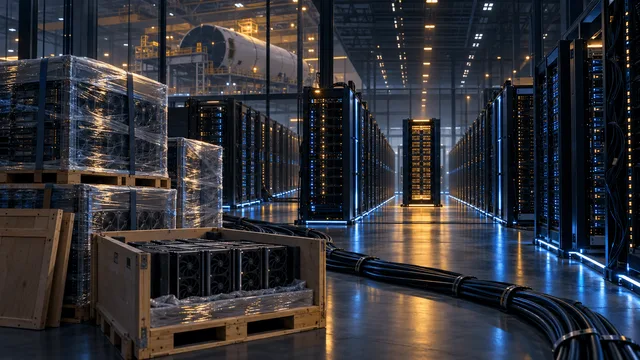
A steep sell-off in artificial intelligence stocks dragged the S&P 500 down 3.7% on Friday, pushing the benchmark index into correction territory and erasing the Nasdaq composite's gains for the year, according to reporting from the Associated Press via WMRA. The decline capped the S&P 500's seventh straight daily loss, its longest losing streak since the early days of the COVID-19 pandemic in 2020.
The Selloff by the Numbers
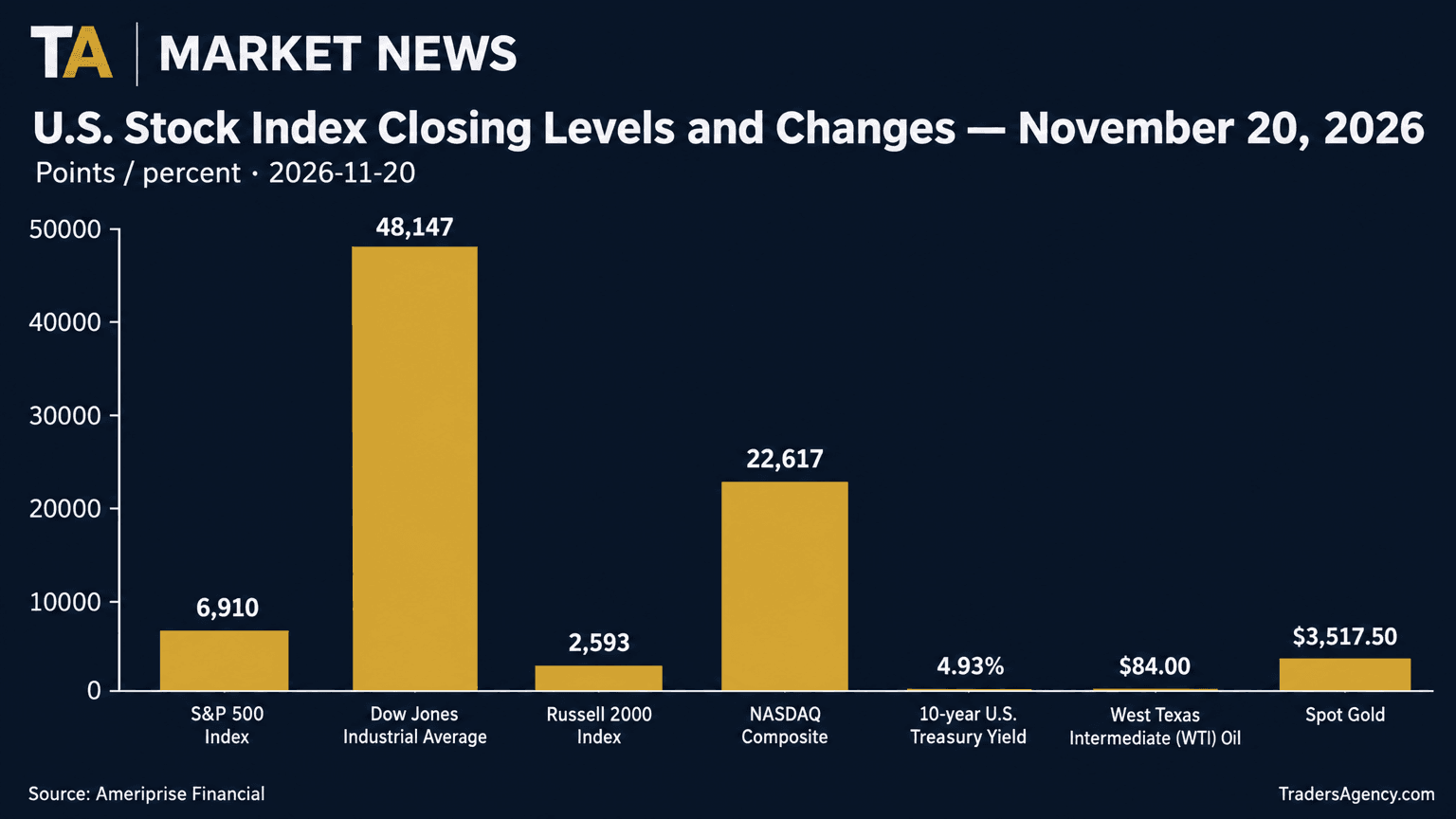
The S&P 500 closed at 6,910.39, down 265.44 points, a level that leaves the index more than 10% below its Oct. 6 all-time high, meeting the technical definition of a correction, the AP reported. The Nasdaq composite, more heavily weighted toward technology names, slumped 5.3%, shedding 1,261.47 points to finish at 22,617.73 and turning negative for the year. The Dow Jones Industrial Average, with less exposure to tech, fell a comparatively milder 1.9%, or 949.73 points, to 48,147.33. Ameriprise Financial's closing market update confirmed the same index levels and noted that both the S&P 500 and the Dow traded into correction territory while the Nasdaq erased its remaining 2026 gain.
Earlier in the session, Charles Schwab's market update, published at 9:16 a.m. Eastern, showed the S&P 500 at 7,175.83, down 147.80 points, or 2.02%, indicating the losses deepened substantially as the trading day progressed.
Chipmakers and AI Infrastructure Names Lead the Rout
Semiconductor stocks absorbed the brunt of the selling. Nvidia, which the AP said is considered by many to be "the poster child for the AI boom," closed 13.8% lower, marking its ninth decline in the last 10 trading days. Advanced Micro Devices sank 13.3%, Micron Technology slid 13.9%, and Broadcom fell 12.1%. The PHLX Semiconductor Index, which tracks the sector broadly, sank 10.7%.
The damage extended beyond chipmakers to companies tied to AI data-center buildout. Corning slid 10.9% and Bloom Energy gave up 15.3%, per the AP's reporting.
Nvidia's stock has fallen more than 25% since what the AP described as the "Huang scandal" erupted earlier in November, a reference to concerns following the sudden downfall of Jensen Huang, the company's former CEO and co-founder. Ameriprise Financial's note echoed this, pointing to "NVIDIA's leadership transition and uncertainty about its willingness to provide financial support to smaller customers" as a factor weighing on sentiment.
Anthropic, which went public Thursday, fell 9.1% to $88.30 on Friday, a day after its debut. The stock remains above its $83 IPO price but is down roughly 23% from its brief peak of $115.10 reached the prior day, according to the AP. Ameriprise's commentary said Anthropic's reversal "intensified concerns about AI valuations and funding across the technology sector."
What's Driving the Correction
Several threads are being cited by analysts as contributing to the downturn. Ameriprise Financial's market note pointed to investors reassessing "the pace of data center spending and whether customers buying compute and infrastructure equipment can finance their commitments, as borrowing costs remain elevated and lending availability is being called into question." The same note flagged tighter chip-export restrictions as another factor "clouding the outlook for AI next year."
The AP reported that the broader AI trade has been losing steam partly on worries that AI stocks' lofty valuations and heavy capital spending are unjustified. Those bubble fears, the AP said, have also been stoked by recent midterm election results, in which candidates advocating a slowdown in data center construction won races at both the federal and state level.
Monetary policy is adding to the pressure. Fed Governor Lisa Cook recently warned that delaying additional rate action could allow inflation to become entrenched, a comment cited in Friday's market commentary as fueling expectations of further Federal Reserve rate increases.
Strategist Views and Technical Signals
Michael Antonelli, market strategist at Baird, told the AP that "the whole notion that AI can continue to spend unlimited amounts of money and support the stock market, I think the notion of that is ending as we speak, that's what's being priced right now." He added, however, that he does not believe the broader bull market that began in October 2022 has ended.
On the technical side, Ameriprise Financial's note said the CBOE Volatility Index reached its highest level in nineteen months, while the Information Technology and Communication Services sectors each finished the week in bear-market territory, down more than 20% from their recent highs. Schwab's earlier snapshot put the Cboe Volatility Index at 31.30, up 2.86 points, or roughly 10%, from the prior session. Read together, those readings indicate an elevated-volatility backdrop, though neither note offers a view on where the market goes from here.
Global Contagion and Safe-Haven Flows

The sell-off was not confined to U.S. markets. The AP reported that Japan's Nikkei and South Korea's Kospi each fell more than 5% overnight, with European indexes also declining sharply. In the bond market, the yield on the 10-year Treasury fell to 4.93% from 5.04% late Thursday, according to the AP; Ameriprise's data showed the same 4.93% yield, down 11 basis points. The decline in yields is consistent with investors shifting into government bonds during an equity selloff, though neither source attributed the move to a specific cause.
A Counterpoint in Consumer Sentiment
Despite the market turmoil, the University of Michigan's consumer sentiment index rose sharply compared with the prior month, coming in slightly ahead of economists' expectations, the AP reported. Consumers cited relief from easing gas prices and improved expectations for business conditions following the midterm elections. Sentiment nonetheless remained below levels seen in February, before the start of the U.S.-Iran war, according to the same report.
Bottom Line
Friday's session confirmed a formal correction for the S&P 500 and erased the Nasdaq's 2026 advance, driven chiefly by a reassessment of AI-sector valuations, financing concerns tied to elevated borrowing costs, and company-specific pressure on Nvidia following leadership uncertainty. Strategists quoted in the reporting, including Baird's Michael Antonelli, framed the move as a repricing of AI spending assumptions rather than a signal that the broader multi-year bull market has ended, though elevated volatility readings and bear-market conditions in technology and communication services suggest the adjustment is still working through the market.
DISCLAIMER: Traders Agency does not offer financial advice. The information provided is for educational purposes only and should not be considered financial advice. Traders Agency is not responsible for any financial losses or consequences resulting from the use of the information provided. Trading carries inherent risks and may not be suitable for all individuals. You are advised to conduct your own research and seek personalized advice before making any investment decisions, recognizing the potential risks and rewards involved.
- The Associated Press via WMRA: S&P 500 sinks 3.7% and the Nasdaq composite goes negative for the year · accessed Nov 20, 2026
- Charles Schwab: Tech Carnage Continues, with Anthropic Now Falling · accessed Nov 20, 2026
- Ameriprise Financial: aftertheclose-2026-11-20a.pdf · accessed Nov 20, 2026
See more from Traders Agency on Google
Make us a preferred source and our market analysis will appear more prominently in your Google Search, Top Stories, and AI results.
Add to Preferred Sources