The Senate just confirmed Kevin Warsh to the Federal Reserve's Board of Governors in a 51-45 vote, and this sets the stage for a major shift in central bank leadership. Our team has been tracking this story closely, and we want to be clear about what's actually happening here: Warsh is confirmed as a governor, not yet as chair. A separate vote for the chairmanship is expected as soon as Wednesday. Traders need to understand the distinction because the market is already moving on assumptions that may be premature.
Who Is Kevin Warsh?
Kevin Warsh is a former Federal Reserve governor returning to the central bank for a term running until 2040. He's being positioned to replace Jerome Powell, whose term expires on Friday, following political pressure from the White House to aggressively cut interest rates.
Warsh is an alumnus of Stanford University and Harvard Law School. His previous stint as a Fed governor ended in 2011. Since then, he has worked as a Hoover Institution fellow and an adviser for billionaire investor Stanley Druckenmiller. His net worth exceeds $100 million, and he is married to Jane Lauder, the billionaire granddaughter of cosmetics magnate Estée Lauder. Warsh is taking the board seat previously held by Stephen Miran, who previously chaired the White House Council of Economic Advisers.
Why Was Kevin Warsh's Confirmation Vote Delayed?
The 51-45 vote fell largely along party lines. Sen. John Fetterman, a Pennsylvania Democrat, joined Republicans in voting in favor of the nomination.
The confirmation process faced significant delays due to a criminal investigation into Jerome Powell. The investigation focused on Powell's testimony to Congress regarding the multibillion-dollar renovation of the Fed's headquarters. A judge found a "mountain of evidence" indicating the subpoenas were a pretextual attempt to pressure Powell into lowering interest rates or resigning. Following that development, Sen. Thom Tillis lifted his block on all Fed nominees, clearing the path for Warsh's confirmation.
Warsh's Monetary Policy Stance: Hawk or Dove?
This is where the picture gets mixed for traders. Over the last year, Warsh has signaled an openness to lowering interest rates. But during his previous run as a Fed governor, he was known as a hawk who focused heavily on inflation risks and opposed overly loose monetary policy.
He consistently questions the size of the Fed balance sheet. He also challenges the current approach to regulating banks and frequently criticizes how the institution uses data and communicates with the public. The mixed signals mean the market cannot yet price in a clear directional bias from his leadership.
How the Market Is Reacting Right Now
The financial sector and bond markets are already pricing in the uncertainty of this leadership change. The numbers tell the story:
Key Market Data: XLF (Financial Select Sector SPDR) 30-day price change: -0.93%. TLT (iShares 20+ Year Treasury Bond ETF) 30-day price change: -1.37%. Both sectors are showing weakness as traders hedge against leadership uncertainty.
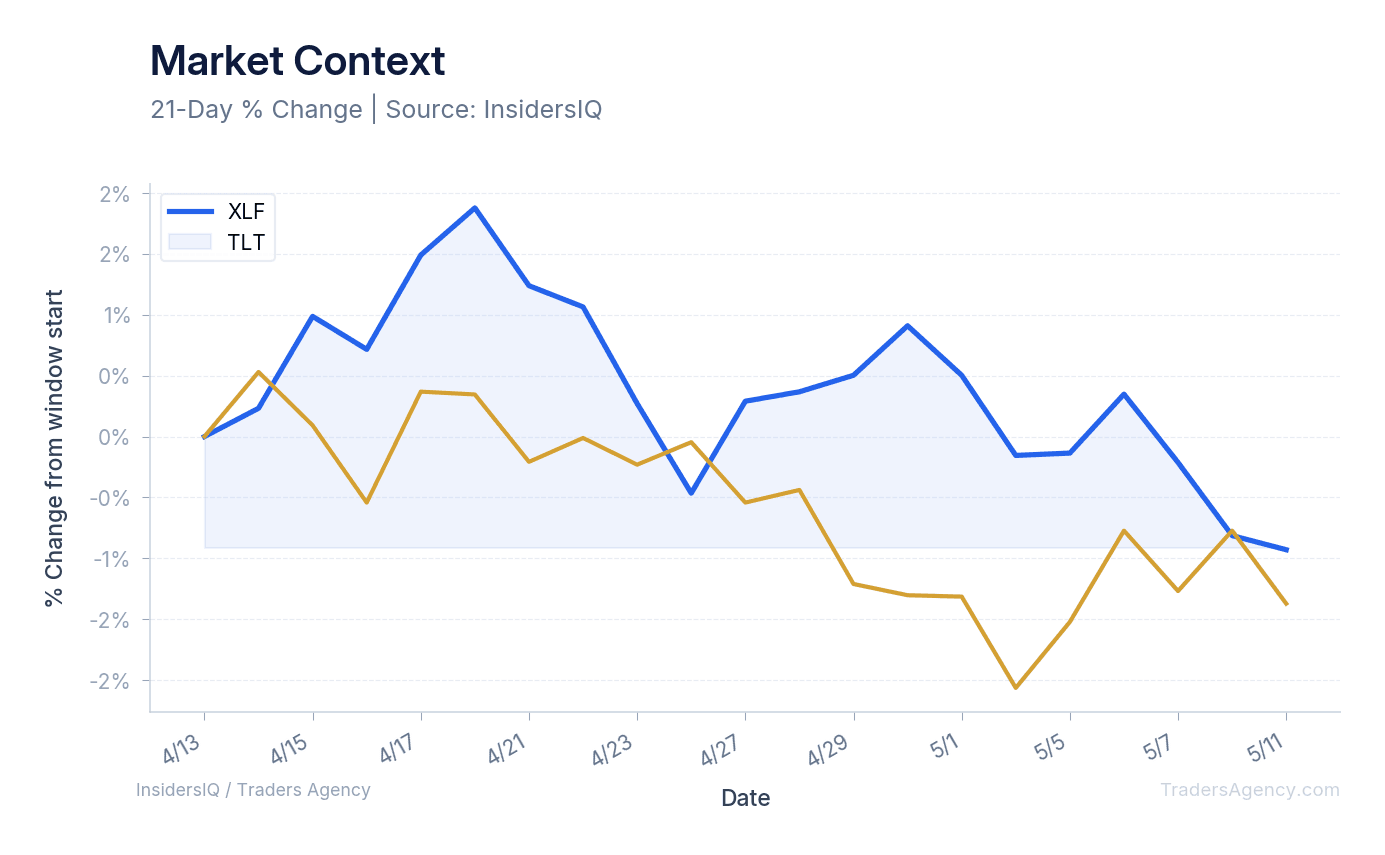
These metrics indicate that traders are actively hedging their bets. The market is waiting to see if Warsh can get the central bank board to agree with the major changes he favors.
Want expert trading insights delivered daily?
Join thousands of traders who rely on Traders Agency for market analysis and trade ideas.
Join Traders AgencyWill Kevin Warsh Bow to White House Pressure on Rate Cuts?
Warsh will immediately face intense pressure from President Trump, who has publicly demanded aggressive interest rate cuts. Trump has repeatedly expressed frustration with current leadership, calling Powell a "moron," a "numbskull," and a "stubborn mule" for refusing to aggressively cut rates.
The White House wants lower rates despite slowing inflation. As a potential Kevin Warsh Fed chair era begins, he will face an immediate test regarding his reaction to these demands. He must balance the desire for economic growth against the risk of causing inflation to heat up. Wall Street and Washington will be watching his initial communications closely to gauge his independence.
What Should Traders Watch After Warsh's Confirmation?
Our team is tracking several specific events that will dictate market direction in the coming days.
1. The Wednesday Vote
The Senate must hold a second vote to confirm Warsh specifically for the four-year term as chair of the board. This vote is expected as soon as Wednesday.
2. The Friday Deadline
Jerome Powell's term as chair officially expires on Friday. A successful vote for Warsh will end Powell's leadership tenure.
3. Bond Market Reactions
We are closely monitoring TLT for further downside. If Warsh leans into his historical hawkish tendencies, long-term Treasuries could face additional pressure.
4. Financial Sector Volatility
With XLF already down 0.93% over the last 30 days, Warsh's critical view of current bank regulations will be a primary focus for financial stock traders.
Timeline to Watch: Wednesday's chair vote and Friday's Powell term expiration create a 72-hour window where bond and financial sector volatility could spike. We're positioning our analysis around these two dates.
The Bottom Line
The confirmation of Kevin Warsh to the Board of Governors initiates a massive transition for the central bank. Our team believes his upcoming tests regarding political pressure and policy reform will dictate the next major trend in both equities and bonds. We are keeping a close eye on the upcoming Senate vote and positioning for potential volatility across the financial sector. The next 72 hours matter. Stay sharp.
Want expert trading insights delivered daily?
Join thousands of traders who rely on Traders Agency for market analysis and trade ideas.
Join Traders AgencyKey Takeaways
- Warsh was confirmed to the Fed's Board of Governors 51-45, but a separate Senate vote for the chairmanship was expected as soon as Wednesday. The governor confirmation and the chair nomination are two distinct votes.
- Jerome Powell's term expires Friday, creating a hard deadline that compresses the timeline for markets and traders watching the leadership transition.
- Warsh previously served as a Fed governor from 2006 to 2011 and has since advised Stanley Druckenmiller, giving him both institutional credibility and close ties to the private investment world.
- The White House has applied direct pressure to cut rates aggressively, meaning Warsh's first major test is whether he signals independence or accommodation toward political demands.
- The next 72 hours are the critical window: the chairmanship vote and Powell's term expiration fall within the same short timeframe, concentrating volatility risk in bonds and financial sector equities.
DISCLAIMER: Traders Agency does not offer financial advice. The information provided is for educational purposes only and should not be considered financial advice. Traders Agency is not responsible for any financial losses or consequences resulting from the use of the information provided. Trading carries inherent risks and may not be suitable for all individuals. You are advised to conduct your own research and seek personalized advice before making any investment decisions, recognizing the potential risks and rewards involved.
See more from Traders Agency on Google
Make us a preferred source and our market analysis will appear more prominently in your Google Search, Top Stories, and AI results.
Add to Preferred Sources