Iranian Foreign Minister Abbas Araghchi told reporters at the United Nations on Thursday that Tehran would reopen the Strait of Hormuz within seven days and resume nuclear talks with Washington if the Trump administration meets conditions Iran says were already agreed in a June memorandum of understanding, according to CNBC. The offer, made on the sidelines of the General Assembly, comes as oil markets weigh whether a diplomatic path can end a standoff that has choked traffic through one of the world's most important shipping lanes.
The Offer and Its Conditions
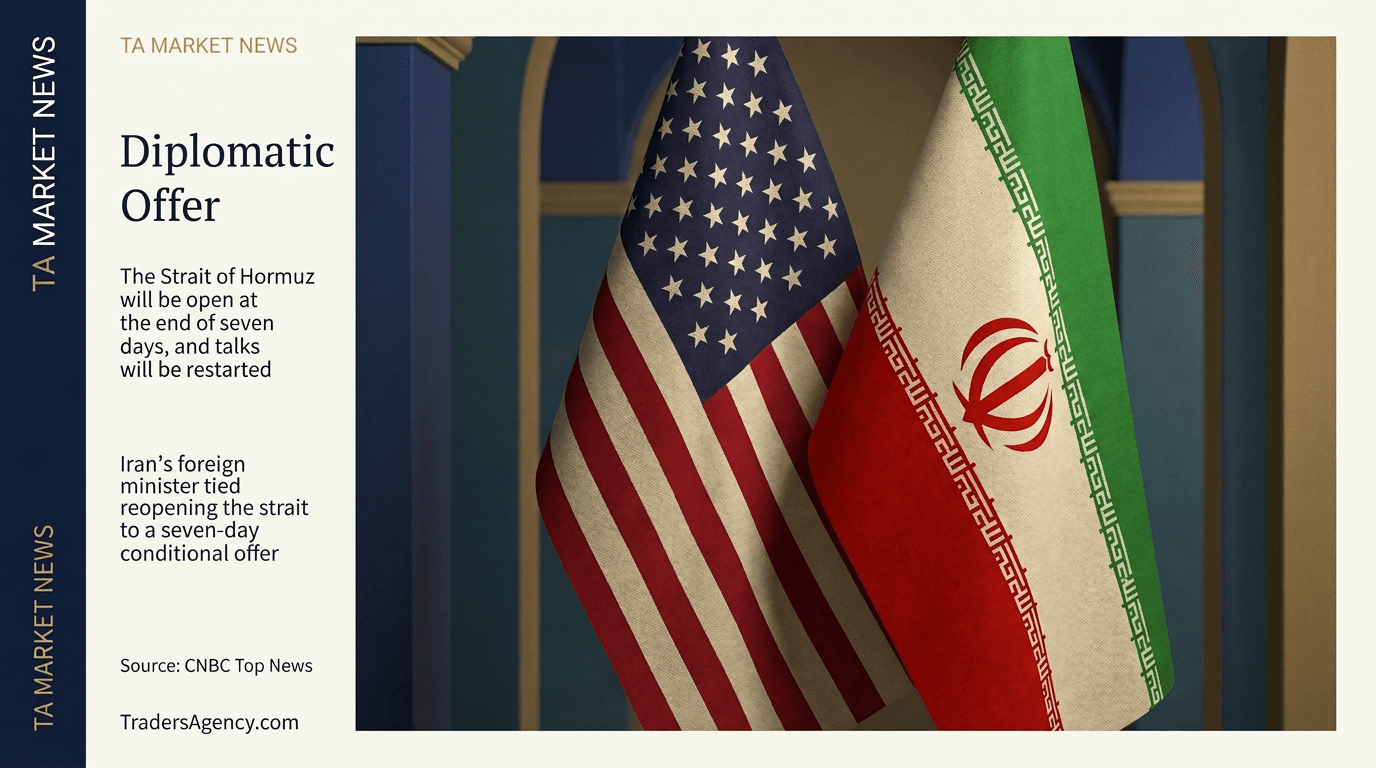
"If certain conditions are met, the Strait of Hormuz will be open at the end of seven days, and talks will be restarted," Araghchi said, according to CNBC's report from the sidelines of the General Assembly. He characterized the terms as nothing new, telling reporters that "the conditions we have asked the U.S. to meet are nothing new, nothing more than what was already in the Islamabad MOU, which was signed by the U.S. president."
Araghchi loosely tied the timing to the U.S. midterm election without setting a deadline. "I think it would be much better if it is done before the midterm election, but it depends on the U.S. administration to decide," he said, adding, "We are not in a hurry," per CNBC. CNBC also reported that Tehran is waiting for a U.S. response to the proposal.
A Deal That Already Collapsed Once
The Islamabad memorandum refers to a June ceasefire agreement between the U.S. and Iran that fell apart in early July after fighting broke out over transit rights through Hormuz, CNBC reported. The Trump administration has previously said it will not return to the terms of that June agreement, and CNBC noted that it remains unclear how Iran's current proposal would prevent hostilities from erupting again.
The renewed outreach follows nearly seven months of conflict. CNBC reported that the U.S. and Israel began a joint attack on Iran on February 28, with Tehran retaliating by firing waves of missiles and drones at Israel and targeting U.S. allies in the region. Iranian President Masoud Pezeshkian, in an interview that aired on Fox News and was cited by CNBC, said "it's America that must choose whether it wants to end this or not" when asked whether the war could conclude by year-end. CNBC also reported that indirect U.S.-Iran talks resumed on the sidelines of the General Assembly this week, and that President Trump has sought Beijing's help pressuring Tehran toward a settlement. U.S. Ambassador to China David Perdue said, as quoted by CNBC, that Washington made clear to Beijing weeks ago that "any help that they would give Iran, whether it would be direct or indirect, whether it would be intelligence or parts or military equipment, was totally unacceptable."
Shipping Traffic and Oil Prices
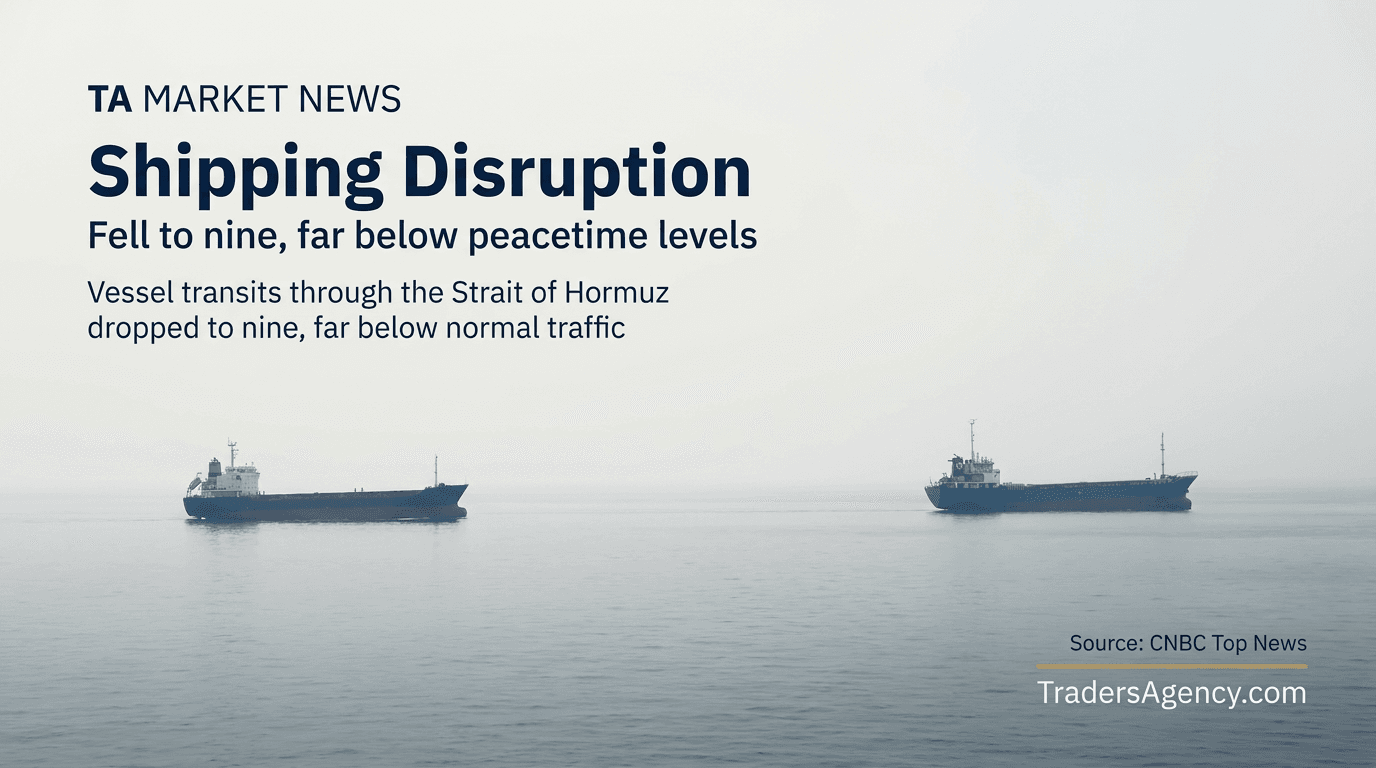
The scale of the disruption is visible in shipping data. CNBC, citing Reuters' preliminary ship-tracking figures, reported that vessel transits through the Strait of Hormuz fell to nine on Friday, far below peacetime levels for a waterway that normally carries about a fifth of global oil supply.
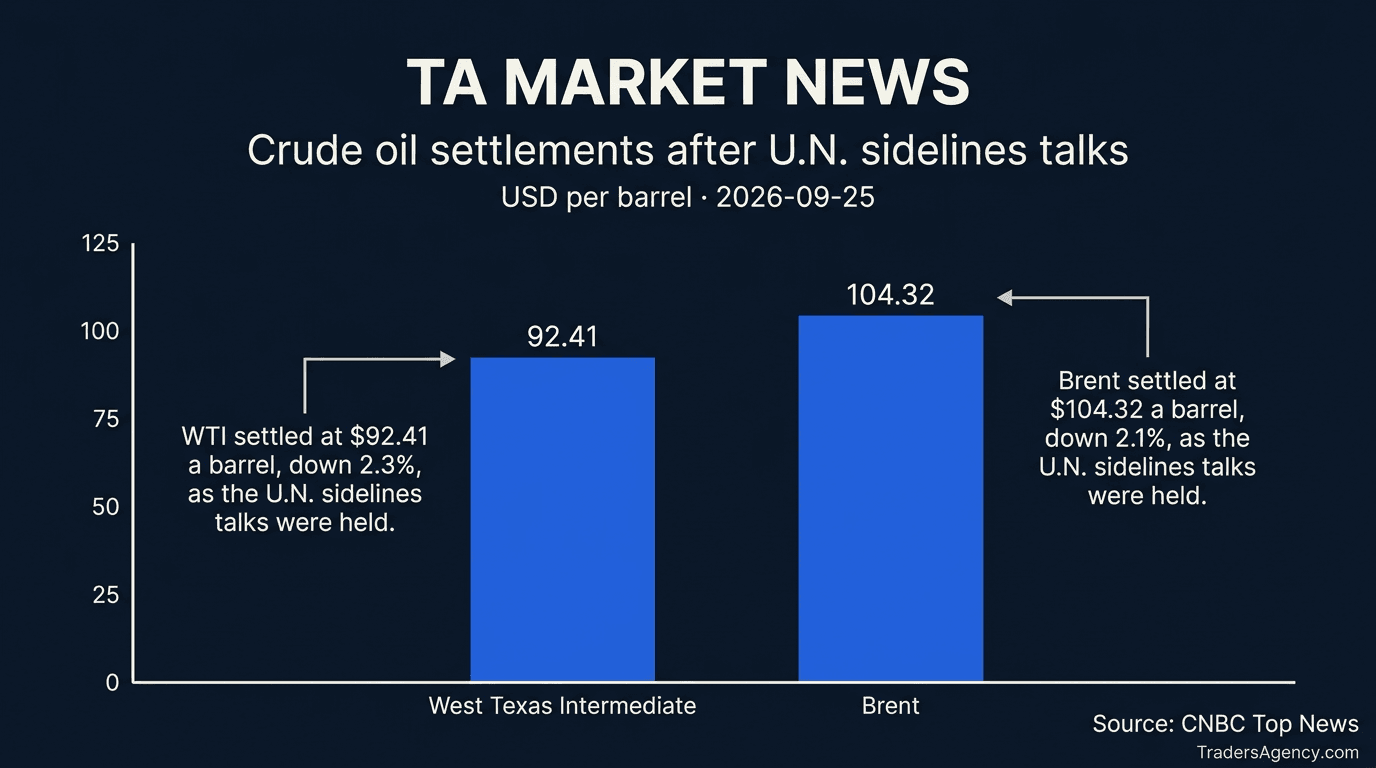
Crude prices fell as the diplomatic contacts became public. CNBC reported that West Texas Intermediate settled at $92.41 a barrel, down 2.3%, while Brent settled at $104.32, down 2.1%, as the U.N. sidelines talks were held. For the week, CNBC said U.S. crude finished 7.9% lower while Brent was flat. Our calculation, based on those CNBC-reported settlements, shows Brent $11.91 above WTI ($104.32 minus $92.41), meaning WTI settled 11.4% below Brent (($92.41 − $104.32) ÷ $104.32).
In Friday trading, CNBC reported Brent crude futures with November expiry down 1% at $105.56 a barrel, with WTI futures down 1.8% at $92.94. By our calculation, that leaves Brent $12.62 above WTI, a 13.6% premium (($105.56 − $92.94) ÷ $92.94). Separately, Seeking Alpha reported that oil fell about 3% to roughly $91.70 a barrel on Friday afternoon amid reports that Washington and Tehran had shifted from opening contacts to a more technical stage of discussion.
Equity markets took the diplomatic signals as modestly reassuring. Seeking Alpha reported the S&P 500 up 0.1%, the Dow up 0.2% and the Nasdaq Composite up 0.2% on Friday, with Treasury yields falling as investors focused on the Hormuz talks.
Escalation Risk Elsewhere
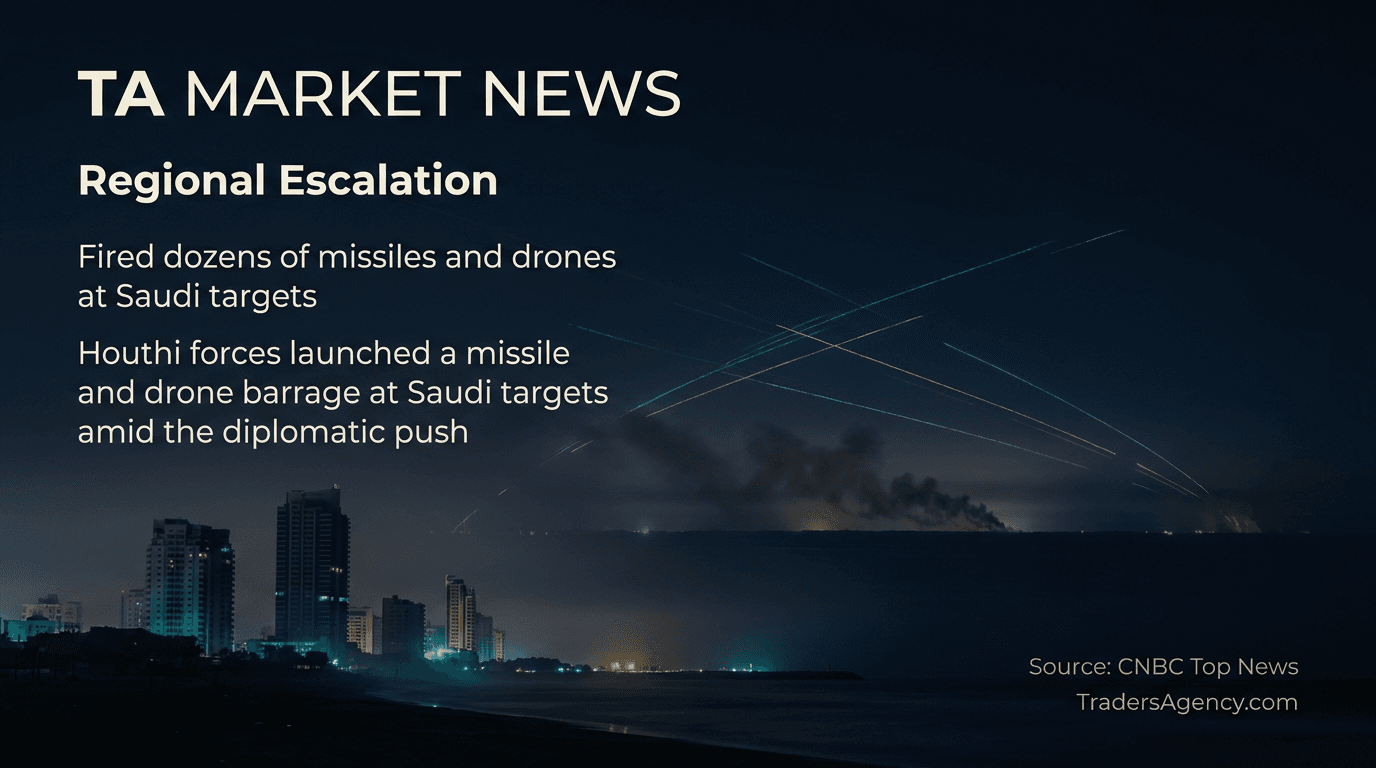
The diplomatic overture unfolded alongside fresh fighting elsewhere in the region. CNBC reported that Houthi forces fired dozens of missiles and drones at Saudi targets Friday morning, with Saudi authorities saying they intercepted six ballistic missiles and issuing emergency alerts in Mecca, Jeddah and Yanbu. Saudi Arabia, Turkey and Pakistan planned an urgent meeting of their chiefs of staff under the Mecca Joint Defense Agreement to discuss supporting the kingdom, according to CNBC.
Pezeshkian sought to separate Tehran from that escalation, telling Fox News, as reported by CNBC, that "the Houthis are responsible for their own actions" and that Iran is "not at war with Saudi Arabia," adding that the group has "their own issues." Saudi Arabia's Grand Mufti struck a different tone, per CNBC, telling troops to be ready "to lay down their lives" fighting the Houthis until the group is removed from power.
Bottom Line
Araghchi's seven-day offer reopens a diplomatic channel that collapsed in July, but the Trump administration's prior refusal to revert to June's terms, the unresolved question of how renewed fighting would be prevented, and continued Houthi strikes on Saudi targets all point to a process that CNBC's reporting describes as still unanswered by Washington. One interpretation of the price action, tied to the CNBC figures above: with WTI finishing the week 7.9% lower while Brent was flat, traders may be assigning some probability to de-escalation without treating it as settled. That is interpretation, not a forecast, and the outcome depends on a U.S. response that has not been reported.
DISCLAIMER: Traders Agency does not offer financial advice. The information provided is for educational purposes only and should not be considered financial advice. Traders Agency is not responsible for any financial losses or consequences resulting from the use of the information provided. Trading carries inherent risks and may not be suitable for all individuals. You are advised to conduct your own research and seek personalized advice before making any investment decisions, recognizing the potential risks and rewards involved.
- CNBC Top News: Iran offers to reopen Hormuz within 7 days and restart nuclear talks · accessed Sep 25, 2026
- Seeking Alpha Market News: Stock market edges higher as Hormuz reopening talks regain focus · accessed Sep 25, 2026
- Seeking Alpha Market News: Stocks climb as Hormuz talks turn technical and oil slides · accessed Sep 25, 2026
- CNBC Top News: Oil falls as potential diplomatic solution to Iran conflict emerges · accessed Sep 25, 2026
See more from Traders Agency on Google
Make us a preferred source and our market analysis will appear more prominently in your Google Search, Top Stories, and AI results.
Add to Preferred Sources