

Hey, Ross here:
The 10-year Treasury yield just pushed above 5%, and that single number is why every conversation about fed rate cuts 2026 predictions keeps coming back to the bond market. When yields move this fast, the bonds sitting on bank balance sheets lose value. We're about to find out exactly how much pain banks like Bank of America are absorbing.
On October 14th, the picture gets a lot clearer.

This isn't a story about abstract Wall Street numbers. It's about your savings account and your bank.
If you have money sitting in a savings account right now, you need to understand this mechanism before the next report drops.
How Does a Bank Actually Make Money?
Bottom Line: Rising yields squeeze bank bond portfolios, and the pain shows up as unrealized losses that only become real if a bank is forced to sell. October 14th bank earnings will show how much worse that paper loss has gotten since the 4.45% yield level, and that arithmetic, not guesswork, is the real starting point for any fed rate cuts 2026 predictions.
And why rising rates break the model
A bank's business model is simple until rates move against it. You deposit a dollar, the bank pays you a little interest, then lends that dollar out or buys bonds with it at a higher rate. The bank keeps the difference between those two interest rates.
That works fine until rates go up.
Here's why: if a bank owns a bond paying 2% a year and the government is now handing out brand new bonds paying 5%, nobody wants the old 2% bond. The only way to sell it is at a discount, a big one. That single dynamic is what makes rising yields so dangerous for any institution holding a large bond portfolio.

This is not a new problem. It's the exact mechanism that killed Silicon Valley Bank in 2023.
The Silicon Valley Bank Playbook
During COVID, deposits were pouring into SVB. The bank took that money and bought long-term bonds because they paid a little more in the short term. Then the Fed started hiking.
In 2022, SVB's bond portfolio was sitting on about $15 billion in losses. Customers pulled $42 billion out of the bank in a single day. It failed the next day.

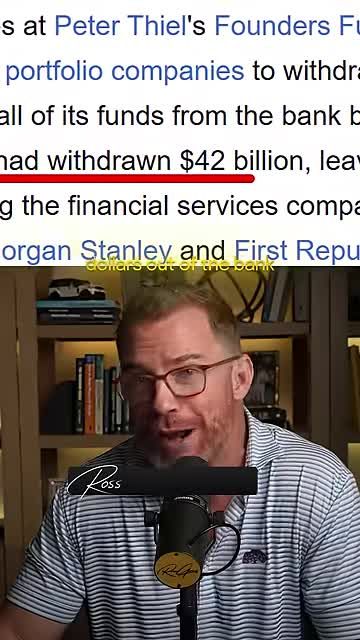
That's the entire playbook. Deposits in. Long-term bonds purchased. Rates rise. Bonds lose value. Depositors pull their money. Bank fails.
It happened in days, not years. And the same mechanism is sitting underneath much larger institutions today, just at a bigger scale.
Inside Bank of America's Bond Book
Rising yields make the bonds a bank already owns lose value, and the bigger the portfolio, the bigger the exposure. Bank of America is holding $506 billion of bonds labeled "held to maturity." That's a cute little label. It just means the bank doesn't have to mark those bonds down on the balance sheet. As long as it never sells, the losses stay on paper.
Those paper losses run to $82 billion.

Not all of it, but a significant chunk. And unlike SVB, nearly half of Bank of America's deposits come from everyday consumer accounts, not big tech startups.
Now the part that should concern anyone watching this closely: that $82 billion was measured on June 30th, when the 10-year yield was 4.45%. The yield is above 5% now. Every tick higher makes those bonds worth less, and nobody knows the new number yet.
We find out on October 14th.
Three Numbers to Watch
- 4.45% - where the 10-year yield sat when the $82 billion loss was measured
- 5%+ - where the 10-year yield sits today
- October 14th - the date the next real number gets revealed
Get an entire year of live weekly mentoring sessions, my newsletter, indicators, bonus reports, tons more. Click the link and I'll see you in the next live session.
Join my Black Ops Trading ClubHas the Fed Cut Rates Yet?
What's happening right now is the opposite of easing: yields are rising, and rising yields make the bonds banks already own lose value. That's the same pressure that killed Silicon Valley Bank in 2023, and it's the backdrop behind most fed rate cuts 2026 predictions you'll come across.
The difference between SVB and Bank of America comes down to scale and deposit composition. SVB's customers pulled $42 billion out in a single day. Bank of America's base is nearly half everyday consumer accounts, not big tech startups.
But the underlying mechanism, bonds losing value as rates rise, is identical. You can track the policy side directly at the Federal Reserve.
What Date Matters for Bank Earnings?
There's a firm date here: October 14th. That's when the next real numbers show up, and it's when we see how much worse Bank of America's paper bond losses have become since the $82 billion figure was measured on June 30th.
Think of October 14th less as an announcement and more as a reveal. The 10-year yield has already climbed from 4.45% to above 5%. Whatever number comes out on the 14th will tell us how much that move actually cost.
What Do Fed Rate Cuts 2026 Predictions Point To?
The case comes straight from the mechanics above. When the 10-year yield pushes above 5%, the bonds already sitting on bank balance sheets lose even more value. That pressure doesn't resolve itself.
The alternative is watching paper losses at institutions like Bank of America keep climbing with every tick higher in yields. A $506 billion bond portfolio doesn't need a crisis to cause damage. It just needs rates to keep rising.
This is the same setup that broke Silicon Valley Bank, playing out at a much larger institution with a different deposit base.
The Rate That Actually Tells You Something
The clearest real-time signal available isn't a Fed funds number. It's the 10-year Treasury yield, which has pushed above 5%. That's up from the 4.45% level on June 30th, and every tick higher makes those long-term bonds worth less.
That yield move is the story. It's the number driving the paper losses at Bank of America, and it's the number that determines how bad the October 14th report turns out to be.
What to Watch Around the Report
The gap to watch is between the June 30th snapshot and whatever comes out on October 14th. An $82 billion paper loss, about 40% of tangible equity, was already a meaningful number at a 4.45% yield. Above 5%, the bonds are worth less.
Speculation is cheap. The reported number is what moves this from theory to fact.
- Whether the paper loss figure at Bank of America grows beyond $82 billion
- Whether consumer deposit behavior shows any early signs of stress
- Whether the 10-year yield keeps climbing past 5% or starts to retreat
- Whether other large banks disclose similar held-to-maturity exposure
None of this requires a crisis to matter. It just requires rates to keep behaving the way they've behaved.
Final Thoughts
The entire story comes down to one mechanism: rising rates make the bonds banks already own lose value, and those losses don't disappear just because a bank labels them "held to maturity."
Silicon Valley Bank showed what happens when that pressure meets a deposit base that can run. Bank of America's deposit base is nearly half everyday consumer accounts rather than big tech startups, but the same math applies, and the math has changed since June. An $82 billion paper loss at a 4.45% yield is one thing. Whatever that number becomes above 5% is another.
October 14th will tell us. Until then, this isn't speculation, it's arithmetic, and that arithmetic is where any serious look at fed rate cuts 2026 predictions has to start.
Get an entire year of live weekly mentoring sessions, my newsletter, indicators, bonus reports, tons more. Click the link and I'll see you in the next live session.
DISCLAIMER: Traders Agency does not offer financial advice. The information provided is for educational purposes only and should not be considered financial advice. Traders Agency is not responsible for any financial losses or consequences resulting from the use of the information provided. Trading carries inherent risks and may not be suitable for all individuals. You are advised to conduct your own research and seek personalized advice before making any investment decisions, recognizing the potential risks and rewards involved.
See more from Traders Agency on Google
Make us a preferred source and our market analysis will appear more prominently in your Google Search, Top Stories, and AI results.
Add to Preferred Sources