Hey, Ross here:
My 2026 investment outlook comes down to one simple shift. The money that built fortunes over the last ten years went into things that were cheap to copy and scale. The money that builds fortunes over the next ten years is going into things that are physically hard to build: power plants, copper wire, transformers, and fuel.
And you're already paying for part of it every month on your electric bill.
The gap between what the market is pricing in and what's actually happening on the ground, with power grids, data centers, and nuclear contracts, is wide enough to act on right now. Most investors are still playing the last decade's game. That game doesn't work the same way for the next one.
What Is the Best Investment for the Next 10 Years?
Bottom Line: The 2026 investment outlook favors physical energy infrastructure over software: power generation, transmission equipment, and fuel supply tied to AI's electricity demand. Companies like GE Vernova, Eaton, and Cameco are positioned on long-term contracts and backlogs that point toward sustained demand in this shift.
Follow the capital, not the headlines
The best investments for the next 10 years sit in the infrastructure behind AI, not the software on top of it. Companies that generate electricity, move electricity, and fuel electricity generation. The physical buildout AI actually depends on to function.
For most of the last decade, investing was easy. You bought the big tech names and rode software, ads, apps, and cloud storage higher. Those businesses cost almost nothing to make one more copy of. Write the code once, sell it a billion times. It's a wonderful business model, and it's also exactly why those stocks got so expensive.
AI broke that model. AI doesn't run on code alone. It runs on electricity, and massive amounts of it. Every question typed into a chatbot runs through a building packed with chips, and that building has to be plugged into something.
Your chatbot lives in a concrete box, plugged into the same grid as your house.
That's the entire thesis. The last decade rewarded companies that were cheap to scale. The next decade rewards companies that are hard to replace.
Why Does AI Change Where Investment Money Goes?
America basically stopped building power plants and power lines for 20 years. Demand was flat, so why would anyone bother? Then, almost all at once, the biggest companies in the world showed up needing more power than entire cities.
You can't download a power plant. You have to build it with steel, turbines, copper, and people.
That single fact is reordering where capital goes. This isn't a call to abandon diversification. It's a reminder that the underlying building blocks of growth have changed, and any forecast built on the last decade's winners needs to account for a buildout that nobody planned for.
Software sells copies. Infrastructure sells capacity.
Software companies sell something that costs almost nothing to duplicate. Infrastructure companies sell something that takes years, permits, and raw materials to build. Whoever already has the capacity gets to set the price.
The next bottleneck isn't code. It's concrete, copper, and turbines.
You're Already Paying for This
PJM runs the power grid for 13 states plus Washington, D.C., including Northern Virginia, home to the biggest cluster of data centers in the world. Its own independent market monitor estimates that data centers have cost the 67 million people on that grid about $29 billion over roughly the past two years.
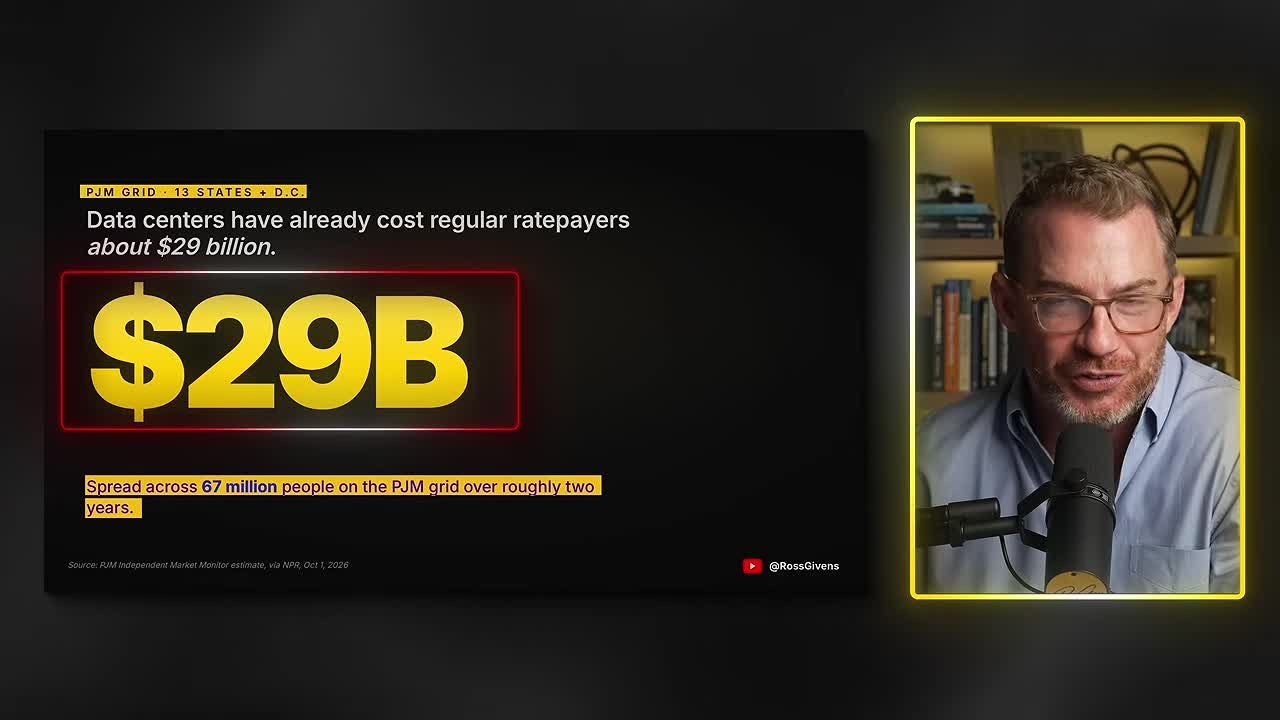
In plain terms: if you live anywhere from Chicago to New Jersey, part of your power bill is already helping build somebody else's AI data center.
You can get mad about that, and plenty of people in Congress are. Or you can ask the better question. If your money is already going into this buildout, why not own a piece of the companies getting paid for it?
That question is the entire premise behind the three stocks below.
Get an entire year of live weekly mentoring sessions, my newsletter, indicators, bonus reports, tons more. Click the link and I'll see you in the next live session.
Join my Black Ops Trading ClubMake It, Move It, Fuel It
I break this buildout into three pieces: the company that makes the power, the company that moves the power, and the company that fuels the power. Each one sits at a different point in the same chain.
1. GE Vernova (GEV): Makes the Power
If you need more electricity, step one is making it. Right now the fastest way to produce a lot of reliable power is a natural gas turbine. Think of it as a jet engine bolted to the ground, spinning a generator. Only a handful of companies on earth build the big ones, and GE Vernova is one of the biggest.
GE Vernova used to be the power division of General Electric, and plenty of investors treated it like a boring industrial leftover. Boring got busy.
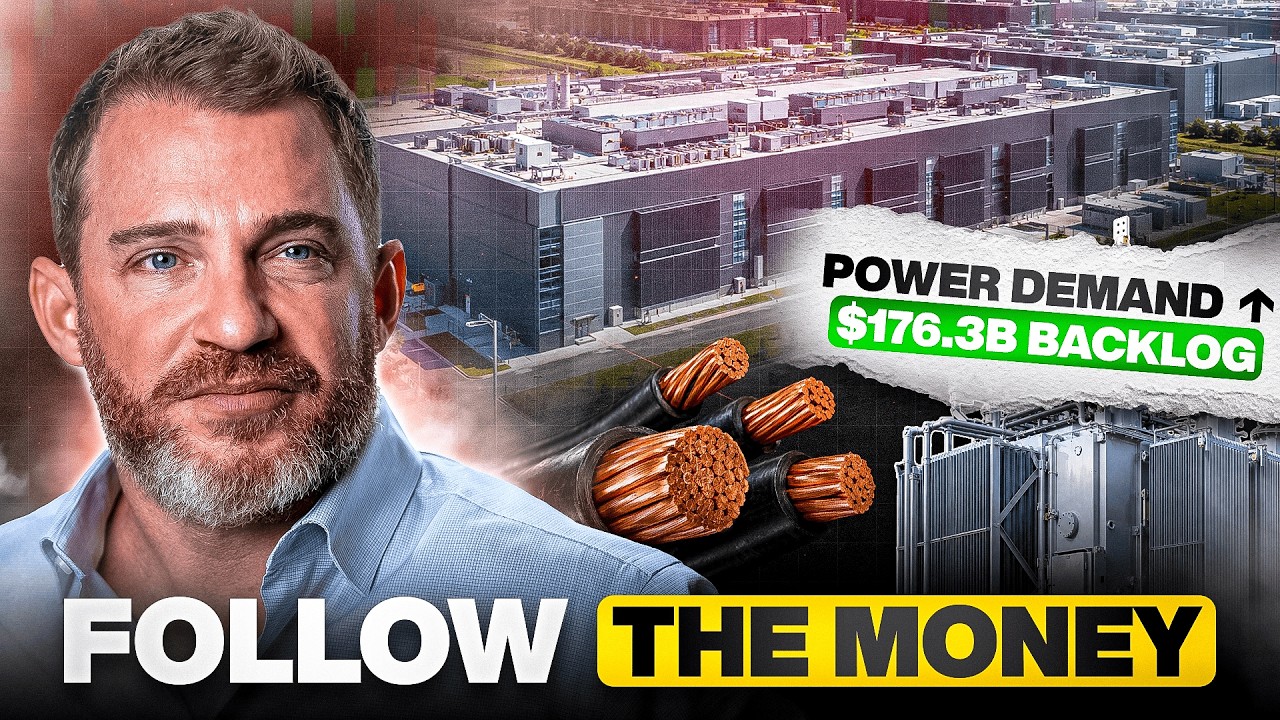
At the end of June, GE Vernova was sitting on a $176 billion backlog. That's orders customers have already signed, waiting to be built and serviced.
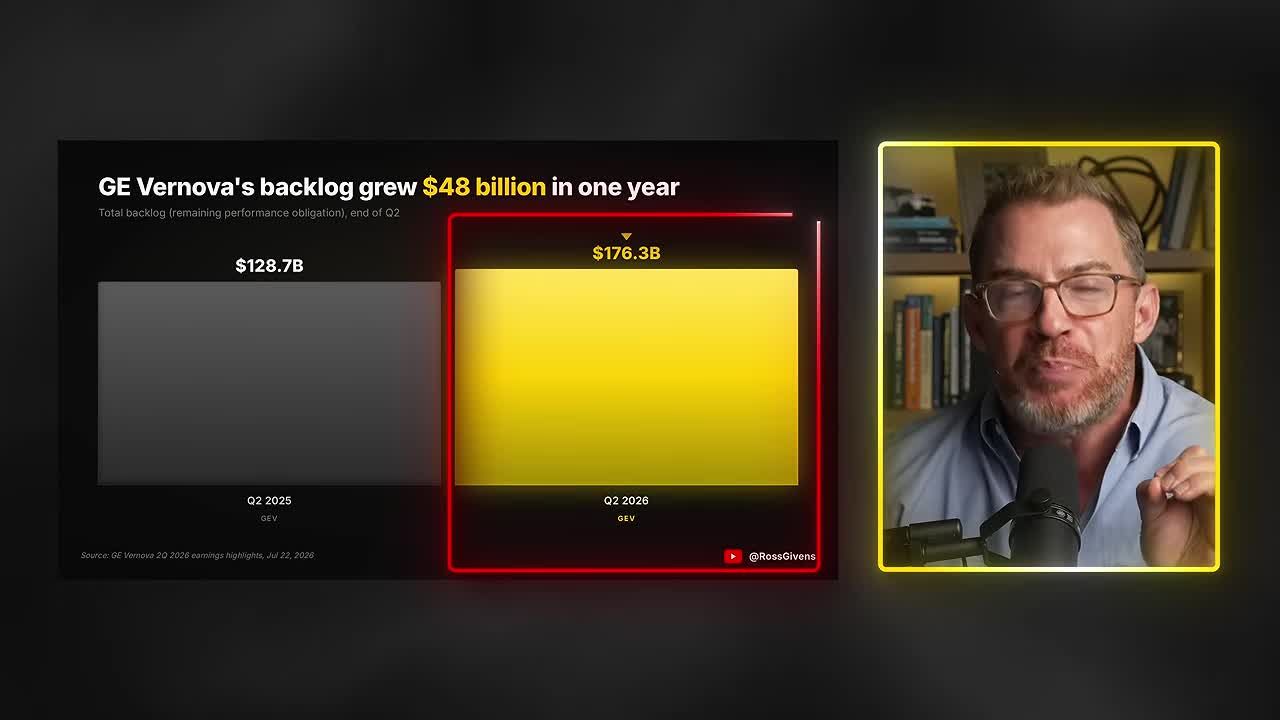
Backlog is the closest thing to seeing the future in business. These aren't hopes. They aren't optimistic outlooks. They're contracts with ink signatures on them. On the earnings call, management said they now have turbine agreements signed into 2031.
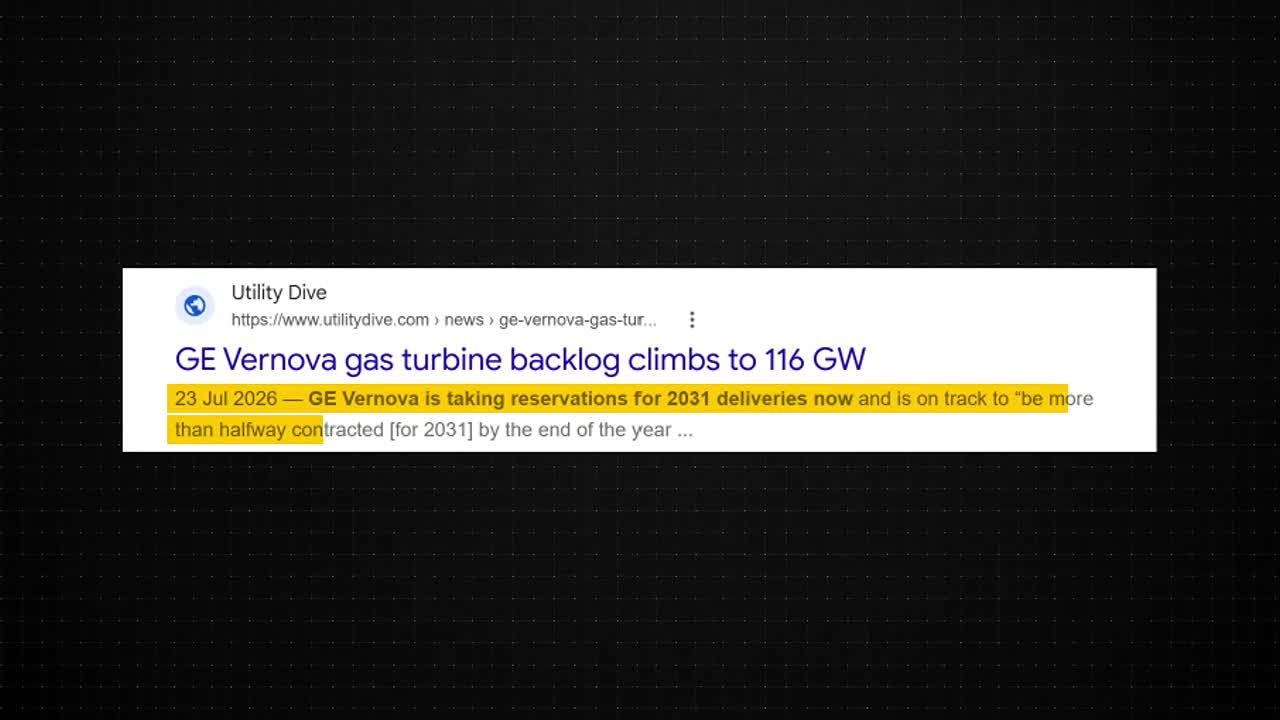
If you're a utility that wants a new gas turbine today, you're getting in line behind orders that stretch past the end of this decade. That's what a bottleneck looks like. When you're the bottleneck, you set the price. You can track the filings yourself through SEC EDGAR.
The stock is up more than 50% in the last year. It's not cheap, and nobody's handing it to you at a discount. But a company with a waiting list into 2031 doesn't need everything to go right next quarter. It just needs the world to keep needing more power, and I don't see that changing.
2. Eaton (ETN): Moves the Power
Power coming out of a turbine can't just plug into a rack of chips. It has to be stepped down, switched, routed, protected, and backed up. Every connection between the power plant and the chip needs equipment: switchgear, breakers, transformers, power distribution.
That's Eaton. The plumbing for electricity.
Eaton has been around for over a century, selling to factories, hospitals, airports, and even the military. That diversification matters, and I'll come back to why.
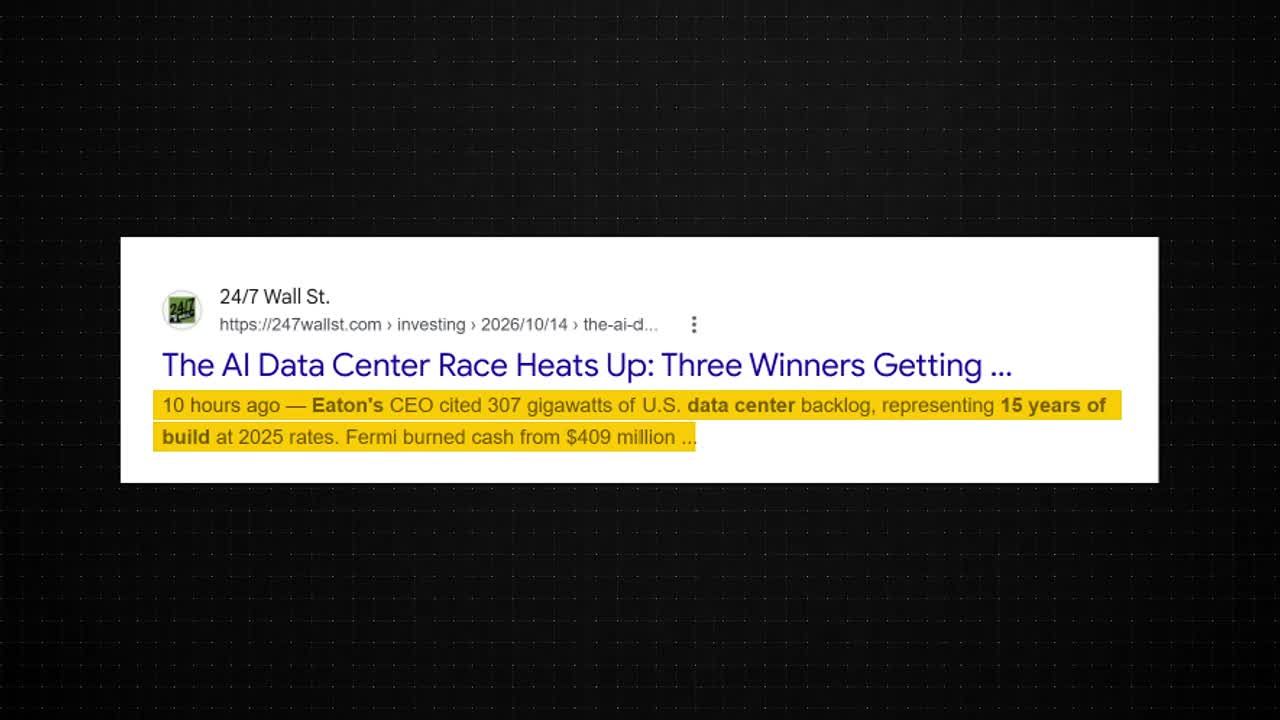
On Eaton's last earnings call, management said the total backlog of U.S. data center projects has grown to 307 gigawatts, which works out to 15 years of work at the pace data centers were being built in 2025.
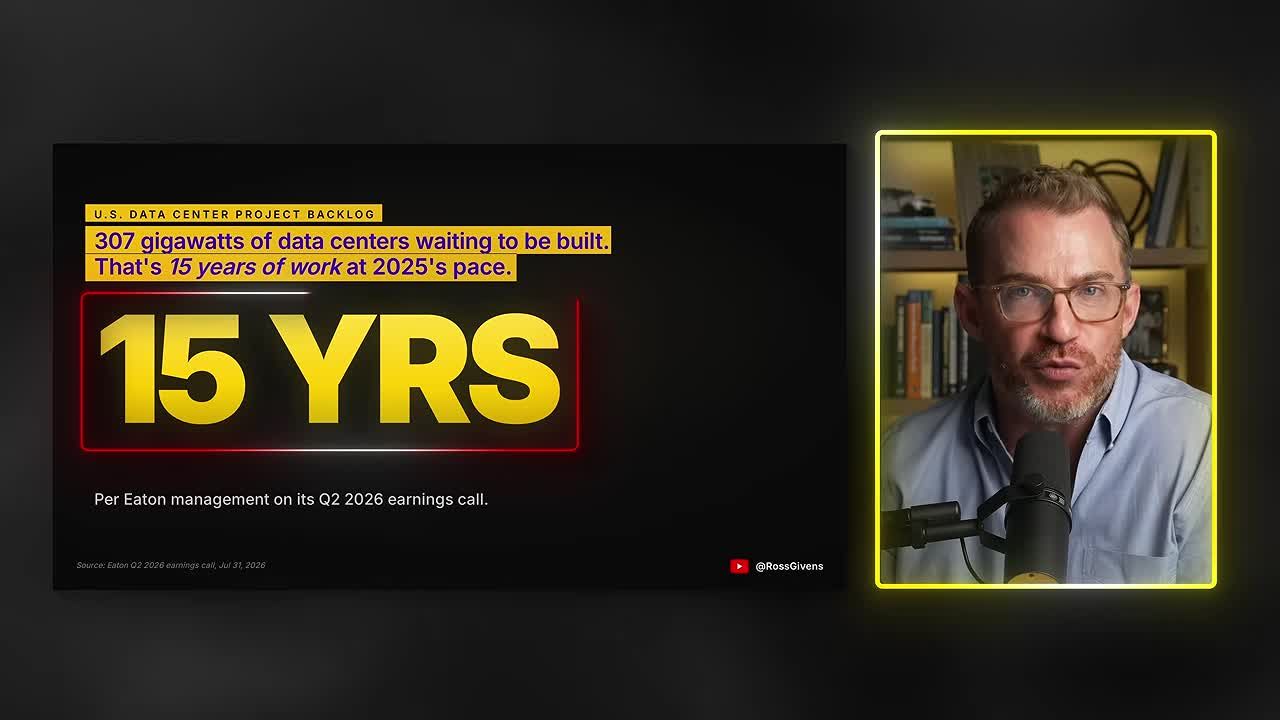
If not one new data center project got announced from here on out, the industry would still have 15 years of building left at last year's pace. And every one of those buildings needs the gear Eaton makes.
I'm not naive about the risk. AI spending could cool off for a year or two, and every boom has a hangover. If you owned a company that only sold to data centers, that hangover would nail the stock.
But Eaton also sells to the factories coming back to America. Every new chip plant, battery plant, and steel mill needs the same electrical gear, and tariffs are pushing companies to build here instead of overseas.
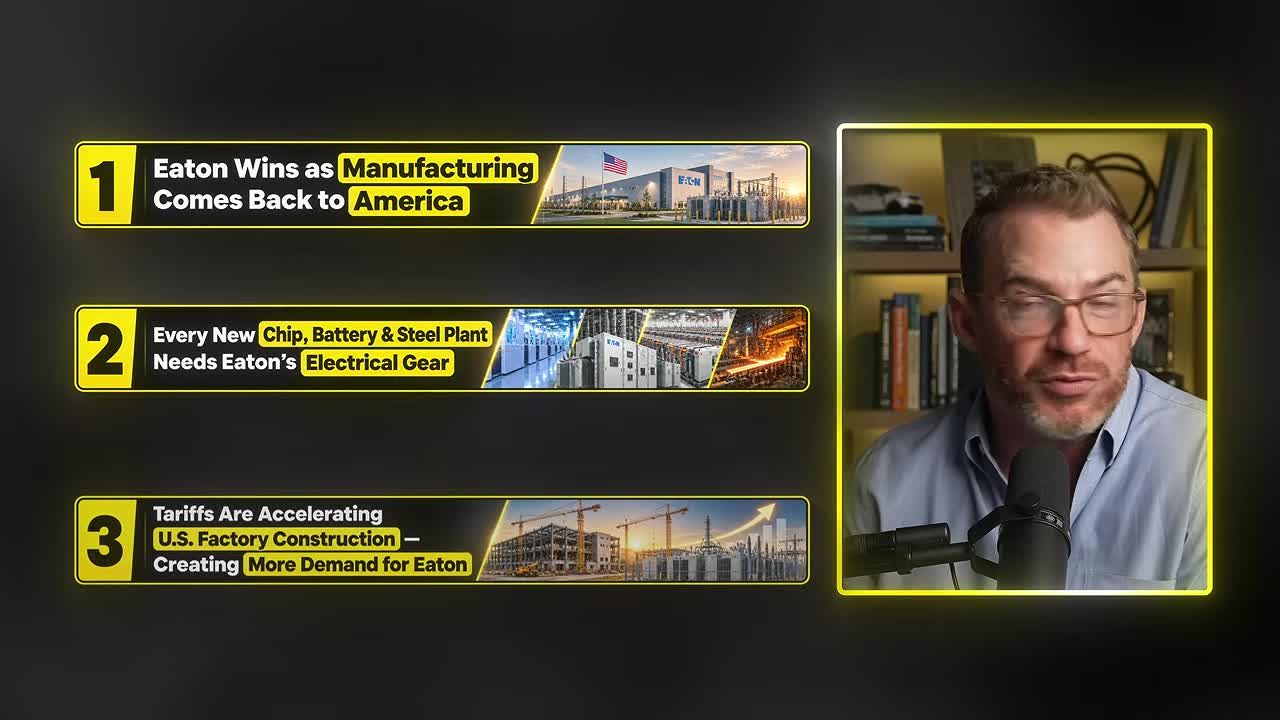
Eaton gets paid when AI builds, and it gets paid when manufacturing comes home. Two engines feeding the same company.
3. Cameco (CCJ): Fuels the Power
Gas turbines are great, but gas prices swing and pipelines take years to approve. Tech companies have also promised shareholders they'll go carbon-free. So what gives you massive, around-the-clock power with no carbon that runs for 50 or 60 years?
Nuclear. One answer.
For decades, nuclear was the industry nobody wanted to touch. Now it's the one everybody's fighting over. Tech giants are signing deals to restart old reactors, and the U.S. government has set a goal of quadrupling America's nuclear power by 2050. That's not a stock tip. That's energy security. A country that can't keep its own lights on can't run its own AI.
Every reactor needs uranium, and Cameco owns 49% of Westinghouse, the company that designs and services a huge share of the world's reactors.
Here's the part I find crazy. Utilities don't buy most of their uranium on the spot market. They lock in long-term contracts years ahead because they can't risk running out. That long-term contract price tells you what the people who actually run reactors think is coming, and it just hit the highest level in the records Cameco publishes, going back to 1996, above even the peak from the 2007 uranium bubble.
And what's Cameco stock doing? Going the other way. It's trading in the mid-80s, which has been a big buy zone for the last 12 months.
Part of that gap is timing. Utilities have been slow to sign new long-term contracts, so the record price hasn't flowed into results as fast as investors hoped. Cameco has also been disciplined about not selling too much uranium at old prices.
I can't promise this gap closes next month. But I'd rather buy when the product is at a record and the stock is on sale than the other way around. That's the setup I look for: buyers paying up, and the stock hasn't caught on yet.
The 2026 Investment Outlook: Is It a Good Year to Invest?
2026 looks like a good year for owning the companies building AI's physical infrastructure, and the reason is simple: the demand is already locked in through contracts. GE Vernova's turbine orders run into 2031. Eaton's data center backlog alone represents 15 years of construction at 2025's pace.
Those numbers don't depend on what happens in any single calendar year. That's the backbone of my 2026 investment outlook: the signal isn't in next quarter's earnings. It's in the backlog that's already signed.
Which Industry Is Set to Boom Next?
Power generation, transmission, and fuel. The physical backbone that AI data centers depend on to function at all. This isn't a prediction about an app or a platform. It's about steel, turbines, copper, and uranium.
- Power generation: gas turbines and nuclear reactors, led by companies with multi-year signed backlogs.
- Transmission and distribution: switchgear, breakers, and transformers that move electricity from the plant to the chip.
- Fuel supply: uranium contracts locked in at record prices by utilities planning decades ahead.
Each piece depends on the others, and none of it can be downloaded or copy-pasted into existence. That's why every version of my 2026 investment outlook keeps coming back to the same three links in the chain.
The Cisco Lesson
On March 27, 2000, Cisco became the most valuable company on the planet, passing Microsoft that day. Cisco sold the routers and switches the whole internet ran on. Everybody owned it. Your neighbor owned it. Your dentist owned it.
If you bought it that day, you waited more than 25 years just to get back to even.
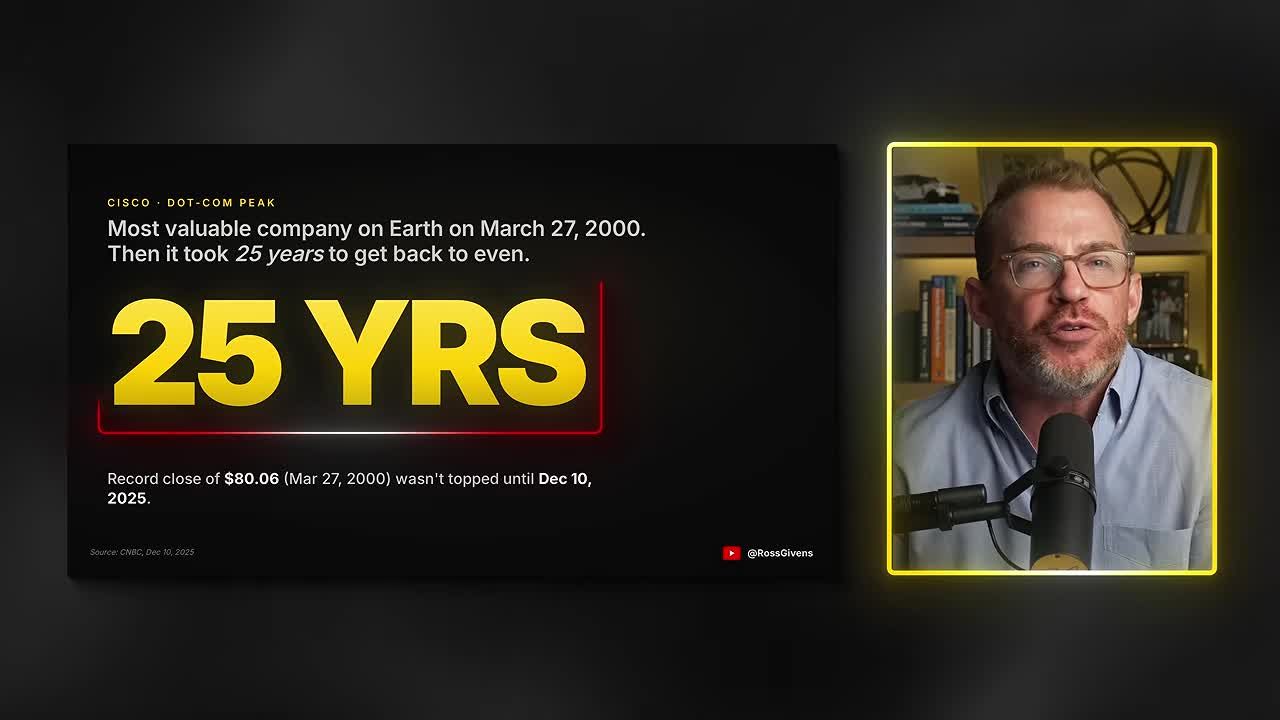
Cisco didn't go broke. The internet didn't fail. The internet won. Cisco was simply the winner of the last decade, priced like it would win the next one too.
We're standing at that same kind of turning point now, only this time the money isn't going into the thing you can see on your phone. It's going into the thing that makes your phone work at all.
The lesson isn't to avoid great businesses. It's to avoid paying tomorrow's price for yesterday's winner. A great business at the wrong price is how you end up holding a Cisco for 25 years.
Putting the Three Side by Side
I'm not telling you to sell your tech stocks. I own some myself. The companies that won the last decade are still great businesses. But the setup for the next decade favors a different kind of asset.
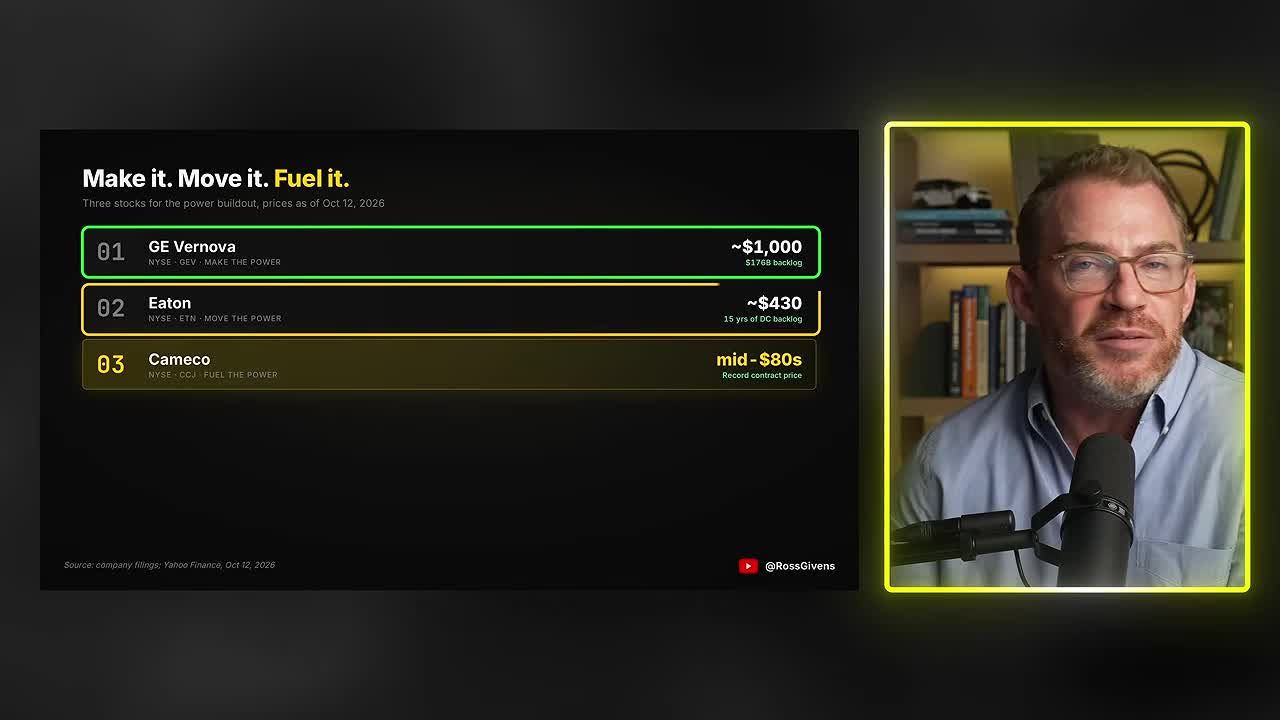
- GE Vernova (GEV) makes the power. Strongest business of the three, and the market already knows it, so you're paying full price for a company with a waiting list into 2031.
- Eaton (ETN) moves the power. It gets paid by data centers and by factories coming home, which is a cushion if AI spending takes a breather.
- Cameco (CCJ) fuels the power. The most beaten up of the three, with a product price and a stock price that disagree the most.
Three different parts of the same machine, same theme.
The money that made people rich over the last decade went into things that were cheap to copy and scale. The money that makes people rich over the next decade goes into things that are hard to build, things AI itself can't do. You can't copy a gas turbine. You can't get a transformer from a piece of code. And you can't wish a uranium mine into existence.
Where the Next Fortunes Get Built
Cisco sold the hardware the internet ran on, and it was the most valuable company in the world for a day. The difference this time is that the hardware has a waiting list, and you're already paying for it every month on your power bill. I'd rather be on the receiving end of that bill than just the one paying it.
The next wave of wealth doesn't get built in the app. It gets built in the power cord behind it.
GE Vernova, Eaton, and Cameco are the three names I want on my side for the next 10 years. Not because they're exciting, but because the contracts, backlogs, and long-term pricing already point in one direction.
That's the short version of my 2026 investment outlook: the playbook that worked for the last decade isn't the playbook that wins the next one. Position accordingly.
Get an entire year of live weekly mentoring sessions, my newsletter, indicators, bonus reports, tons more. Click the link and I'll see you in the next live session.
DISCLAIMER: Traders Agency does not offer financial advice. The information provided is for educational purposes only and should not be considered financial advice. Traders Agency is not responsible for any financial losses or consequences resulting from the use of the information provided. Trading carries inherent risks and may not be suitable for all individuals. You are advised to conduct your own research and seek personalized advice before making any investment decisions, recognizing the potential risks and rewards involved.
See more from Traders Agency on Google
Make us a preferred source and our market analysis will appear more prominently in your Google Search, Top Stories, and AI results.
Add to Preferred Sources