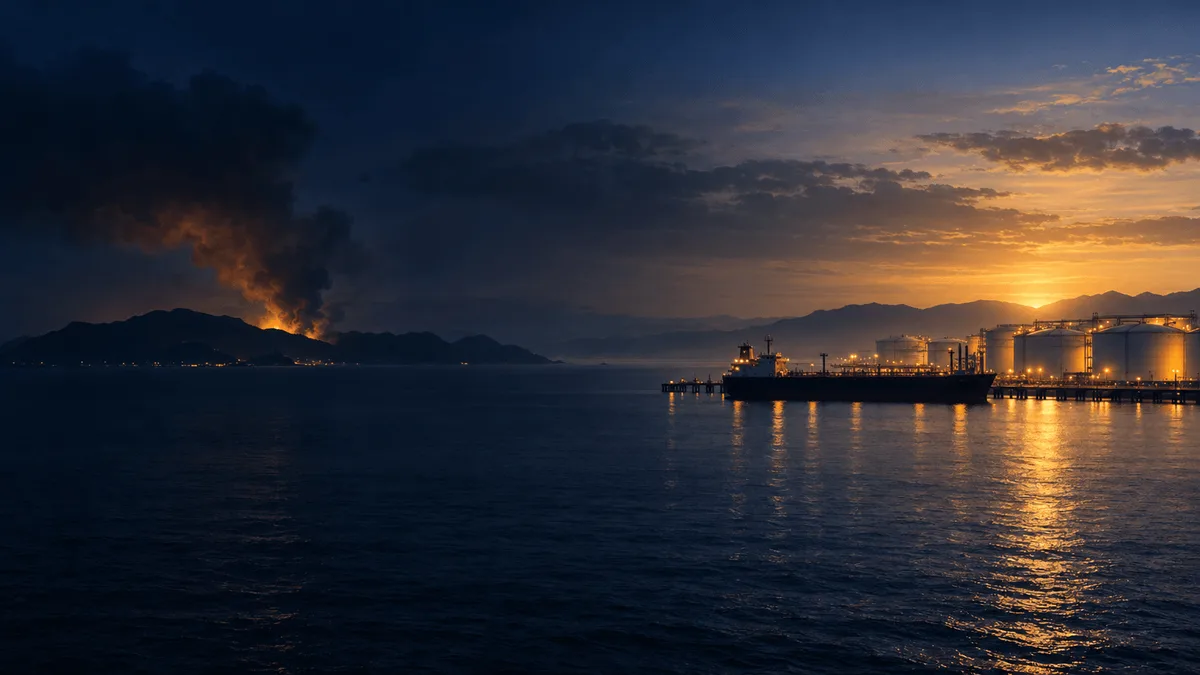
The U.S. military carried out limited, defensive strikes on Iran's Qeshm Island on Monday, according to multiple U.S. officials cited by CNN, NBC News and ABC News. Officials characterized the action as protective rather than a resumption of major combat operations, and oil prices rose on Tuesday as the move reinjected a geopolitical risk premium into crude markets that had sold off sharply just a day earlier.
What Triggered the Strikes
A senior U.S. official told CBS News that the strikes targeted Qeshm Island after Iran's Islamic Revolutionary Guard Corps fired at an American aircraft. A separate U.S. official told CNN the attack came in direct response to Iran firing at a U.S. aircraft, while a third official told NBC News, "This was a defensive measure for Iranians using surface-to-air missiles against U.S. assets." One U.S. official told NBC that the Revolutionary Guard has "routinely targeted and shot at U.S. manned and unmanned aircraft over the Strait of Hormuz" in recent weeks, and that this latest attempt to target a U.S. aircraft led directly to the Qeshm strike meant to take out the missile launcher, describing it as part of ongoing operations.
The strikes were first reported by The Wall Street Journal, which said, according to CNBC's account, that Washington has been carrying out "limited strikes" against Iran in recent weeks. A person familiar with the matter told CNN the administration deliberately kept the attack under wraps to avoid overstating what it considered a defensive move. The timing fell on the eve of U.S. midterm elections, a point several outlets, including CBS News and NBC News, noted explicitly. CNBC reported that Trump said last month the U.S. would not attack Iran before the midterms, after polling ahead of the vote showed support for the military action had dwindled to just 31% of Americans.
Iran's state-affiliated Fars News Agency reported "several explosions" heard on Qeshm Island in the early hours of Tuesday local time, per CNN, while NBC News cited Iranian state media describing five explosions on Monday. Separately, Iran's Revolutionary Guard Corps claimed late Monday it had shot down two U.S. RQ-170 reconnaissance drones over Qeshm Island. A U.S. official called that claim false, according to ABC News, and CNN noted it remains unclear whether the drone episode is connected to the U.S. strikes at all.
Oil Market Reaction
Oil prices climbed on Tuesday after reports of the Qeshm strikes, according to CNBC, reversing a sharp selloff from the prior session. Reuters, via Arab News, reported that oil prices rose more than $1 on Tuesday as an Iranian official said a deal to end the war remained far off, fueling concerns over escalation and risks to energy supplies.
That rebound followed a steep drop. Both Brent and WTI had fallen more than 7% on Monday, per Reuters/Arab News, as talks between Iranian and Qatari officials had briefly lifted hopes for a resolution to the broader conflict involving the U.S. and Israel. CNBC reported the same dynamic, framing Monday's selloff as a reaction to signals from the U.S. and Iranian presidents that they were open to a diplomatic solution, before the strike reports reversed that move. Before the Monday selloff, Brent had been trading at its highest level since 2022, driven by fears of further U.S. strikes on Iran after the midterms, according to CNBC; Arab News separately noted Brent closed October at its highest level in six months on similar escalation concerns.
Tim Waterer, chief market analyst at KCM Trade, told Reuters, as carried by Arab News, that "the report added a degree of risk premium back into the oil price," framing the Tuesday move as markets pricing in renewed uncertainty rather than a fresh supply disruption. Seeking Alpha reported that oil futures only edged higher overnight rather than spiking sharply, even as the strikes stoked concern the conflict could escalate, noting that President Trump said he was in "no rush" to resume military action. That qualified reaction, a modest overnight edge rather than a violent spike, suggests traders are treating the strike as consistent with the pattern of limited, defensive exchanges officials described rather than as the opening of a new offensive phase. That is our interpretation of the price action relative to the sourced commentary, not a forecast of where oil heads next.
Diplomatic Track Under Strain
Earlier on Monday, before the strikes were reported, Vice President JD Vance told CNN the U.S. and Iran had "certainly made some progress" in recent talks, adding, "The president and I both feel really good about the prospect of potentially coming to a negotiated settlement." CNN reported Vance also cautioned that Iran remains unpredictable and that Trump retains both kinetic and non-kinetic options. President Trump posted on Truth Social the same day, before the Qeshm strikes, that "Oil Prices are DROPPING LIKE A ROCK... because people feel that there will not be a War with Iran," adding "Iran wants a settlement, as soon as possible. It could happen!" per CNN's reporting.
Qatari mediators were engaged in parallel shuttle diplomacy, traveling to Tehran Monday night to discuss a draft U.S.-Iran deal that CNBC said had been under negotiation for eight days, then returning to Doha Monday evening. A diplomat briefed on the talks told CNN that both sides were separately reviewing the latest suggestions from mediators aimed at bridging remaining gaps.
After the strikes became public, the tone from Tehran hardened. A senior Iranian official told Reuters, as reported by CNBC, that Tehran would respond forcefully to U.S. "aggression" and warned the two sides remained far from a deal. Iran's Parliament Speaker and top negotiator, Mohammad Bagher Ghalibaf, said Tuesday that Tehran "has delivered a firm and rational response to the American side and the ball is now in America's court to prevent a war," according to NBC News.
Bottom Line
Officials describe the Qeshm Island strikes as a defensive, limited response to Iranian missile fire on a U.S. aircraft, part of what one official called an ongoing pattern of skirmishes over the Strait of Hormuz rather than a deliberate escalation. Oil markets read the episode as a reintroduction of risk premium after Monday's diplomacy-driven selloff, though the muted overnight price move suggests traders are not yet pricing a full breakdown in talks. With Qatari-mediated negotiations still active and Iranian officials publicly hardening their rhetoric even as Trump continues to float a settlement, the diplomatic track appears strained but not yet abandoned.
DISCLAIMER: Traders Agency does not offer financial advice. The information provided is for educational purposes only and should not be considered financial advice. Traders Agency is not responsible for any financial losses or consequences resulting from the use of the information provided. Trading carries inherent risks and may not be suitable for all individuals. You are advised to conduct your own research and seek personalized advice before making any investment decisions, recognizing the potential risks and rewards involved.
- CNBC Top News: U.S. strikes Iran's Qeshm Island as Vance seeks settlement · accessed Nov 3, 2026
- CNBC Top News: Oil prices climb after U.S. strikes Iran's Qeshm Island · accessed Nov 3, 2026
- Seeking Alpha Market News: Oil futures edge up after U.S. said to strike Iran's Qeshm Island · accessed Nov 3, 2026
- CNN: US military conducts strikes on Iran’s Qeshm Island in defensive operation, officials say · accessed Nov 3, 2026
- Reuters via Arab News: Oil rises as peace prospects dim after US hits Iran’s Qeshm Island · accessed Nov 3, 2026
- NBC News: U.S. military carries out limited strikes on Iran’s Qeshm Island, U.S. officials say · accessed Nov 3, 2026
- ABC News: US carries out defensive airstrikes on Iran's Qeshm Island: Officials · accessed Nov 3, 2026
- Reuters via Yahoo News: US carries out 'defensive' strikes on Iran's Qeshm Island, officials say · accessed Nov 3, 2026
- CBS News: U.S. launches defensive strikes at Iranian targets near Strait of Hormuz · accessed Nov 3, 2026
See more from Traders Agency on Google
Make us a preferred source and our market analysis will appear more prominently in your Google Search, Top Stories, and AI results.
Add to Preferred Sources