

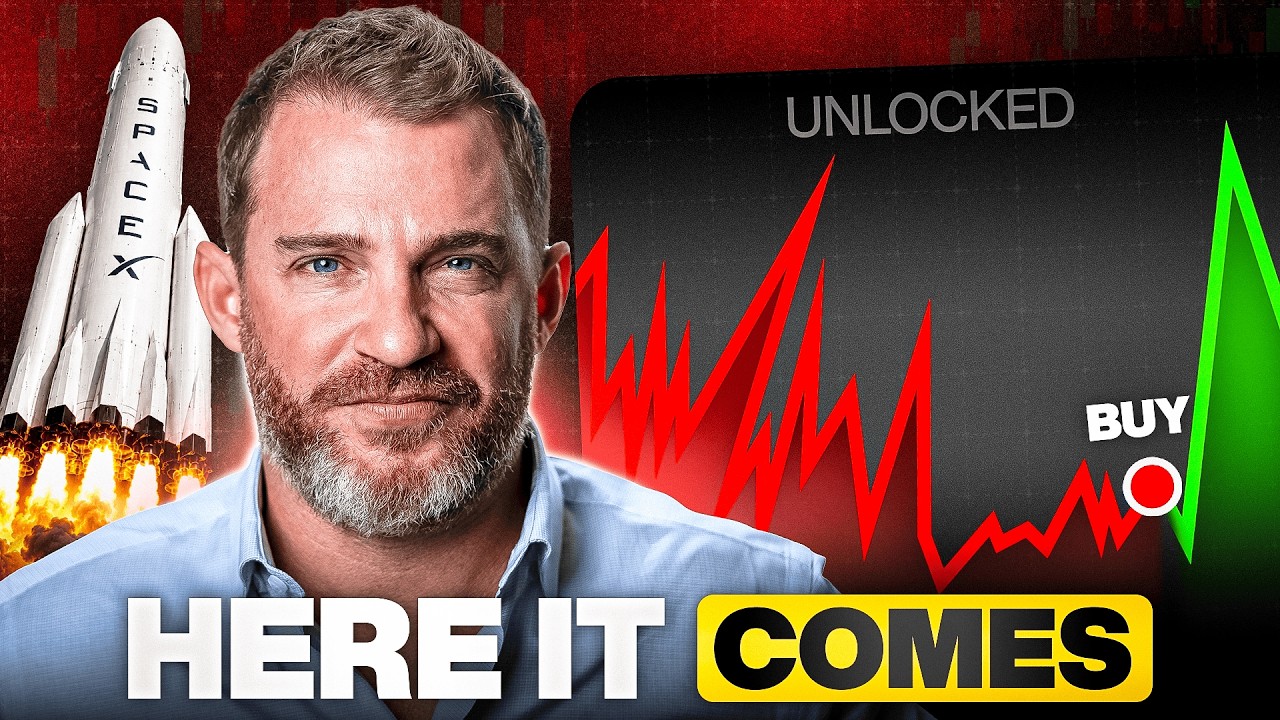
The SpaceX lockup expiration just triggered, and it's about to shift the entire market for this stock.
The company reported earnings for the first time as a public entity. And Elon Musk just told the world that SpaceX will be worth $10 trillion. A lot has hit the tape in the last 48 hours.
The single most important data point? The sheer volume of stock now hitting the open market. It's going to push the price down in the short term. But for long-term investors, this dip is setting up to be a once-in-a-lifetime buying opportunity.
Here's exactly what the data shows, and where I'm planning to buy.
What Does the 911 Million Share Unlock Mean for Investors?
Bottom Line: The SpaceX lockup expiration is a textbook supply shock: nearly $100 billion in newly tradeable shares hitting a market that has not added new buyers to absorb them. The short-term price drop is the point, not the problem. The trade thesis is to let insiders and short sellers drive the price to the $58 target, then buy into a company with a stated $10 trillion valuation ambition at a steep discount to its IPO price.
What it actually means for investors
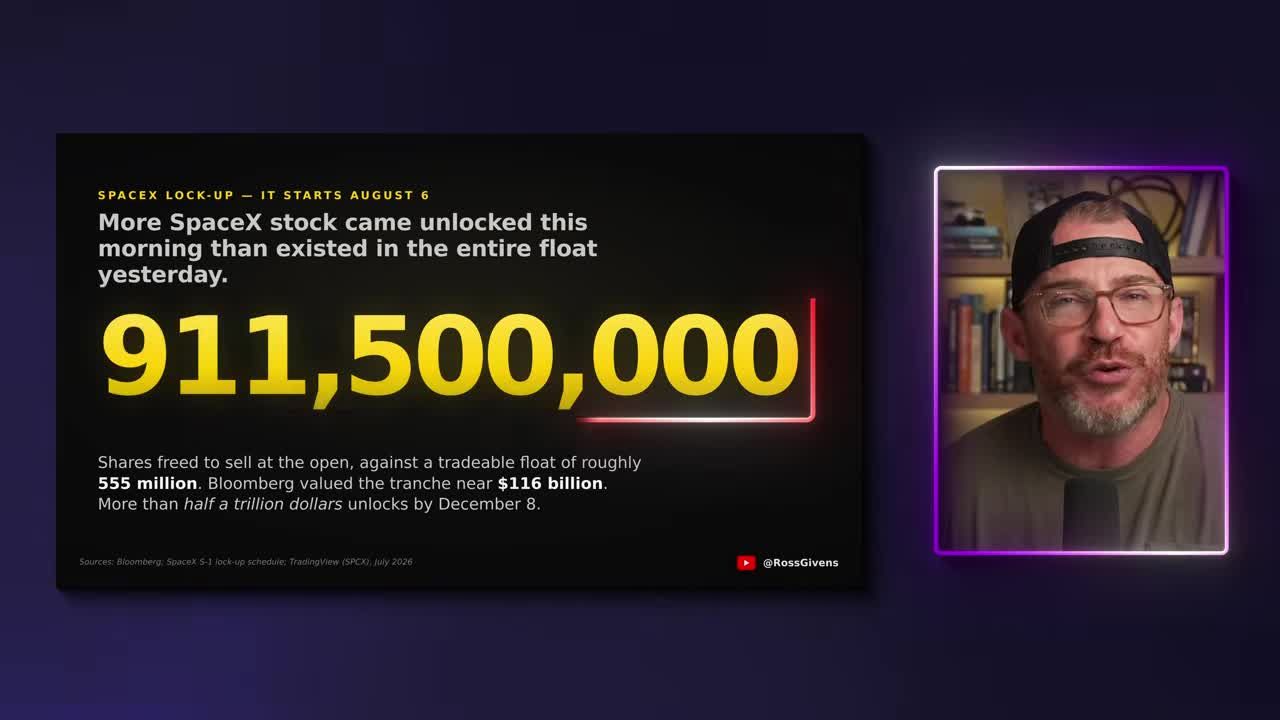
As of 9:30 a.m. Eastern this morning, insiders and early investors are finally free to sell 911 million shares of SpaceX. That's nearly $100 billion in stock suddenly hitting the market.
For reference, the IPO issued 555 million shares. That was the biggest IPO of all time. This morning's event nearly tripled the number of publicly available SpaceX shares. There's roughly two and a half times more SpaceX stock available right now than there was yesterday.
The math is simple. When the amount of something for sale explodes and the number of buyers stays the same, sellers have to compete with each other. The only way a seller competes is by dropping the price. Car lots and home builders do the exact same thing when their inventory isn't moving.
Who Is Cashing Out?
The people holding these newly unlocked shares are sitting on massive gains. Many are up 50, 80, even 100 times their original money.
Founders Fund is a perfect example. They put in $600 million early on. By the time of the IPO, that stake was worth $50 billion.
If a big chunk of these investors decide to cash out and collect record profits, the sheer volume being dumped on the market is almost guaranteed to send the price lower.
But understand exactly who these sellers are. This is not Elon Musk. His shares are locked until June of 2027, and I doubt he sells a single one.
This selling comes from early employees and early funds. They've been sitting on paper money for a decade. They have kids going to college. They have houses they want to buy. Getting out at $110 instead of $150 doesn't change their financial reality one bit. They never have to work again regardless of where they sell.
How Does a Lockup Expiration Affect SpaceX's Stock Price?
This is nothing new. It happens the same way every time a major company hits the public markets. When insiders are finally allowed to sell, the stock takes a beating. The SpaceX lockup expiration is following the same pattern.
- Uber: dropped 40% below its IPO price on expiration day.
- Rivian: dropped about 20% in a single session when Ford announced it was selling its stake.
- Palantir: lost 13% in one day when Peter Thiel and the early crowd got free to sell.
- Snowflake: staggered their release exactly like SpaceX is doing, and still fell another 11% in its final week.
These were ordinary unlocks at ordinary companies. What just happened to SpaceX is the biggest one in the history of the stock market.
What Comes Next
The selling pressure has months to run
The selling didn't end at 9:30 this morning. More tranches are coming this month, and again in October after the next earnings report. The full lockup doesn't officially expire until December 8th.
That means the selling pressure has four full months to run.
Even the most important company on Earth will go down if everyone is selling at the same time. Right now there's a massive wall of stock coming, and there simply isn't enough money on the other side to absorb it yet.
Get an entire year of live weekly mentoring sessions, my newsletter, indicators, bonus reports, tons more. Click the link and I'll see you in the next live session.
Join my Black Ops Trading ClubIs SpaceX Really Worth $10 Trillion?
Tuesday after the close, SpaceX reported earnings for the first time as a public company. As expected, there was a good bit of volatility around that event.
The company is not yet profitable. The price today is determined entirely by what investors believe it will be worth in the future. And if Elon Musk is right, it could one day be worth $10 trillion.
On Tuesday, Musk reposted an article on X written by Peter Diamandis, putting the thesis in front of his 241 million subscribers for the entire world to see. I read the article, and the case is compelling.

The main argument is simple. SpaceX is not one company. It's five companies stacked on top of each other. Most analysts are trying to slap a single multiple on a single business. That's a mistake.
The Five Pillars of SpaceX
1. Starlink
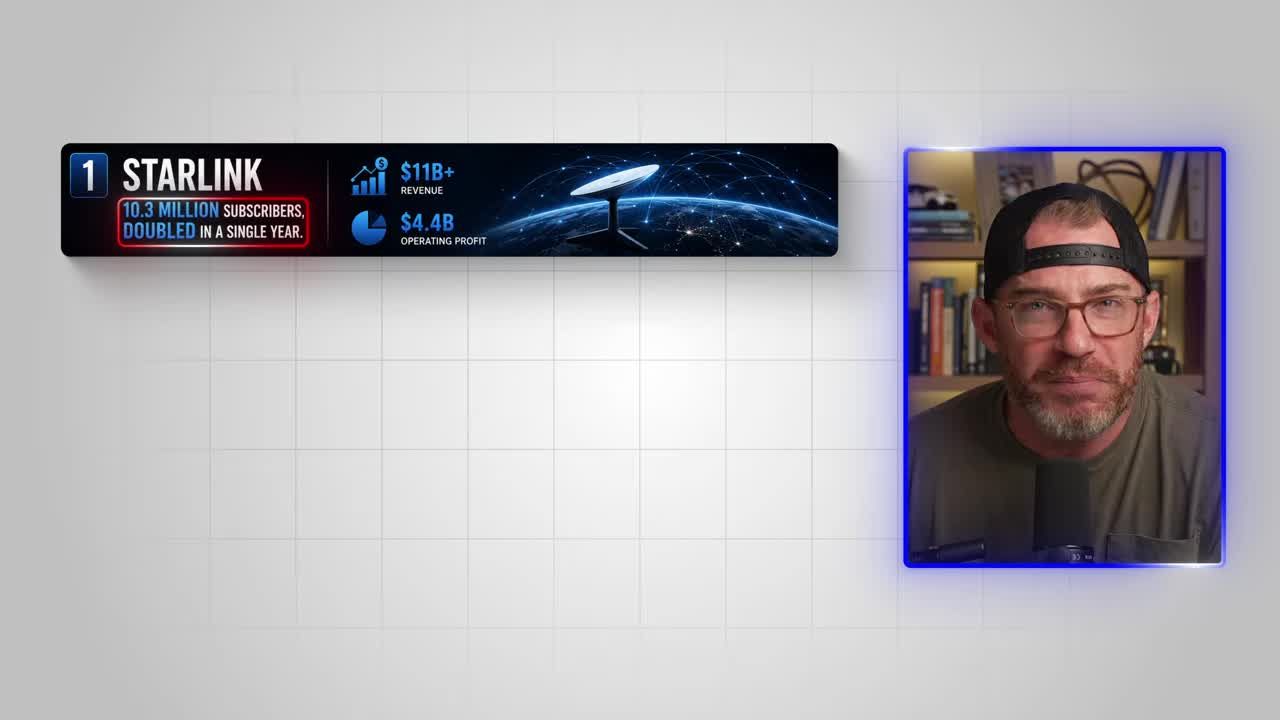
The connectivity business has 10.3 million subscribers. That number doubled in a single year. Last year, Starlink did over $11 billion in revenue and $4.4 billion in operating profit. Real revenue, real profit, massive growth.
2. AI Compute
Nobody saw this one coming. SpaceX rents out data center capacity to the biggest names in artificial intelligence. Anthropic pays them $1.25 billion a month. Google pays $920 million a month. Reflection AI pays another $150 billion. Add it all up, and you're looking at roughly $28 billion a year from a business that didn't exist a few years ago.
3. Chips
Musk wants to stamp out his own AI chips at the Terra Fab down in Texas. Instead of standing in line at Taiwan Semi behind every other company on Earth, he's bringing it in-house. The filing says the facility could run as high as $119 billion to build.
4. The Launch Business
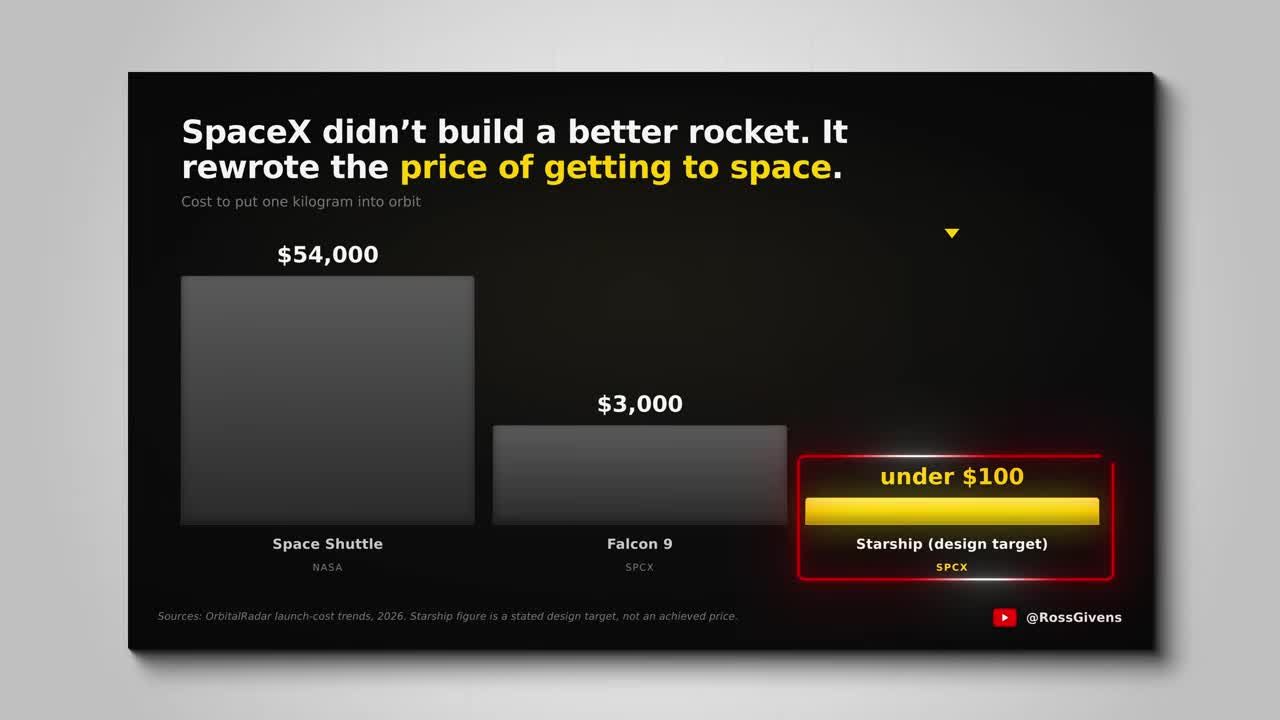
This is the original business, and still the ultimate moat. Putting one kilogram of anything into orbit on the Space Shuttle cost about $54,000. The Falcon rocket took that under $3,000. Starship is designed to get it below $100. Drop the cost of getting to space by 500 times and you have an impenetrable moat. You own the space sector entirely.
5. Complete Vertical Integration
The fifth pillar isn't a business at all. It's that Musk owns all four of the others. The rocket carries the satellite. The satellites carry the compute. The Fab makes the chips. Starlink pays for all of it.
Every competitor has to rent a piece of that infrastructure from someone else. Nobody has one full column. Elon has the whole board.
Total vertical integration is extremely valuable. Look at what happened to supply chains during COVID, the oil disruptions, the chip shortage a few years back. Having everything in-house changes the entire equation.
The Data After the Unlock
When SpaceX listed back in June, only 2% of the company was actually available to buy. Every fund from New York to Singapore wanted a piece. Because there was almost nothing available, demand vastly exceeded supply. That's exactly why the stock ripped from $135 to $225 in just three days.
That supply constraint is officially over.
That heavy short interest will drive the price lower in the near term. The sellers are going to pile on.
A Once-in-a-Lifetime Dip?
For long-term investors, this aggressive selling is a gift.
My target is $58. That's how low I believe SpaceX stock will trade by the end of the year, and it's the exact level where I plan to start buying. If it goes lower, even better.
Look past the immediate dump. Let the market work through that massive new supply. Let the early investors drive the price down so you can buy it cheap.
I've always traded this way. When a stock was at eight, I told you it was going to 20. I liked it at eight. I love it at four. It's simply a chance to average down.
And do you know what happens once the stock hits $58?
Once the early investors are finally out and the price reaches a level the broader market sees as cheap, the entire trend reverses. Short sellers get forced to cover, which means they have to buy the stock to exit their trades.
At the same time, hedge funds, pension funds, and university endowments start building multi-billion dollar positions. Demand exceeds supply once again, just like it did at the IPO when the stock shot from $135 to $225.
Should You Buy Into the SpaceX Lockup Expiration Now?
This SpaceX lockup expiration has nothing to do with rockets, satellites, or Elon Musk's long-term vision. It's purely a mechanical reality of supply and demand between now and December.
The people selling into this market today are taking their profits. The real opportunity is getting on the other side of the trade.
You're getting a rare second chance to buy the most important company on the planet at a steep discount. Imagine getting a chance to buy Tesla or Meta below their IPO prices. That's exactly what's setting up right now.
Let the sellers dump their shares. Let the short sellers drive the price down. Wait for $58, and prepare to buy the next decade of growth on the cheap.
Get an entire year of live weekly mentoring sessions, my newsletter, indicators, bonus reports, tons more. Click the link and I'll see you in the next live session.
Key Takeaways
- The SpaceX lockup expiration unlocked 911.5 million shares, nearly tripling the publicly available float overnight and dwarfing the 555 million shares issued in the IPO.
- With roughly 2.5x more shares suddenly available and no corresponding surge in buyers, basic supply-and-demand pressure is expected to push the share price down in the near term.
- The identified buy target is $58, framed as a potential entry point comparable to buying Tesla or Meta below their IPO prices.
- Elon Musk has publicly stated a $10 trillion valuation target for SpaceX, which forms the long-term bull case underpinning the dip-buying thesis.
- The selling pressure is expected to be concentrated and temporary, with the window for discounted entry framed as lasting through December.
DISCLAIMER: Traders Agency does not offer financial advice. The information provided is for educational purposes only and should not be considered financial advice. Traders Agency is not responsible for any financial losses or consequences resulting from the use of the information provided. Trading carries inherent risks and may not be suitable for all individuals. You are advised to conduct your own research and seek personalized advice before making any investment decisions, recognizing the potential risks and rewards involved.
See more from Traders Agency on Google
Make us a preferred source and our market analysis will appear more prominently in your Google Search, Top Stories, and AI results.
Add to Preferred Sources