

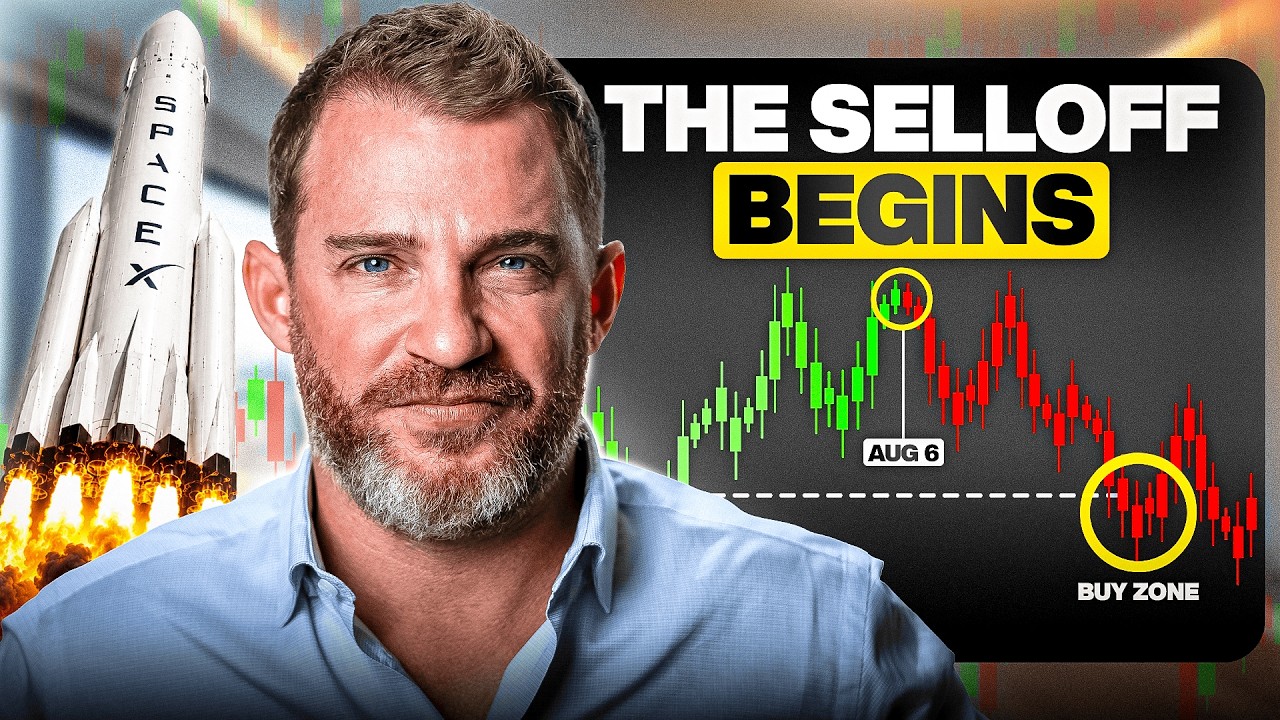
On August 6th, SpaceX stock will begin a 50% fall. If you have been asking whether this is a healthy dip or something worse, the honest answer to "is SpaceX stock going to crash" is yes.
This is not a dip. It is not a shakeout. It is a 50% decline that takes the stock from around $120 today down into the $50s. And I can give you the reason, the date, and the exact price where I plan to start buying.
The math is already sitting on the calendar.
Is SpaceX Stock Going to Crash or Just Correct?
Bottom Line: The SpaceX post-IPO crash is a mechanical event, not a verdict on the company. When 911 million locked-up shares hit the market starting August 6th, the stock has no floor until insiders finish selling and supply clears. The trade is simple: let the crash happen, buy in the $50s, and hold for the long-term compounding that follows.
The answer is a crash, and here is why
SpaceX stock is going to fall by roughly 50%, from around $120 today into the $50s. This is not a simple correction. It is what happens when a mountain of new supply hits a market that has already used up its demand.
I have been on this trade since before the IPO. I said early on that the stock would run to $200 in the first week and then roll over. That is exactly what played out.
The initial surge was pure demand. The IPO was oversubscribed. Millions of people wanted shares, missed the allocation, and bought on the open market. That buying drove the price up.
Now it is supply's turn. The sellers are coming.
What Is the 911 Million Share Unlock and Why Does It Matter?
The single event that sinks the stock
When a company goes public, insiders (employees, executives, and early venture funds) are banned from selling for a set period. It is called a lock-up. It keeps everyone from dumping shares on day one and crashing the price.
Most lock-ups last 180 days and release everything at once. SpaceX built a staircase instead.
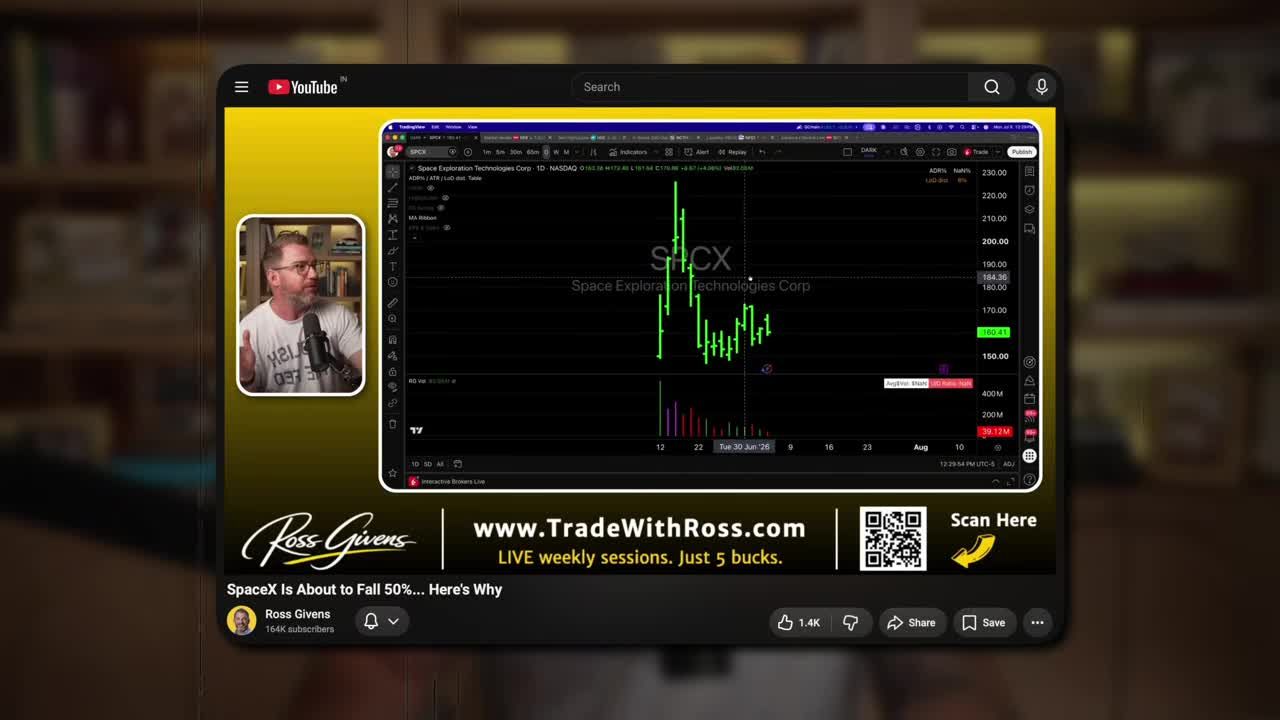
The first step is a big one. On Thursday, August 6th, a switch flips. Exactly 20% of the locked block becomes available to sell.
To grasp the scale, look at the current supply. The entire tradable float today is 639 million shares: the 555 million sold in the IPO, plus the 83 million the underwriters took for the overallotment. That is all of it.
On August 6th, we get 1.4 times the entire supply of SpaceX dropped into the market's lap. If even a fraction of those insiders cash out, and they will, there is not enough demand to absorb it. The price falls, and it falls hard.
The Supply Staircase Runs to December
Earnings first, then the flood
On Tuesday, August 4th, after the market closes, SpaceX reports earnings for the first time in company history. Two trading days later, the lock-up cracks open.
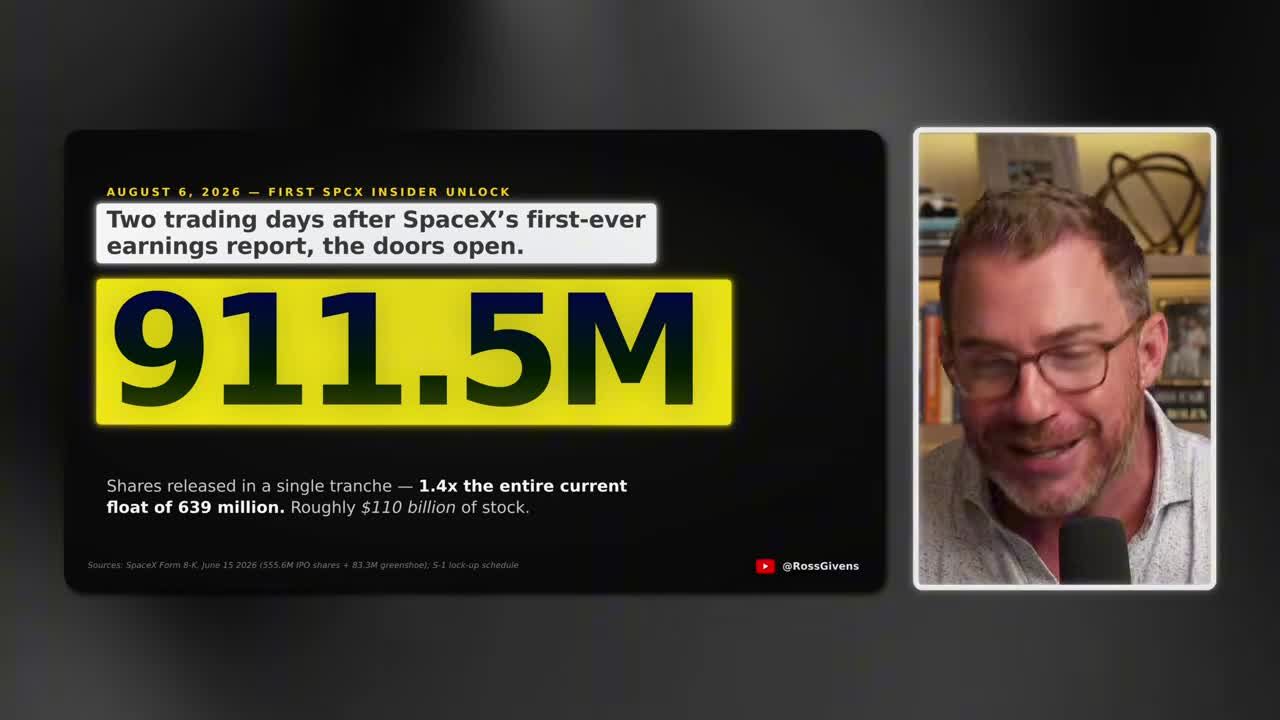
And it does not stop in August. The staircase drips another 7% every two to three weeks through late October. Call it 300 million shares at a time.
Then comes the monster. After the Q3 report in November, another 28% unlocks. That is 1.3 billion shares in a single release, the biggest supply event of the year.
By December 8th, the staircase ends and everything left comes free. All in, roughly 4.6 billion shares could hit the market between August and Christmas.
Elon Musk's stake is locked until June of 2027. I doubt he sells. But the other insiders absolutely will.
Why Will SpaceX Insiders Sell After the Lock-Up Expires?
Do not assume they will hold
Every time I lay this out, someone insists employees believe in the company and will never sell. Do not be naive.
Many of these are people in their 20s and 30s sitting on tens of millions of dollars in stock. They are already meeting with realtors. They can smell the leather in their new Ferrari.
They will not all sell. But research on lock-ups shows that 15% to 40% of newly freed shares get sold in the first several weeks, and I lean toward the high end here.
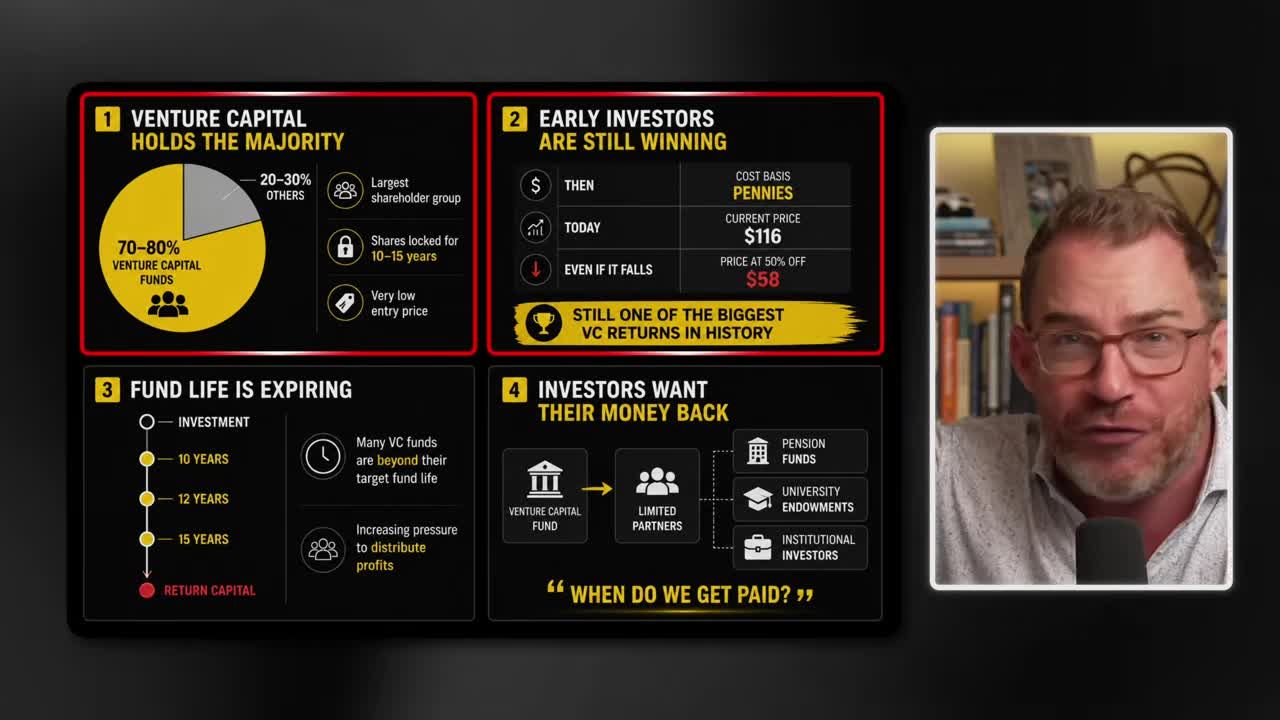
Consider who holds the stock. The bulk is owned by venture capital funds that have been locked into SpaceX for 10, 12, sometimes 15 years. Their cost basis is measured in pennies per share. At $115, at $120, even at $50, they are sitting on some of the biggest returns in history.
Many of these funds are past their stated fund life. They owe money back to the pension funds and university endowments who have been asking "when do we get paid?" for a decade. August 6th is the first exit door they have ever been offered. They do not need the stock to stay at $150. They just need their money.
Get an entire year of live weekly mentoring sessions, my newsletter, indicators, bonus reports, tons more. Click the link and I'll see you in the next live session.
Join my Black Ops Trading ClubThree Forces Guaranteeing Lower Prices
1. The Short Sellers
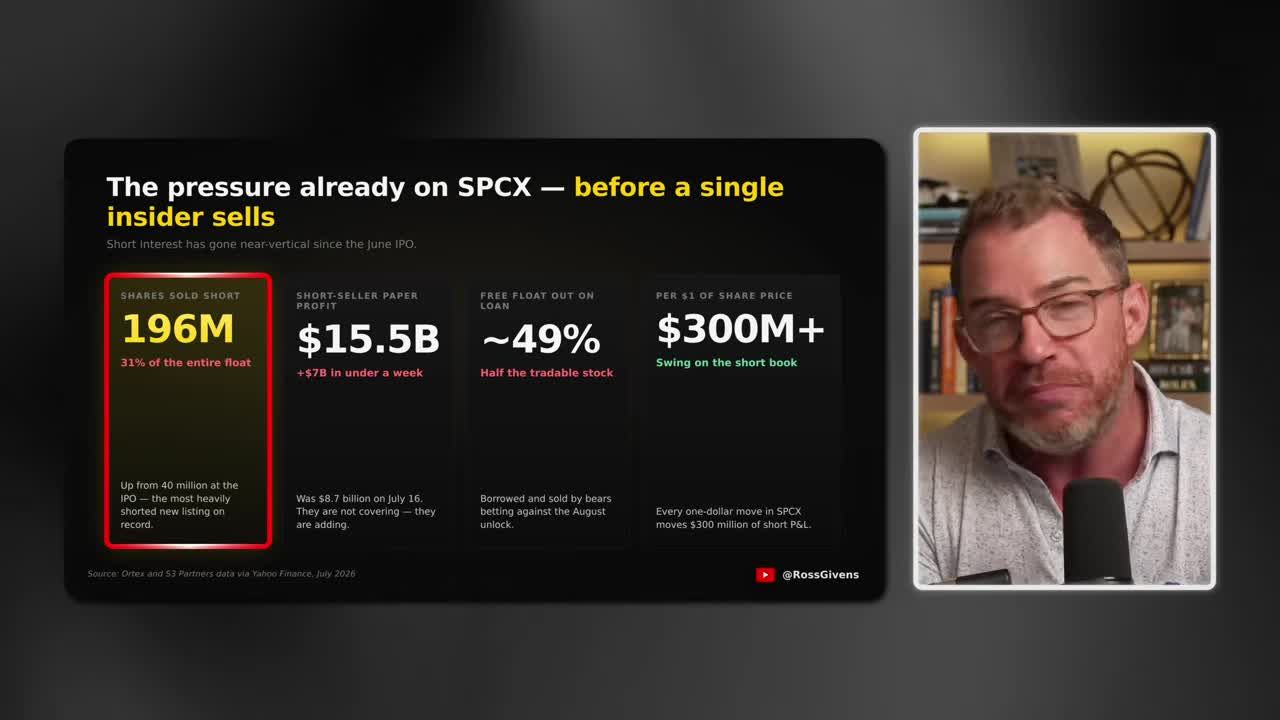
There are currently 196 million shares of SpaceX sold short. That is 31% of the entire float, making it the most heavily shorted new listing on record.
At the IPO, short interest was only 40 million. The shorts are winning. They are sitting on $15.5 billion in paper profit. Two weeks ago that number was $8.5 billion. They made $7 billion in a single week, and they are adding to their positions instead of covering.
2. The Systematic Machines
The big systematic funds and trend followers are run by computers, not people. These programs look for one set of conditions.
When they see a mega-cap stock trading below its IPO price, below its 50-day moving average, and making new lows, the algorithms sell. Sellers attract sellers. That is how a supply problem becomes a downtrend, and it keeps selling until the trend turns.
3. The End of Forced Buying
Every bit of forced buying in this story has already happened. The Russell 1000 added SpaceX in June. The NASDAQ 100 added the stock on July 7th.
That was roughly $20 billion in mechanical buying, and it is over. The dollars are spent.
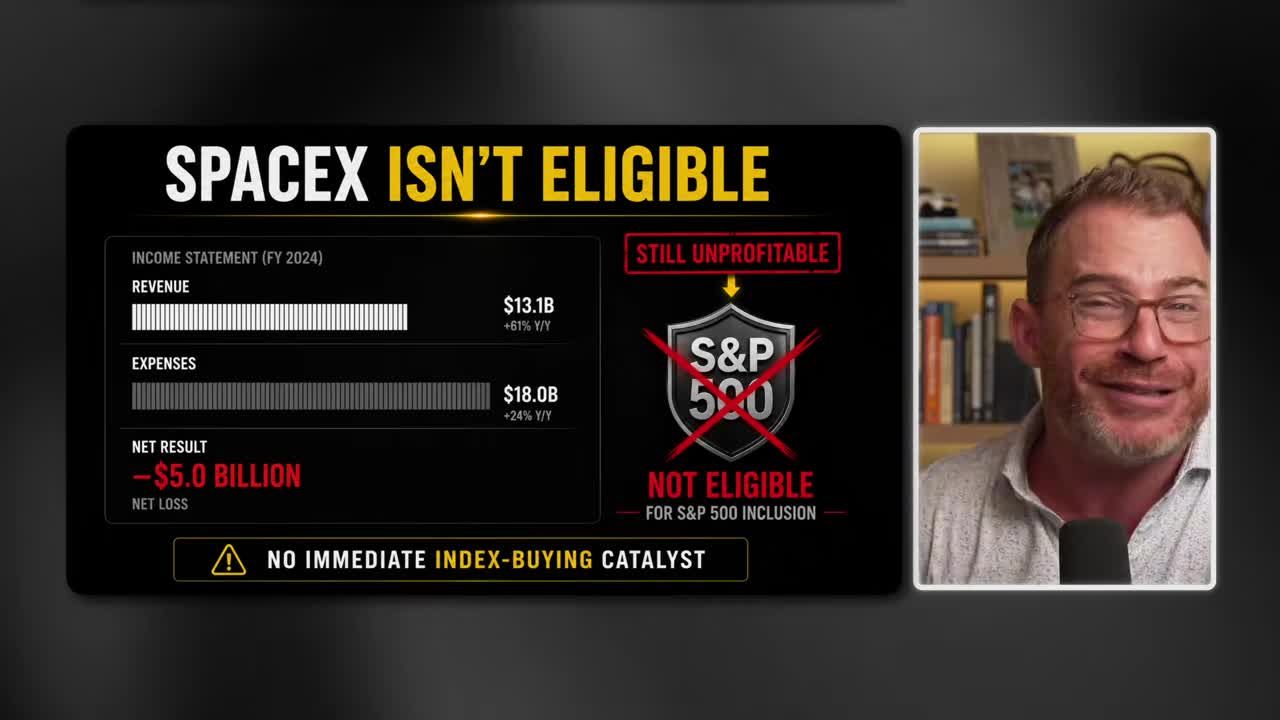
The S&P 500 cannot save it. S&P Global's rules require actual bottom-line GAAP profitability. Over the last four quarters, SpaceX lost $5 billion. They are not eligible, which means the largest pool of automated buying on Earth is sitting this one out.
You can review the company's official numbers directly in its SEC filings.
Where Is the Bottom for SpaceX Stock After the Lock-Up Selloff?
20,000 simulations point to the $50s
I built a supply and demand model for this stock and ran a Monte Carlo analysis of 20,000 simulations of where it goes between now and New Year's. The median low came back at $60 per share, and most versions saw SpaceX in the $50s. If you are still wondering whether SpaceX stock is going to crash, the models leave little room for debate.
History backs this up. Every hot IPO sells off into its lock-up period. Look at how far Uber, Facebook, and Snowflake fell. A 50% drop is the norm, not the exception.
And none of those companies had a trillion dollars worth of stock unlocking in six months.
The Morgan Stanley Warning
A $300 target with a decade of losses baked in
Morgan Stanley holds the most bullish target on Wall Street at $300 a share. Yet their own analyst report contains a warning.
The report forecasts no free cash flow positive year before 2035 and average external capital needs of roughly $84 billion per year from 2027 to 2034. In plain terms: no profits for at least a decade, and roughly $85 billion a year needed just to keep the doors open.
The report goes further. If debt markets cannot absorb that financing need, SpaceX may have to issue equity. That dilutes shareholders, reduces growth investment, and lowers the price target.
This is from analyst Adam Jonas, the same person carrying a $300 price target. The stock is going to get cut in half.
Should You Sell SpaceX Now?
Separate the business from the ticker
To be clear, this is not a bet against SpaceX and it is not a short. I do not bet against Elon Musk. Too many people have gone broke doing that. Starlink is a monster. SpaceX flies more than 80% of everything humanity puts into orbit. I believe it will one day be the most valuable company on the planet.
But you do not make money buying great companies. You make money buying great companies at good prices.
A stock can represent a great company and a terrible price at the exact same time. Those things are not mutually exclusive. Nothing is worth an infinite price. For the next four months, the laws of supply and demand are bigger than Elon Musk.
The Exact Level Where I Buy
Patience over stories
The retail dip buyers picking up 50 or 100 shares at a time cannot stop this. The demand showed up in June. The supply shows up next week. It is that simple.
I am not buying a single share until this stock breaks $60.
We will likely reach that level in late October or early November. The first two weeks of November, right after the Q3 earnings release, is the single most likely spot for the ultimate low.
Everyone who bought at $150, $180, or $225 was buying a story. In a few months, you can buy the exact same company, the same Starlink, and the same launch monopoly for less than half that price. That is the entry I am waiting for.
The Patient Investor's Gift
The calendar is about to hand patient investors a gift. So is SpaceX stock going to crash? Yes, and that is exactly what you want.
SpaceX will eventually make tens of thousands of millionaires. But most of those winners will be the people who bought when the stock was cheap, after the lock-up and after the post-IPO selloff.
That is the difference between an investment that pays off in six months and one that takes six years. Wait for the $50s. Let the insiders sell. From there, sit back and let Elon Musk compound your money for the next decade.
Get an entire year of live weekly mentoring sessions, my newsletter, indicators, bonus reports, tons more. Click the link and I'll see you in the next live session.
Key Takeaways
- SpaceX stock is predicted to fall roughly 50% from around $120 to the $50s, with the decline expected to begin on August 6th.
- The catalyst is a 911 million share lock-up expiration, which floods the market with insider supply at a time when post-IPO retail demand has already been exhausted.
- The IPO ran to $200 in the first week as expected, driven by oversubscription and open-market buying from investors who missed the allocation. That demand is now spent.
- The lock-up selloff is not a reason to avoid SpaceX permanently. The $50s are identified as the target entry point for long-term investors.
- Insider selling pressure is expected to continue in waves through December, creating a staircase of supply that keeps a lid on any recovery attempts before the bottom forms.
DISCLAIMER: Traders Agency does not offer financial advice. The information provided is for educational purposes only and should not be considered financial advice. Traders Agency is not responsible for any financial losses or consequences resulting from the use of the information provided. Trading carries inherent risks and may not be suitable for all individuals. You are advised to conduct your own research and seek personalized advice before making any investment decisions, recognizing the potential risks and rewards involved.
See more from Traders Agency on Google
Make us a preferred source and our market analysis will appear more prominently in your Google Search, Top Stories, and AI results.
Add to Preferred Sources