
The U.S. Treasury is weighing a massive intervention in the debt markets, and our team is watching the ripple effects across long-term yields closely. Treasury Secretary Scott Bessent could tap the near $1 trillion Treasury General Account to fund an expanded bond purchase program, a move that would represent one of the largest liquidity injections into fixed income in recent memory.
The Move: Following the news on Monday, the 10-year Treasury note yield dropped 4 basis points to 4.7%, while the 30-year yield retreated 4 basis points to 5.23%. The Treasury doubled its buyback ceiling from $2 billion to at least $4 billion per operation.
These scott bessent treasury bond buybacks are designed to stabilize a $32 trillion market, but they are already causing volatility. For bond traders, this shift represents a major liquidity event. We are tracking how this potential cash deployment could impact bond ETFs like TLT and BOND as the government attempts to influence rising yields against a backdrop of a $40 trillion federal debt load.
How Do the Treasury Bond Buybacks Actually Work?
Our analysis of the latest developments confirms that the Treasury surprised markets last week by doubling the size of its off-the-run security buybacks. The ceiling for these operations on the long end of the curve is increasing from $2 billion to at least $4 billion.
Initially, market participants assumed the Treasury would fund these purchases by selling short-term bills. Bessent referred to this strategy as a "Treasury Twist," where long-term bonds are bought and paid for with short-term issuance.
However, senior Treasury officials have indicated that the Treasury General Account is available as an alternative funding source. Bessent has built the TGA up to around $950 billion using existing tax collections, well above the previous administration's target of $550 billion to $600 billion.
What Is a Treasury Buyback?
A Treasury buyback is a financial operation where the government purchases its own previously issued, off-the-run debt securities from the open market. This process injects liquidity into the financial system and can help stabilize or lower long-term bond yields by reducing the available supply of debt.
Our team is monitoring how these specific TGA-funded bond purchases could alter supply and demand dynamics. By utilizing the TGA, the government essentially uses its checking account at the Federal Reserve to absorb long-duration debt.
The 30-year yield recently hit its highest point since 2007. Removing up to $4 billion per operation could provide the Treasury with considerable firepower to influence these long-term rates.
Why Would the Treasury Buy Back Bonds?
The Treasury would buy back bonds to improve market liquidity, manage cash balances, and stabilize long-term yields during periods of high volatility. By repurchasing older securities, the government aims to keep the debt market functioning smoothly and prevent borrowing costs from spiraling higher.
Bessent stated the intent is to keep the market in equilibrium and encourage a focus on fundamentals rather than trading headlines during a quiet period. The federal debt load currently sits at $40 trillion, making yield management a top priority.
We have seen skepticism from market analysts regarding whether the program is large enough to make a lasting impact. Yields initially dropped after the announcement before rebounding, with the 30-year yield giving back most of its early declines.
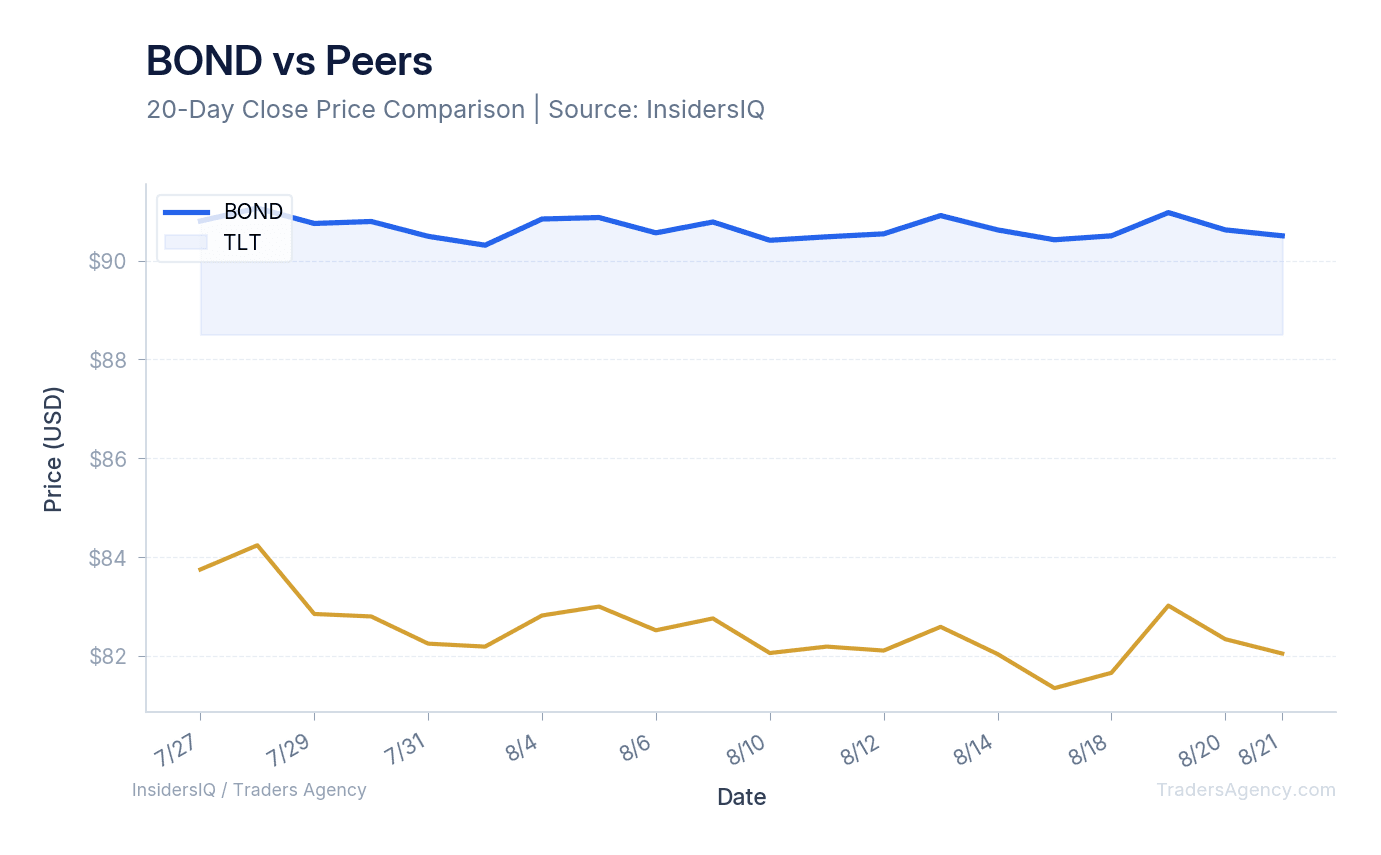
Bond ETF Performance (30 Days): The BOND ETF has seen a price change of -0.33%, while the TLT ETF has experienced a -2.03% drop, reflecting ongoing uncertainty around the buyback program's effectiveness.
Want expert trading insights delivered daily?
Join thousands of traders who rely on Traders Agency for market analysis and trade ideas.
Join Traders AgencyTracking the Treasury Buyback Schedule
We are closely tracking the upcoming buyback schedule to gauge market reactions. The Treasury has set a specific timeline for these expanded operations.
Here are the exact steps the Treasury is taking:
- Doubling the size of buybacks from $2 billion to at least $4 billion.
- Targeting the 10-to-20-year and 20-to-30-year portions of the curve.
- Setting the operational window to begin on September 9 and close on November 4.
The timing of these operations coincides with the annual Jackson Hole Symposium. Markets are highly focused on Federal Reserve Chair Kevin Warsh's keynote address expected on Friday.
Our analysis suggests that the Treasury's intervention raises the importance of Warsh's comments. As yields rose, the dollar dropped, which is abnormal, a condition that traders should be watching carefully.
Addressing Market Criticisms and Debt Ceiling Risks
Treasury officials pushed back on criticism that they had abandoned the practice of being "regular and predictable" about bond sales. The announcement came two weeks after the quarterly refunding announcement, but officials clarified that no change had been made to the actual official auction schedules.
When Janet Yellen ran the Treasury, officials stated the goal was to set the TGA at a "week ahead of cash needs." The current Treasury maintains that it sets the account consistent with long-standing cash balance policy. Assuming any of the TGA is used, and the Bessent Treasury wants to maintain the near $1 trillion level, additional bonds would have to be sold to build it back up.
However, running the account somewhat lower does not appear to entail any immediate risk. Reducing the TGA would mean the government has less cash on hand in the event of a new debt ceiling impasse. Officials do not view a partial drawdown as creating a near-term cash management problem.
The next debt-ceiling constraint is not expected until sometime between next winter and early spring. This timeline gives the Treasury room to build the account back up if needed.
Bessent told CNBC last week that he expects progress in the deficit when tariff revenue returns after court-mandated refunds are replaced by new tariffs. He also stated that top officials will be meeting soon to forge plans aimed at improving the overall fiscal situation.
What Should Bond Traders Watch After This Announcement?
Our team is tracking several specific data points as this story develops. The market's reaction to the TGA deployment will likely dictate the next major move in fixed income.
- 10-year Treasury note yield: Recently dropped to 4.7%.
- 30-year yield: Retreated to 5.23% after hitting its highest point since 2007.
- Fear & Greed Index: Currently sitting at 68.
- WallStreetBets sentiment: Registering at 0.03 with 2,748 mentions.
The Fed holds the TGA like a bank but does not consider it part of its monetary policy toolkit. This separation limits concerns that the Fed could be asked to assist the Treasury in these operations.
While buyback history shows these tools are rarely used at this scale, the current setup provides the government with significant flexibility. We will monitor the buyback results closely after the first operation on September 9 to assess the true market impact.
The Bottom Line for Bond Traders
The potential for TGA-funded Treasury bond buybacks introduces a massive new liquidity mechanism to the fixed-income markets. Our team believes the doubling of buyback limits to $4 billion could create short-term volatility in long-duration assets like TLT. We are watching the September 9 operations closely to see if this intervention can meaningfully influence the recent surge in long-term yields.
The key question remains whether this program is large enough relative to the $32 trillion Treasury market to make a lasting difference, or whether it simply provides temporary relief. Either way, bond traders need to be positioned for elevated volatility through the fall.
Want expert trading insights delivered daily?
Join thousands of traders who rely on Traders Agency for market analysis and trade ideas.
Join Traders AgencyKey Takeaways
- The Treasury doubled its bond buyback ceiling from $2 billion to at least $4 billion per operation, with the expanded program potentially drawing on the near $1 trillion Treasury General Account.
- Following the announcement, the 10-year yield fell 4 basis points to 4.7% and the 30-year yield dropped 4 basis points to 5.23%, though the article notes these buybacks are already causing volatility.
- The program targets off-the-run securities on the long end of the curve, meaning long-duration bond ETFs like TLT and BOND could see elevated price swings around buyback operations.
- A key unresolved question is whether $4 billion per operation is large enough to have a lasting effect on a $32 trillion Treasury market, or whether it may only provide temporary yield relief.
- The September 9 operations are flagged as a near-term event to watch for signals on whether the intervention can meaningfully cap the recent surge in long-term yields.
DISCLAIMER: Traders Agency does not offer financial advice. The information provided is for educational purposes only and should not be considered financial advice. Traders Agency is not responsible for any financial losses or consequences resulting from the use of the information provided. Trading carries inherent risks and may not be suitable for all individuals. You are advised to conduct your own research and seek personalized advice before making any investment decisions, recognizing the potential risks and rewards involved.
See more from Traders Agency on Google
Make us a preferred source and our market analysis will appear more prominently in your Google Search, Top Stories, and AI results.
Add to Preferred Sources