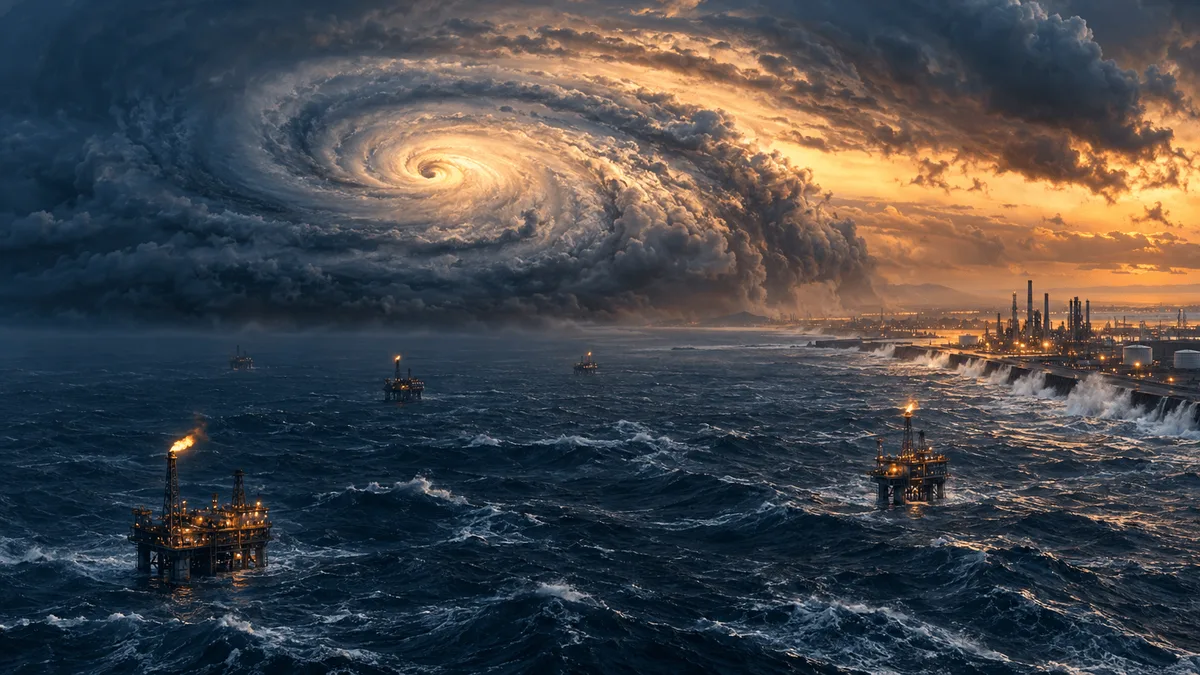
Hurricane Isaias strengthened into a major Category 3 storm on Friday, packing 120 mph winds as it bore down on the northern Gulf Coast, the National Hurricane Center said. As of Thursday, producers had shut in roughly 63% of Gulf of Mexico oil output, or about 1.3 million barrels per day, and 121 of the region's 371 manned platforms had been evacuated, according to the Bureau of Safety and Environmental Enforcement, as energy companies and coastal officials raced to prepare for landfall.
Storm Track and Intensity
According to the National Hurricane Center, Isaias was centered about 200 miles south-southeast of the mouth of the Mississippi River on Friday and moving north at roughly 15 mph, with forecasters expecting further strengthening before landfall, CNBC reported. The hurricane center forecast landfall late Friday or early Saturday between Mobile Bay on the Alabama coast and Choctawhatchee Bay in the Florida Panhandle.
A hurricane warning covered the coast from Ocean Springs, Mississippi, to the western Florida Panhandle, with tropical storm warnings extending from southeastern Louisiana to the Aucilla River along Florida's Big Bend, the hurricane center said. Forecasters cautioned that storm surge could reach 5 to 7 feet from Ocean Springs to Indian Pass, Florida, and in Mobile Bay, along with large waves, flash flooding and tornadoes. The National Hurricane Center noted that "while the storm is not expected to make landfall at peak intensity, it is likely that Isaias will still be a significant hurricane when it reaches the coast," and advised that preparations be rushed to completion as conditions were set to deteriorate quickly. The agency also said Isaias was expected to weaken rapidly after landfall, falling to tropical storm strength by Saturday afternoon as it tracks north along the Alabama-Mississippi line.
Isaias is the first hurricane of the Atlantic season, forming more than four months into the season and, according to CNBC's reporting, one day short of tying a 121-year-old record for the latest-forming first hurricane of a season, set in 1905.
Gulf Oil and Gas Production Shut In
The storm's approach has already reshaped Gulf of Mexico energy output. As of Thursday, operators had shut in about 1.3 million barrels per day of oil production, equal to roughly 63% of total Gulf output, according to the Bureau of Safety and Environmental Enforcement, as reported by CNBC. Regulators also reported that 121 of the Gulf's 371 manned oil platforms had been evacuated ahead of the storm. The Gulf of Mexico accounts for almost 15% of crude pumped annually in the United States, underscoring the scale of the curtailment.
Refineries in the Warning Zone
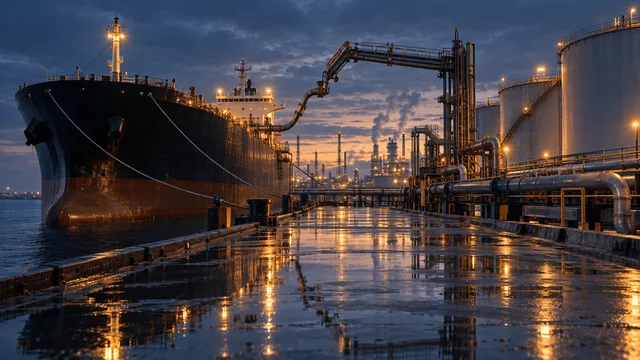
CNBC reported that the hurricane appeared to be veering away from the dense refining corridor in southern Louisiana near New Orleans and Baton Rouge, sparing the bulk of the region's processing capacity. But the storm's path still threatens two facilities: Chevron's refinery in Pascagoula, Mississippi, and a Vertex Energy refinery in Saraland, Alabama, both located within the hurricane warning area.
Together, those two refineries can process a combined 466,000 barrels per day, or about 2.4% of total U.S. refining capacity, according to Andy Lipow, president of Lipow Oil Associates. As of Thursday, Chevron spokesperson Ross Allen said the Pascagoula refinery remained operational; Vertex officials were not immediately available to comment on the status of the Saraland plant, CNBC reported.
Lipow told CNBC that the greatest risk to the two refineries is a loss of electricity or flooding damage rather than wind alone, and that any shutdown would likely take one to two weeks to reverse if the plants escape structural damage. He noted that Gulf Coast refineries are already running near 95% of capacity, leaving little spare capacity elsewhere in the system to offset lost output. Lipow also warned that tanker traffic would be disrupted regardless of whether the two refineries shut down, saying vessels delivering crude and those loading gasoline, jet fuel and diesel would face delays, and that "Florida will experience delays in receiving gasoline, jet fuel and diesel."
A Distillate Market Already Under Strain
The timing is notable because diesel supplies are unusually tight. Lipow wrote in a Friday note that "losing any refinery capacity when diesel supplies are at their lowest level for this time of year since the EIA began reporting in 1982 is not a good thing," referring to Energy Information Administration data, as cited by CNBC. CNBC's reporting also linked the tight distillate market to disruptions tied to the wars in Eastern Europe and the Middle East, noting that Ukrainian strikes on Russian refineries led Moscow to ban diesel exports, while Iran and Houthi forces have targeted refineries in the Middle East. U.S. refiners have responded by exporting diesel into wide margins abroad, particularly to Europe, CNBC reported.
Analysts offered differing emphases on what the storm means for markets. Jim Burkhard, global head of crude oil market research at S&P Global Energy, said in comments reported by CNBC that the production cuts are steep enough to matter given already-elevated oil prices, even though past Gulf hurricanes have caused larger disruptions. He said the more significant question is whether Isaias comes ashore as a powerful storm near refining infrastructure rather than the offshore production shut-ins themselves.
Kevin Book, managing director at ClearView Energy Partners, told CNBC's Squawk Box that in prior Gulf refinery outages, fuel prices have tended to rise while crude prices fell, because affected refineries stop both buying crude and producing fuel for consumers. This is an interpretive pattern drawn from past storm cycles, not a guaranteed outcome for Isaias, and actual price moves will depend on whether the Pascagoula and Saraland refineries sustain damage or extended outages.
Evacuations and Emergency Declarations
Coastal communities moved quickly as the storm approached. Alabama Gov. Kay Ivey ordered non-residents to immediately evacuate Gulf Shores, Orange Beach and Dauphin Island, CNBC reported. The governors of Florida and Alabama declared states of emergency across dozens of counties, and Florida Gov. Ron DeSantis said about 5,000 National Guard troops were expected to mobilize by Friday, according to CNBC's reporting.
Bottom Line
Hurricane Isaias has already pulled a substantial share of Gulf of Mexico crude production offline and put two mid-sized refineries representing roughly 2.4% of U.S. refining capacity directly in its warning zone, even as the storm appears to be sparing the larger Louisiana refining hub. The production shut-ins look set to be temporary once the storm clears, based on NHC's forecast that Isaias will weaken quickly after landfall. The more consequential variable, according to the analysts cited by CNBC, is whether the Pascagoula and Saraland refineries avoid flooding or power loss, given that any outage would hit an already tight U.S. diesel market and a Gulf Coast refining system with little spare capacity to absorb further losses.
DISCLAIMER: Traders Agency does not offer financial advice. The information provided is for educational purposes only and should not be considered financial advice. Traders Agency is not responsible for any financial losses or consequences resulting from the use of the information provided. Trading carries inherent risks and may not be suitable for all individuals. You are advised to conduct your own research and seek personalized advice before making any investment decisions, recognizing the potential risks and rewards involved.
- CNBC Top News: Hurricane Isaias strengthens on track toward U.S. Gulf Coast · accessed Oct 9, 2026
- CNBC Top News: Hurricane Isaias disrupts U.S. oil production in Gulf of Mexico · accessed Oct 9, 2026
- CNBC Top News: Hurricane Isaias Florida, Alabama and Mississippi coasts · accessed Oct 9, 2026
- Hurricane Isaias: Expected landfall along the northern Gulf Coast after forecast strengthening, with hurricane conditions and life-threatening storm surge possible from Mississippi through the Florida Panhandle · accessed Oct 9, 2026
See more from Traders Agency on Google
Make us a preferred source and our market analysis will appear more prominently in your Google Search, Top Stories, and AI results.
Add to Preferred Sources