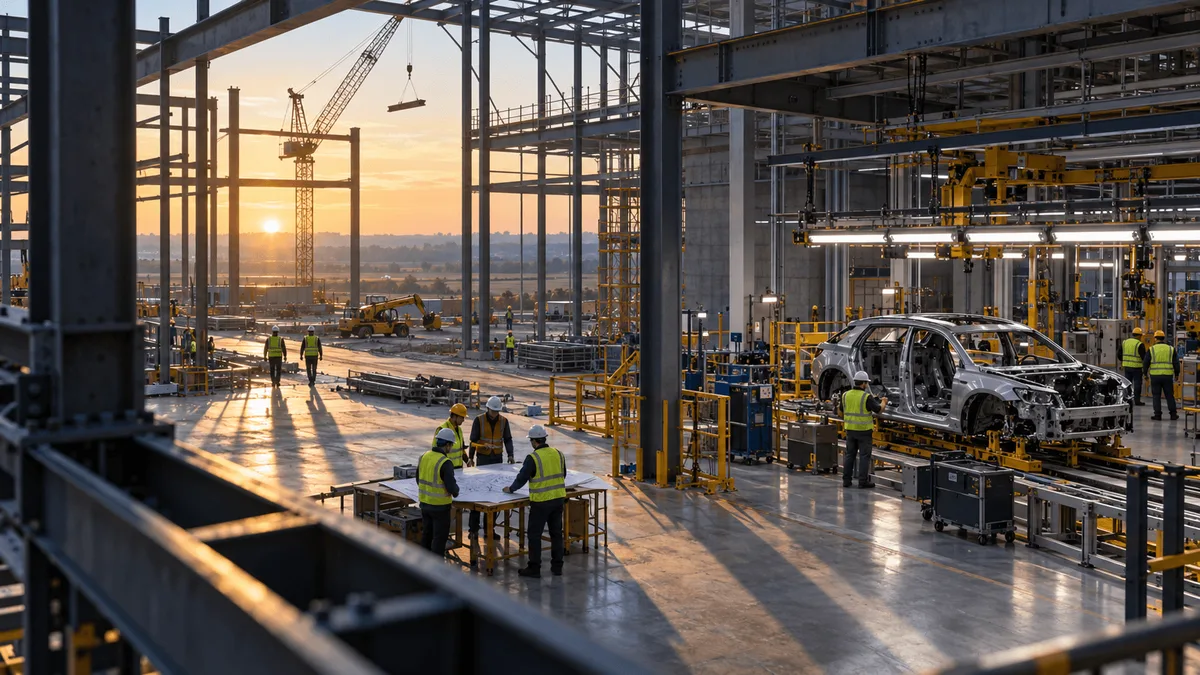
Honda Motor has announced plans to invest $3 billion in a new vehicle assembly plant in central Ohio, a project the automaker says is part of a wider effort to expand U.S. production of hybrid-electric vehicles. The plant, expected to begin production in 2029 pending final government approvals, is projected to add capacity for 240,000 vehicles annually and create more than 2,000 jobs, according to Honda's own announcement and reporting from CNBC.
New Plant Location and Scale
According to Honda's Form 6-K filed with the SEC, the new facility will sit on land between the company's existing East Liberty and Marysville Auto Plants in Ohio. It will become Honda's fourth auto plant in the state and its ninth auto-related production facility in the United States. Honda says it currently operates 12 manufacturing plants in the U.S., eight of which produce engines or light-duty vehicles, per CNBC's reporting.
The company characterizes this as its first new mass-production U.S. vehicle assembly plant since it opened a facility in Indiana in 2008. In the interim, Honda opened a $70 million performance vehicle facility in Ohio in 2016 and, earlier this year, a multibillion-dollar joint-venture battery plant, also in Ohio, CNBC reported.
Hybrid Production Expands Across Three States
Honda describes the Ohio plant as one piece of a broader set of investments at its operations in Ohio, Alabama and Georgia intended to expand and strengthen an integrated U.S. production network for hybrid-electric vehicles, along with the engines and hybrid systems that power them. The company's SEC filing states that hybrid powertrain production capacity in Ohio specifically will increase 250 percent, though the filing does not specify the dollar amounts allocated to the Alabama and Georgia facilities individually.
Capacity Targets
Honda projects that these combined projects will lift its U.S. auto production capacity to approximately 1.3 million vehicles a year and its North American capacity to approximately 1.9 million, according to both the company's newsroom release and its SEC filing. CNBC similarly reported the new plant is expected to bring Honda's light-duty vehicle capacity in the U.S. to 1.3 million units annually. Honda has not published a detailed breakdown showing exactly how much of the North American total growth will come from U.S. operations versus plants elsewhere in the region.
Approvals and Timeline
Honda's own release and CNBC's reporting both note that the 2029 production start is contingent on final government approvals, though neither source specifies which approvals remain outstanding, what agencies are involved, or an expected decision date. Readers should treat the 2029 start date as the company's stated target rather than a confirmed commencement.
Tariffs and Trade Policy Context
On the role of tariffs, American Honda executive Bob Nelson told CNBC that "tariffs are an impact to us, even with the high localization rate that we have," but pointed to unmet demand as the more immediate driver: "the real impact is that we have customers out there wanting Honda product and we can't give it to them." Nelson also told CNBC that Honda did not work with the Trump administration ahead of Monday's announcement.
Separately, American Honda executive Jennifer Thomas told CNBC that the industry is "at capacity" and that the company is "exploring all options" to maximize existing output. Thomas warned of a "catastrophic" scenario for the automotive industry if the U.S. and Canada fail to reach a new trade deal before the end of the year, when President Trump has threatened to double tariffs on Canadian vehicles and parts from 25 percent to 50 percent starting January 1, per CNBC's reporting.
CNBC also noted that Honda's announcement came roughly two weeks after Volkswagen-owned Audi said it would invest more than $4 billion in a new U.S. plant, unveiled at a rally with President Trump. Neither Honda nor CNBC stated that Honda's plan was a direct response to Audi's move or to the administration's trade posture.
From EV Pullback to Hybrid Focus
The Ohio announcement follows a shift in Honda's electrification strategy. CNBC reported that in May, Honda indefinitely suspended an $11 billion plan to produce all-electric vehicles and batteries in Canada and canceled three planned EVs for the U.S. market. That same month, per Honda's own release, the company announced plans to introduce 15 new Honda and Acura hybrid models globally by 2030, with North America expected to be the primary market for many of them. Honda also points to a long U.S. manufacturing history, having built more than 33 million vehicles and more than 39 million engines in the country since 1982, and currently employing more than 30,000 people in the U.S.
Bottom Line
Honda's $3 billion Ohio plant represents a concrete, large-scale bet on hybrid demand in the U.S. market, backed by stated capacity and job figures from the company itself. The project still requires final government approvals with no disclosed timeline, and key financial details, including the specific investment amounts for the Alabama and Georgia facilities, have not been made public. Company executives have linked the expansion to demand constraints and separately flagged tariff and trade-policy risk as an ongoing industry concern, but have not described the Ohio plant as a direct response to any single policy action.
DISCLAIMER: Traders Agency does not offer financial advice. The information provided is for educational purposes only and should not be considered financial advice. Traders Agency is not responsible for any financial losses or consequences resulting from the use of the information provided. Trading carries inherent risks and may not be suitable for all individuals. You are advised to conduct your own research and seek personalized advice before making any investment decisions, recognizing the potential risks and rewards involved.
- CNBC Top News: Honda to invest $3 billion in new vehicle assembly plant in Ohio · accessed Nov 9, 2026
- Honda: Honda to Boost U.S. Hybrid Production with New $3 Billion U.S. Auto Plant and Investments in Multiple Facilities · accessed Nov 9, 2026
- Seeking Alpha Market News: Honda to build $3B Ohio factory as hybrid push gains pace · accessed Nov 9, 2026
- Honda / SEC: Form 6-K · accessed Nov 9, 2026
See more from Traders Agency on Google
Make us a preferred source and our market analysis will appear more prominently in your Google Search, Top Stories, and AI results.
Add to Preferred Sources