A U.S.-led investment consortium has signed a definitive agreement to acquire LUKOIL International GmbH (LIG), the non-Russian oil and gas arm of Russia's LUKOIL, according to a consortium announcement distributed via Business Wire and reported by Oil & Gas Journal and Rigzone. The consortium is led by U.S.-based holding company Eldridge and includes the U.S. International Development Finance Corporation (DFC), UAE-based Catena Investment Holding, and Xtellus Partners.
If completed, the deal would separate LUKOIL's international upstream, refining, trading, and retail assets from its sanctioned Russian parent, placing them under American and allied ownership, per the consortium's statement.
What the Portfolio Contains
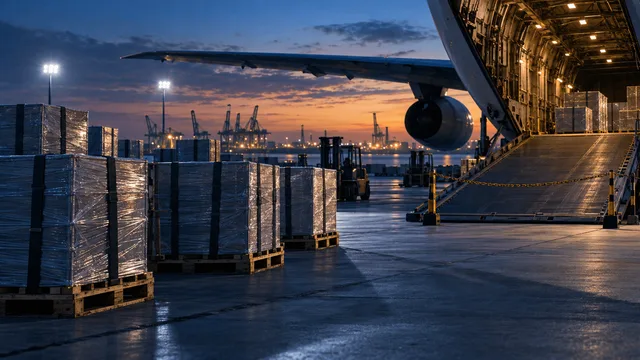
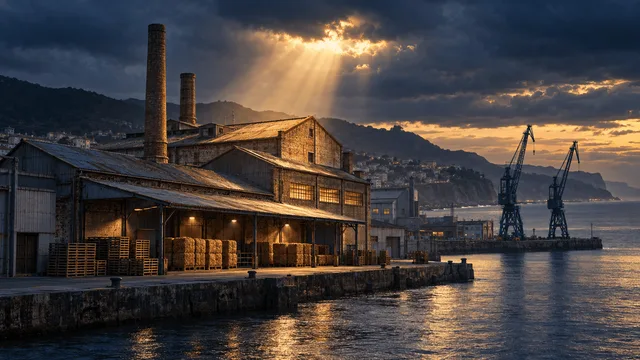
According to the consortium's release, LIG's upstream operations span 11 countries and currently produce approximately 350,000 barrels of oil equivalent per day. The portfolio also includes three refineries: Burgas in Bulgaria, described as the largest refinery in the Balkans; Zeeland in the Netherlands; and Petrotel in Romania. Combined, these refineries have a capacity of roughly 350,000 barrels per day and, according to the consortium, support thousands of jobs.
Beyond upstream and refining assets, LIG holds the international trading business LITASCO and more than 2,000 retail fuel stations spread across 16 countries in Europe, North America, and Central Asia, the consortium said.
How the Transaction Is Structured
Rather than a cash purchase, the deal is structured as a share swap. Under the negotiated terms reported by both Oil & Gas Journal and the consortium's own announcement, the consortium will exchange restricted shares of PJSC LUKOIL and other Russian companies for 100% of LIG's equity. The companies say this structure avoids any direct cash payment to Russia.
As part of the arrangement, DFC will receive an ownership interest in the acquired portfolio on behalf of the United States at no upfront cost to American taxpayers, according to the consortium. Sale consideration will reportedly be held in a restricted custodial account for five years, or until applicable sanctions are lifted. Upon closing, the consortium states that LIG's assets will be completely severed from PJSC LUKOIL ownership. Citi is named as lead financial advisor to the consortium.
Regulatory Path and Prior Failed Attempts
The transaction is not yet final. Per both Oil & Gas Journal and the consortium's statement, the deal is subject to conditional approval from the U.S. Treasury Department's Office of Foreign Assets Control (OFAC), along with completion of due diligence, customary closing conditions, and other required regulatory approvals.
This is not the first attempt to carve LIG out of Russian ownership. Oil & Gas Journal reports that the proposed acquisition follows earlier unsuccessful efforts by commodity trader Gunvor and later by U.S. investment firm Carlyle to acquire LUKOIL International GmbH. Carlyle's agreement reportedly expired earlier this year after the transaction failed to obtain OFAC approval. That history underscores that signing a definitive agreement is a necessary step but not a guarantee of regulatory clearance; whether the Eldridge-led structure satisfies OFAC's conditions remains an open question that only the regulator's review can answer.
Plans for the Assets and What It Could Mean
The consortium has said that upon closing, it will immediately prioritize stabilizing operations, preserving asset value, and ensuring continuity from upstream production through downstream retail, including bringing full refining capacity back online. In our reading, that stated priority implies at least some of the portfolio's refining capacity is not currently running at full rates, though the consortium has not quantified how much or explained why; a return to full capacity, if achieved, would be a tangible marker of progress beyond the signed agreement.
In our reading, the share-swap mechanism and the custodial holding period reflect an effort to structure the transaction so that it separates valuable international assets from sanctioned Russian ownership while, per the consortium, avoiding any direct cash payment to Russia, with the holding period tied to the sanctions regime itself. That is a reasonable interpretation of the stated terms, but it is not confirmation that OFAC will view the structure favorably. Oil & Gas Journal reports that Carlyle's earlier agreement for the same business expired after the transaction failed to obtain OFAC approval.
For global oil markets, the portfolio's scale is meaningful on the consortium's own figures: roughly 350,000 boe/d of upstream production across 11 countries and a combined refining capacity of about 350,000 b/d in Bulgaria, Romania, and the Netherlands, plus the LITASCO trading business and more than 2,000 retail stations across 16 countries. In our view, should the deal close, it would mark a substantial realignment of non-Russian energy assets away from Russian-parent ownership. Whether that materially changes European fuel supply dynamics would likely depend on how quickly operations and full refining capacity are restored, a point the consortium has flagged as an immediate priority but has not quantified in the statements reported.
Bottom Line
The Eldridge-led consortium has signed, not closed, a deal to acquire LUKOIL International's non-Russian assets through a share-swap structure designed to avoid direct payments to Russia. The transaction's fate now rests on OFAC approval, a hurdle that sank a prior attempt by Carlyle earlier this year. Readers should treat the announced terms, including DFC's no-cost ownership stake and the five-year custodial holding period, as the consortium's stated plan rather than a completed transaction.
DISCLAIMER: Traders Agency does not offer financial advice. The information provided is for educational purposes only and should not be considered financial advice. Traders Agency is not responsible for any financial losses or consequences resulting from the use of the information provided. Trading carries inherent risks and may not be suitable for all individuals. You are advised to conduct your own research and seek personalized advice before making any investment decisions, recognizing the potential risks and rewards involved.
- Consortium announcement via Business Wire: American-Led Consortium Announces Agreement to Acquire LUKOIL International’s Global Energy Portfolio · accessed Nov 26, 2026
- Oil & Gas Journal: US-led consortium aims to acquire LUKOIL International’s energy portfolio · accessed Nov 26, 2026
- Rigzone: Eldridge Consortium Pens Deal to Acquire Lukoil International · accessed Nov 26, 2026
See more from Traders Agency on Google
Make us a preferred source and our market analysis will appear more prominently in your Google Search, Top Stories, and AI results.
Add to Preferred Sources